
 English
 中文

Bulletin
CropWatch bulletinMenu
Authors: Wangyixuan | Edit: tianfuyou
Over the past few decades, South America, particularly Brazil and Argentina, has significantly expanded its soybean cultivation, becoming a key region for global production, with far-reaching impacts on the global soybean market and international trade patterns. As major producers and exporters, changes in its production are critical for the international market and China's food security.
In 2024-2025, South America's soybean productionshowed overall growth, with Brazil and Argentina together producing 216 million tons, an 11.4% increase over the previous year. The combined soybean planting area in both countries is expected to reach 61.9 million hectares, a 3.5% rise, adding 2.1 million hectares. Brazil's planting area saw a slight increase, while Argentina’s grew significantly by 10.2%. However, agro-meteorological conditions and crop yields varied across the region. While Argentina experienced better-than-average weather, persistent high temperatures and low rainfall in January caused more severe drought conditions, leading to lower yields. In contrast, Brazil's soybean season, dominated by dry and hot weather, improved significantly compared to the previous year’s severe drought. The key pod-filling period saw a favorable combination of rain and heat, contributing to a sharp increase in Brazil’s soybean yields. As a result, the average soybean yield in South America reached 3,489 kg per hectare, up by 7.7%.
The La Niña phenomenon from late 2024 to early 2025 was weaker in intensity and shorter in duration, but still had some impact on soybean production in South America. Argentina was more severely affected, with continued low precipitation in the main soybean-producing areas, worsening soil moisture conditions, and a higher risk of reduced yields. In contrast, while the southern regions of Brazil faced drought risks, the central, western, and northern areas experienced sufficient rainfall, leading to a relatively limited overall impact.
The increase in soybean production in South America helps ease global supply pressures, providing a more reliable source of imports for major importing countries such as China, stabilizing global soybean prices. However, the rapid expansion of soybean production also presents challenges, particularly due to extreme weather events caused by climate change, land degradation, and ecological concerns. Therefore, while expanding production, South American countries should focus on sustainable development, adopting agricultural innovations and ecological protection measures to ensure long-term food production stability.
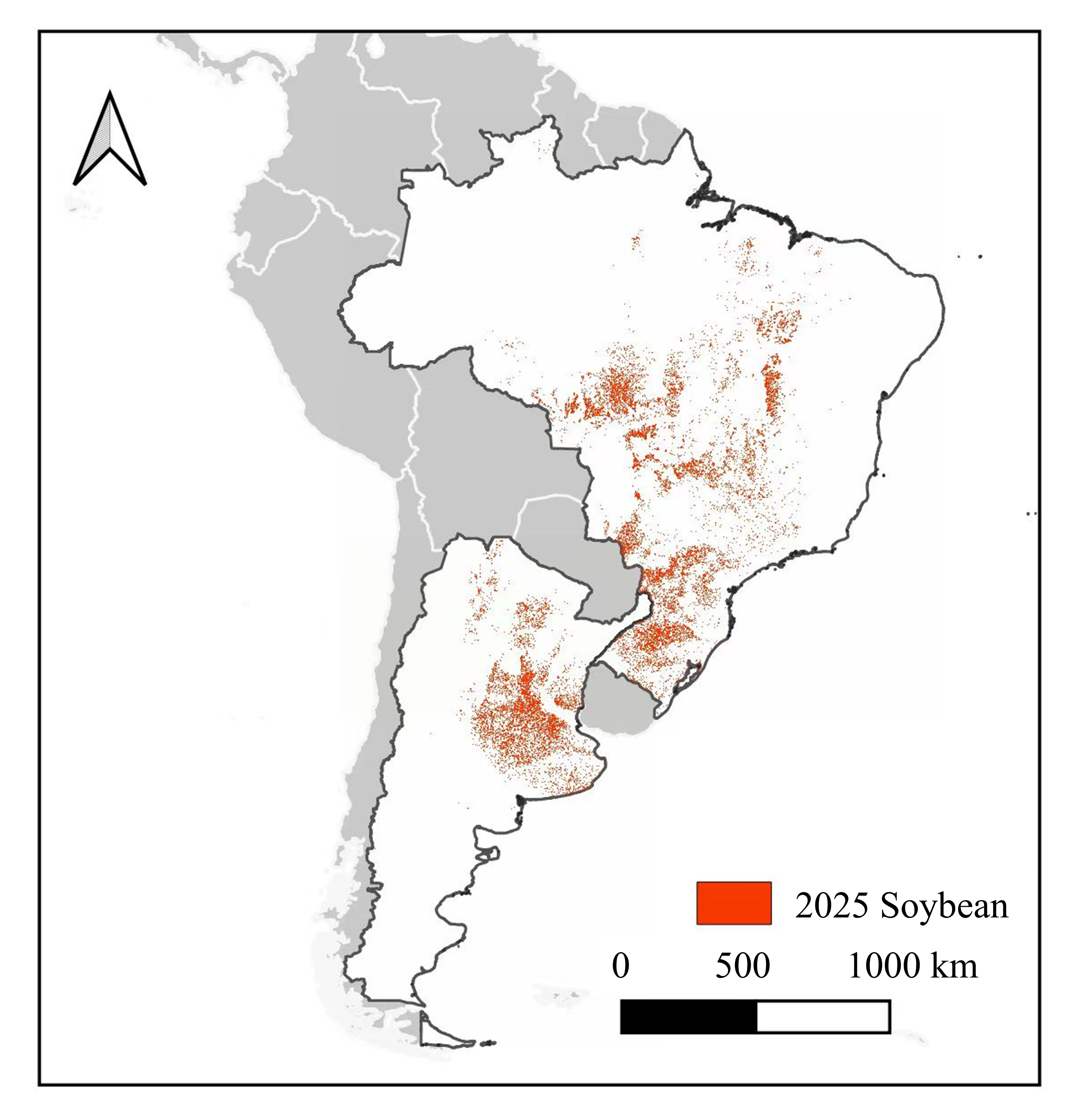
Figure 1. Soybean Distribution in South America in 2025
Table 5.1 Soybean planting area, yield, and production estimates for 2024.10-2025.1 in the South America, with Δ in 2025 production compared to 2024 values.
| Area (million ha) | Yield (ton/ha) | Production (million tones) | |||||||
| 2024 | 2025 | Δ% | 2024 | 2025 | Δ% | 2024 | 2025 | Δ% | |
| Brazil | 42.88 | 43.21 | 0.8 | 3.56 | 3.97 | 11.4 | 152.79 | 171.58 | 12.3 |
| Argentina | 16.95 | 18.69 | 10.2 | 2.42 | 2.38 | -2.0 | 41.10 | 44.39 | 8.0 |
| Total | 59.83 | 61.90 | 3.5 | 3.24 | 3.49 | 7.7 | 193.90 | 215.97 | 11.4 |