
 English
 中文

Bulletin
CropWatch bulletinMenu
Authors: tianfuyou | Edit: tianfuyou
During this monitoring period, Argentina experienced overall rainfall above the average level. However, during the critical mid-January period for soybean and maize growth, the country faced drought conditions. According to soil moisture data, soil humidity in January was 24% lower than the average of the past 15 years, indicating worse growing conditions compared to last year. As a result, the total output of soybeans and maize in Argentina showed completely opposite trends (Figure 2.1).
Argentina's soybean planting area increased by 1,735.9 thousand hectares year-on-year, with a growth rate of 10.24%. However, due to the drought and less rainfall from December to January, some production areas suffered from drought and high temperatures. The estimated yield is 2.38 tons per hectare, a 2.0% decrease compared to last year. Despite the decline in yield, the significant expansion in planting area is expected to drive an 8% year-on-year increase in total soybean output, reaching 44.389 million tons. Factors such as fluctuations in international soybean prices, adjustments in export policies, and relatively stable planting benefits have driven the expansion of soybean areas, thereby supporting the growth in output. However, climate risks should be closely monitored.
In contrast, due to extreme drought and the expansion of soybean planting, Argentina's maize planting area has been significantly reduced by 1,600 thousand hectares, a decrease of 16.5%. The yield has dropped to 6.02 tons per hectare, a 2.0% year-on-year decline. The simultaneous reduction in planting area and yield has led to an 18.2% year-on-year decrease in total maize output, amounting to 48.721 million tons.
The Rosario Exchange in Argentina has revised its maize production estimate downward from 48 million tons to 46 million tons, which also corroborates the negative outlook from CropWatch. The sharp contrast between the increase in soybean planting area and the decrease in maize area reflects farmers' planting choices under the influence of policies (such as adjustments in export taxes) and market orientation. As a major global exporter of maize and soybeans, Argentina's fluctuations in output may impact the international supply chain. For example, a reduction in maize output may drive up global prices, while an increase in soybean output may help ease some supply pressures.
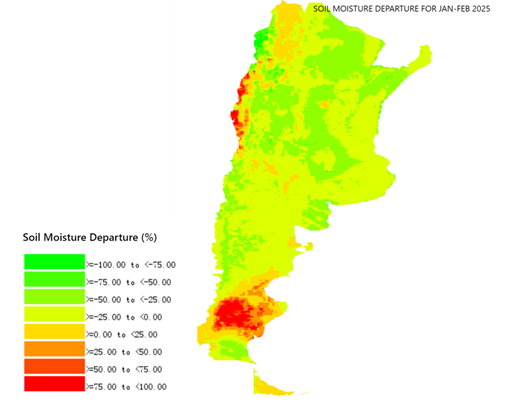
Figure 1. Soil Moisture Anomaly in Argentina from January to February 2025
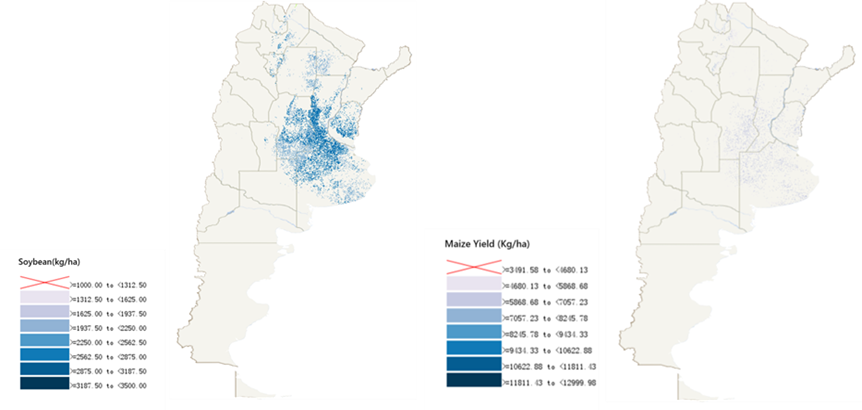
Figure 2. Spatial Distribution of Soybean and maize Yield in Argentina