
 English
 中文

Bulletin
CropWatch bulletinMenu
Authors: MH18174088459 | Edit: tianfuyou
During this monitoring period, which corresponds to the planting and growing stages of maize in Southern Africa, particular attention was given to the maize conditions in this region. From October 2024 to February 2025, Southern Africa experienced significantly lower precipitation (28.9% below the average of the past fifteen years) and higher temperatures (an increase of 1°C compared to the average of the past fifteen years). Additionally, Southern Africa has been in a state of drought since February 2024, with drought risks in the region remaining persistently high over the past year, leading to actual crop water usage falling below the required amounts. The drought risks in Zambia, Mozambique, and Zimbabwe eased between September and November of last year but then increased again, slowing down by January of this year; Angola saw some alleviation starting from November last year but a significant rise in December; South Africa began to see some relief from September last year but still experienced fluctuations.
The NDVI growth curves for each country indicate that crop growth during this monitoring period was significantly lower than the previous year and the five-year average. Maize production overall shows a trend of reduced planting area, forecasted lower yield per unit area, and decreased total output, with the total maize cultivation area decreasing by 17.2% year-on-year, the forecasted yield per unit area reducing by 3.2%, and total production dropping by 12.7%, indicating significant challenges for maize production in the region.
Forecasted yields per unit area for all major maize-producing countries have declined, with reductions ranging from 2.1% to 5.3%, reflecting a decrease in agricultural production efficiency across the entire region. The largest forecasted yield reduction was in Mozambique (-5.3%), followed by Angola (-4.1%), South Africa (-2.3%), and Zambia (-2.1%).
In terms of planting area, only South Africa (+6.5%) expanded its maize cultivation area, likely related to the South African government's policy to expand maize cultivation. In contrast, Angola (-29.5%), Mozambique (-25.2%), and Zambia (-12.0%) saw a significant reduction in planting areas, potentially influenced by deteriorating climatic conditions.
Regarding forecasted total production, only South Africa (+4.0%) experienced growth, primarily due to the expansion of planting areas compensating for the decrease in yield per unit area. Meanwhile, Angola (-32.4%), Mozambique (-29.2%), and Zambia (-13.9%) all saw substantial declines in forecasted total output, indicating severe impacts on agricultural production in these countries.
Overall, drought has had a considerable impact on maize production in Southern Africa. Drought-resistant measures and optimized irrigation management are necessary before harvest to mitigate the threat of climate change to food security. As maize is still in the growth stage during this monitoring period, the CropWatch team will continue to monitor and update yield forecast outcomes.
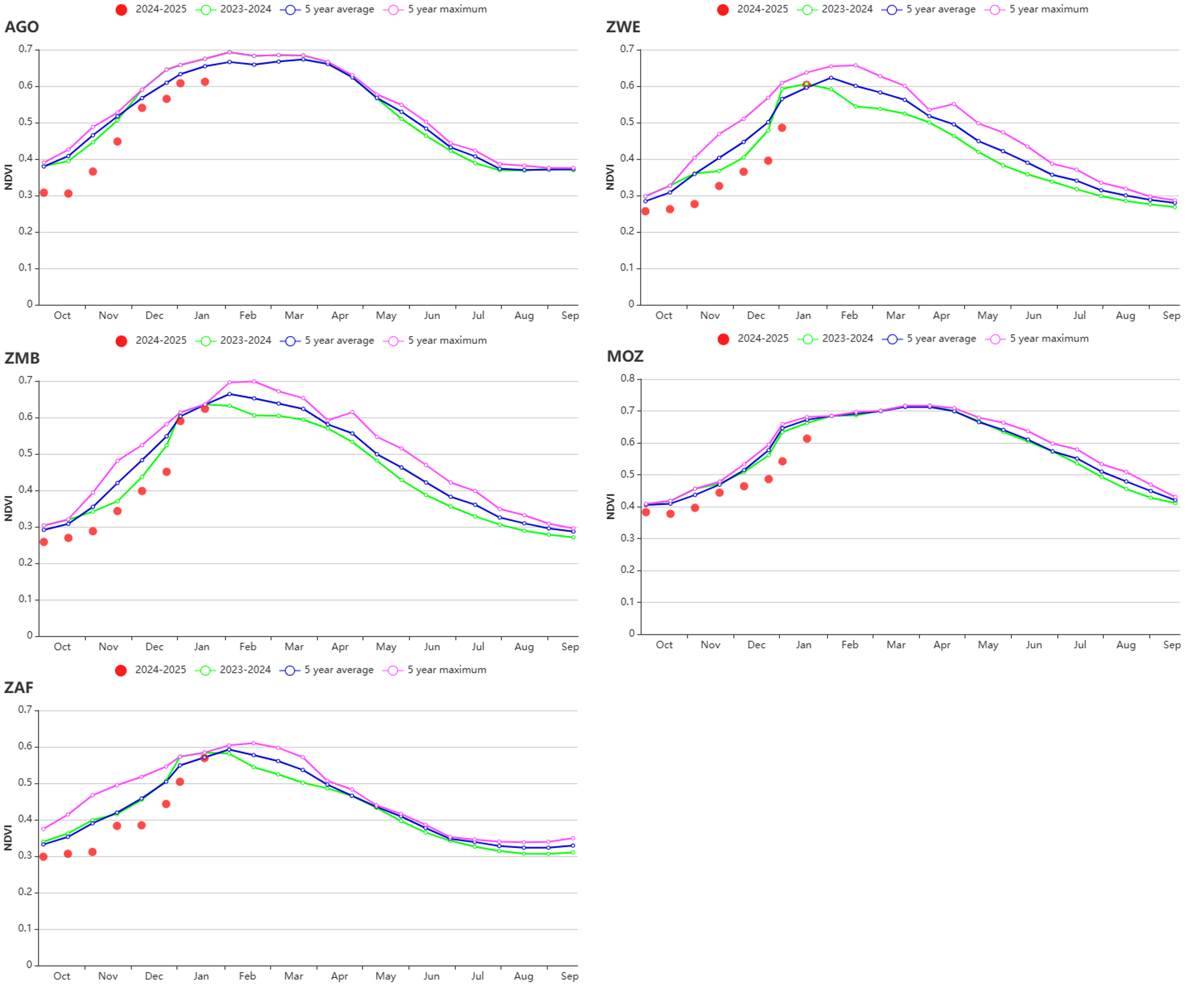
Figure.3.1 Crop condition development graph based on NDVI (Zambia, Mozambique, Angola, Zimbabwe and South Africa)
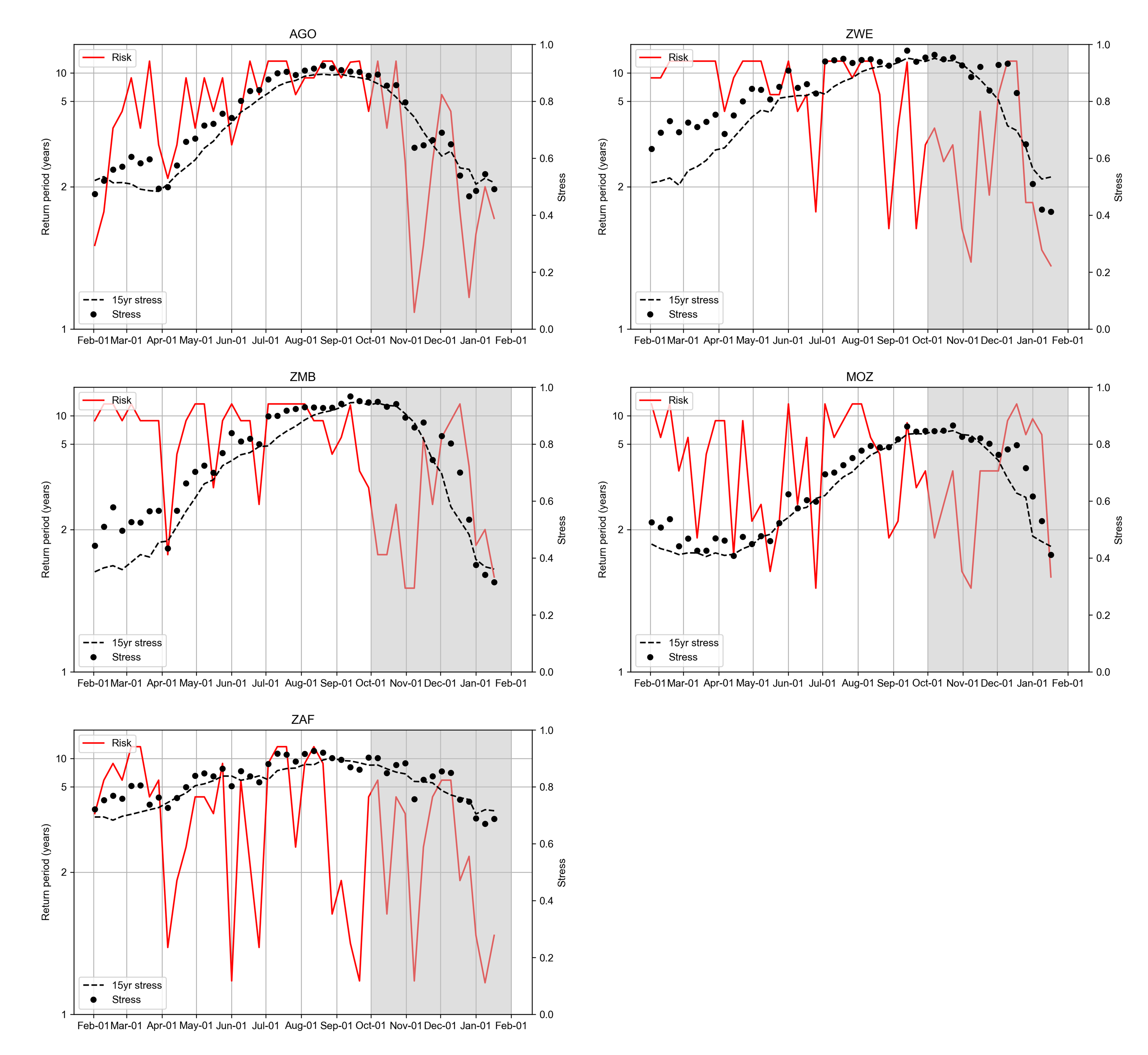
The remote sensing based water stress and their risks for Zambia, Mozambique, Angola, Zimbabwe and South Africa of southern Africa