
 English
 中文

Bulletin
CropWatch bulletinMenu
Authors: lijunbin | Edit: tianfuyou
CropWatch monitoring results revael that during the monitoring period, winter-spring paddy rice in the Southeast Asian monitoring countries was mainly planted in the Mekong Delta (southern Vietnam), Tonle Sap Plain (central Cambodia), Chao Phraya Alluvial Plain (central Thailand), and Java Island in Indonesia (Fig. 2.11). The variation of paddy rice area is smaller in Vietnam and Thailand compared to 2024, while Indonesia, Laos, and Cambodia experienced more significant variations .
Analysis of rice cultivation status by country:
Vietnam: The Mekong Delta region maintained the highest rice yield among Southeast Asian monitored countries (Fig. 2.6). However, due to reduced rainfall and typhoon impacts, the yield decreased by 2.0% compared to 2024, leading to 2.4% decline in total production.
Thailand: While cultivated area decreased by 2.4% compared to 2024, a 6.0% increase in photosynthetically active radiation benefited crop growth, leading to a 0.9% yield increase. Total production only slightly decreased by 1.5%.
Indonesia: Increased precipitation and frequent cloudy and rainy weather led to a decrease in photosynthetically active radiation, combined with the effects of flooding, resulted in 5.3% yield drop and an estimated 10.0% decrease in rice production.
Laos: Showed the most significant decline, with cultivated area decreasing by 9.3%, yield dropping by 6.4%, and total production falling by 15.1%. The main factors were rainfall 29.0% below the 15-year average and insufficient irrigation infrastructure in mountainous regions. Dry-season agriculture's high dependence on rainfall resulted in both limited sowing area and seedling survival rate.
Cambodia: Cultivated area decreased by 8.8%, primarily due to insufficient rainfall (7.0% below the 15-year average). Despite a 5.0% increase in PAR, water stress limited light utilization efficiency, causing potential biomass to decline by 6.0% compared to 15-year average. This resulted in a 1.1% reduction in yield and an decline of 9.9% in production.
Comprehensive analysis have shown that the widespread production declines across Southeast Asian rice-producing countries may intensify global rice supply constraints. As the world’s primary rice-exporting region, reduced Southeast Asian output could trigger international price volatility, heighten food security pressures in import-dependent regions (notably Africa and the Middle East), and pose significant challenges to global food supply systems.
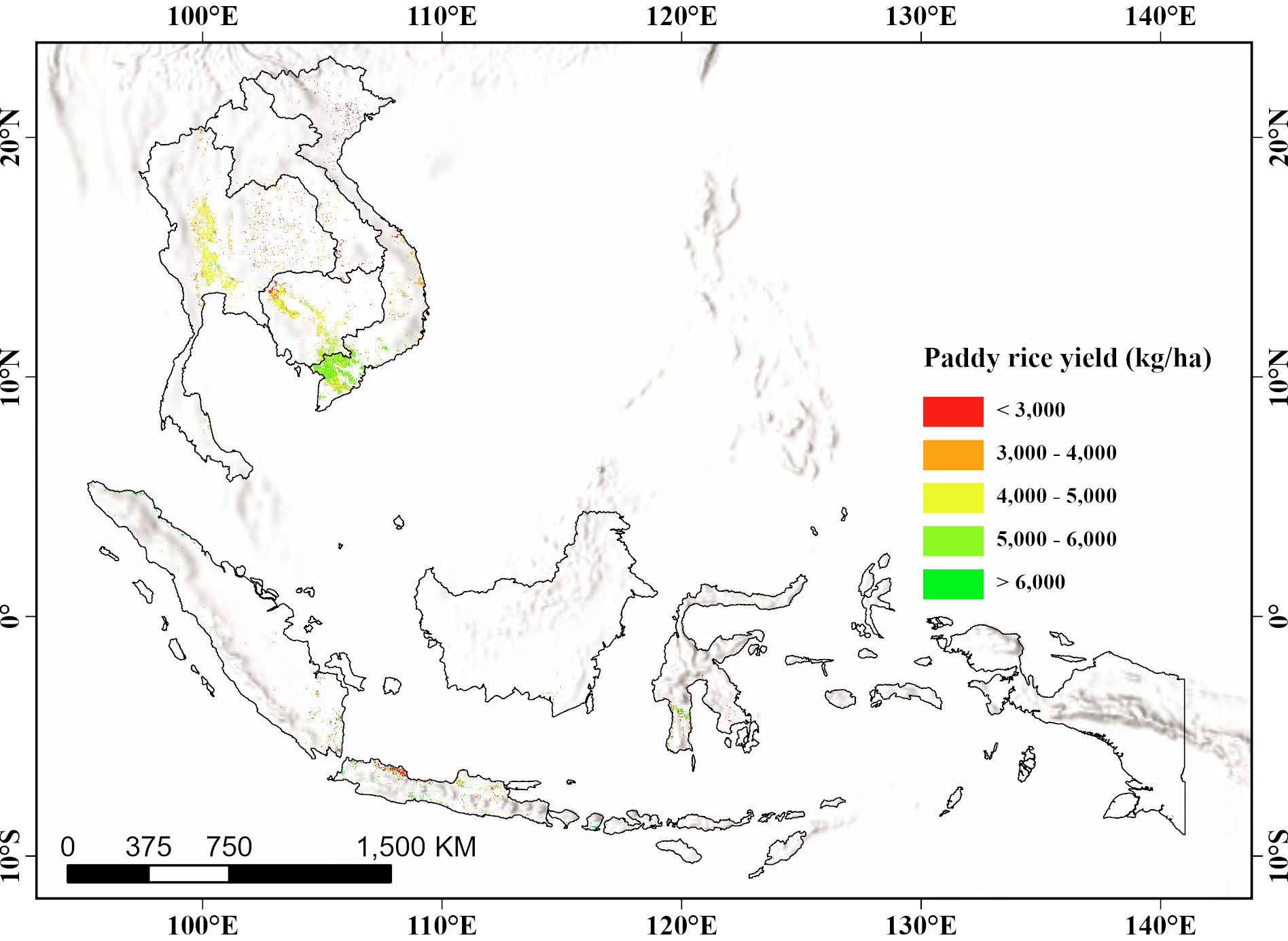
Fig. 2.11 Spatial distribution of paddy rice yield in Southeast Asia during the monitoring period.