
 English
 中文

Bulletin
CropWatch bulletinMenu
Authors: Miao,qinxl,Wangmx | Edit: qinxl
China's Major Grain and Oil Crop Production
This report utilizes multi-source remote sensing data from the European Space Agency's Sentinel 1/2 satellites and the U.S. Landsat 8/9 satellites, along with national 10-meter resolution farmland data and massive ground samples collected through the GVG agricultural information collection smartphone application. Artificial intelligence methods such as random forest and transfer learning were employed to monitor the 2025 national summer grain and winter wheat planting areas. Combined with the latest agricultural meteorological information and crop yield remote sensing monitoring models, the analysis predicts this year's summer grain and winter wheat production, with the following results.
(1) Summer Grain Production Forecast
The national summer grain total production in 2025 is expected to be 146.18 million tons, an increase of 1.21 million tons (+0.8%) year-on-year, significantly slower than the 2.1% growth rate in 2024. Major producing provinces achieved summer grain production of 126.78 million tons, an increase of 1.78 million tons (+1.4%) year-on-year, while non-major producing provinces decreased by 2.7% (a reduction of 570,000 tons). National summer grain yield decreased by 1.3% year-on-year, but a 2.2% increase in planting area supported stable total production.
Shandong, Anhui, Hebei, Shanxi, and Shaanxi provinces led the increase in summer grain production. Shandong's summer grain planting area and yield both increased, by 4.1% and 0.8% respectively year-on-year, with total production reaching 29.47 million tons, an increase of 1.39 million tons (+4.9%). Anhui's summer grain area expanded significantly by 6.0%, with total production increasing by 460,000 tons (+3.1%). Increases in planting area in Hebei and Shaanxi offset the impact of declining yields, with total production increasing by 450,000 and 100,000 tons respectively.
Henan and Hubei summer grain yields decreased by 1.4% and 3.2% year-on-year respectively, leading to a decline in total production. Xinjiang's summer grain planting area reduction combined with a slight decrease in yield resulted in a year-on-year decrease of 210,000 tons in total production. Jiangsu and Gansu summer grain production both decreased slightly.
Table 1: 2025 Summer Grain Yield and Production Forecast for Major Producing Provinces
Province | Production in 2024 (million ton) | 2025 | ||||
Area ∆ (%) | Yield ∆ (%) | Summer grain production (million ton) | Production change (million ton) | Production ∆ (%) | ||
Hebei | 13.01 | 5.9 | -2.3 | 13.46 | 0.45 | 3.4 |
Shanxi | 2.37 | -1.7 | 4.2 | 2.43 | 0.06 | 2.4 |
Jiangsu | 14.28 | -1.6 | 1.1 | 14.20 | -0.08 | -0.6 |
Anhui | 14.84 | 6 | -2.7 | 15.30 | 0.46 | 3.1 |
Shandong | 28.08 | 4.1 | 0.8 | 29.47 | 1.39 | 4.9 |
Henan | 33.47 | 0.8 | -1.4 | 33.28 | -0.19 | -0.6 |
Hubei | 6.04 | 0.4 | -3.2 | 5.87 | -0.17 | -2.8 |
Shaanxi | 3.86 | 5.2 | -2.6 | 3.96 | 0.10 | 2.5 |
Gansu | 3.32 | -0.1 | -0.8 | 3.29 | -0.03 | -0.9 |
Xinjiang | 5.73 | -3 | -0.8 | 5.52 | -0.21 | -3.8 |
Subtotal | 125.00 | 126.78 | 1.78 | 1.4 | ||
Other provinces | 19.97 | 19.40 | -0.57 | -2.7 | ||
Nation* | 144.97 | 2.2 | -1.3 | 146.18 | 1.21 | 0.8 |
(2) Winter Wheat Production Forecast
The national winter wheat planting area in 2025 is expected to be 24,303 thousand hectares, an increase of 2.2% year-on-year (Table 2, Figure 2). Among them, the winter wheat planting area in 11 major producing provinces including Henan and Shandong reached 21,518 thousand hectares, an increase of 2.3% year-on-year, accounting for 88.5% of the national total area. The Huang-Huai-Hai region (Hebei, Jiangsu, Anhui, Shandong, Henan) is the core winter wheat production area, accounting for about 72% of the planting area, but with significant differences within the region: Anhui's winter wheat planting area increased significantly by 6.7% to 3,134 thousand hectares, reversing the downward trend in 2024, mainly benefiting from optimized crop rotation patterns as well as market and policy factors. Shandong and Hebei winter wheat planting areas increased by 4.1% and 5.9% respectively. Jiangsu and Xinjiang winter wheat planting areas decreased compared to 2024, by 2.7% and 3.0% respectively, but still higher than the average planting area over the past 5 years. Shaanxi winter wheat planting area increased by 5.2% year-on-year to 818 thousand hectares, while Gansu slightly decreased by 0.1%.
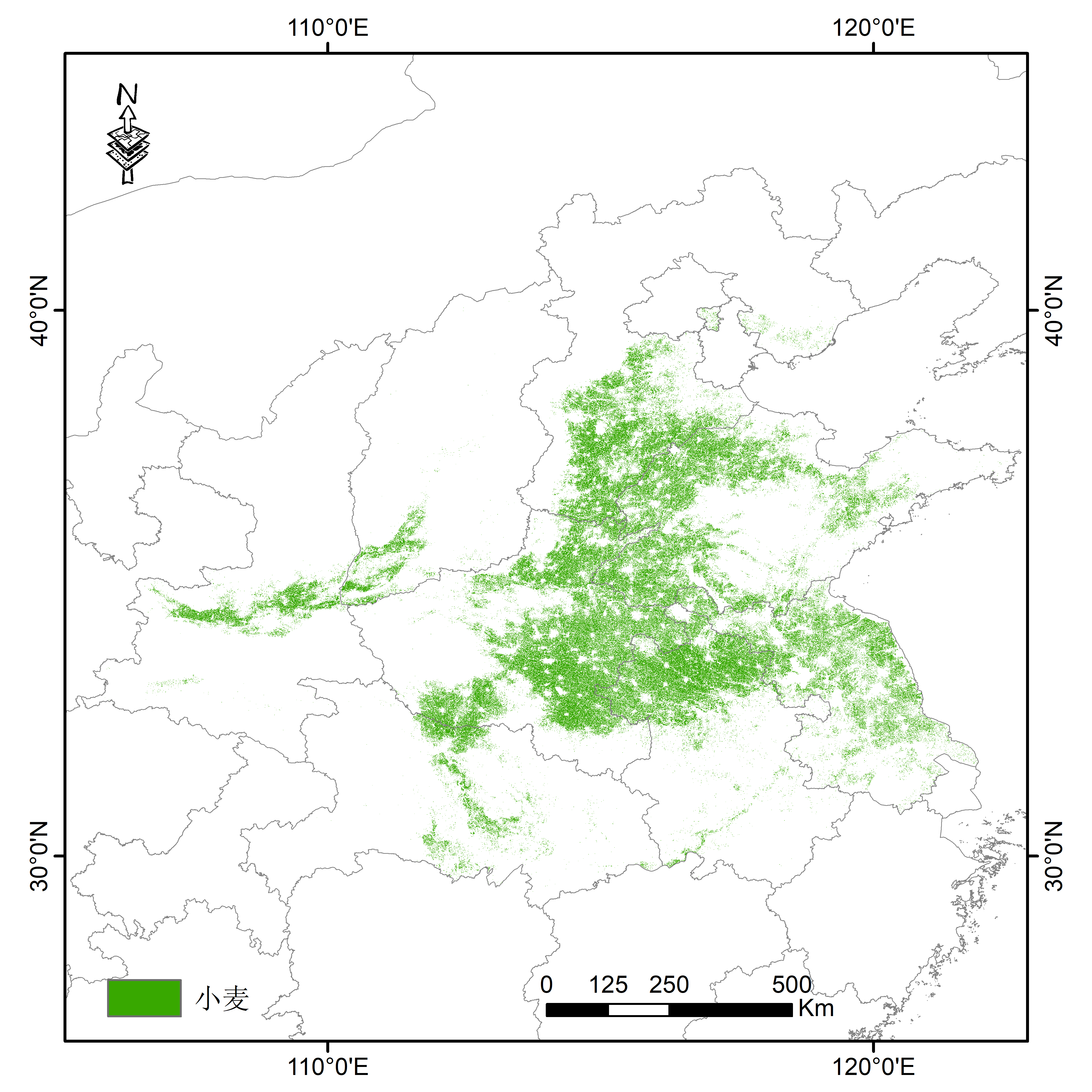
图 2 2025年华北和黄淮海麦区冬小麦空间分布
Figure 2: Spatial Distribution of Winter Wheat in North China and Huang-Huai-Hai Wheat Region in 2025
The national average winter wheat yield is expected to be 5,470 kg/hectare, a decrease of 1.0% year-on-year, but the increase in planting area supports a 1.2% year-on-year increase in total production to 132.93 million tons. The yield decrease in major producing provinces (-0.8%) is smaller than in non-major producing provinces (-2.5%), highlighting the stronger disaster prevention and mitigation capabilities in major production areas. Among them, Shandong province saw increases in both winter wheat planting area and yield year-on-year, with total winter wheat production increasing by 1.37 million tons, an increase of 4.9%, making it the province with the largest increase in production among major producing provinces, contributing 84% of the national production increase. The impact of yield declines in Anhui, Hebei, and Shaanxi was offset by area growth, with production increasing year-on-year by 530,000 tons (+3.7%), 430,000 tons (+3.4%), and 70,000 tons (2.5%) respectively. Shanxi province's winter wheat yield increased by 4.2% year-on-year, driving a production increase of 60,000 tons, an increase of 2.4%. Winter wheat yields in Henan, Hubei, and Jiangsu all decreased year-on-year, combined with area fluctuations, resulting in total production decreases of 190,000 tons (-0.6%), 130,000 tons (-2.8%), and 240,000 tons (-1.7%) respectively. Xinjiang's winter wheat yield decreased slightly by 0.2% year-on-year, combined with reduced planting area, resulting in a production decrease of 120,000 tons in the region.
Winter wheat production in 2025 shows characteristics of "increased area, slightly decreased yield, stable to slightly increased total production" with stability highlighted in major producing provinces, but the yield decline needs attention. Temperature continued to fluctuate in April, and from late April to mid-May, precipitation is expected to be above normal in the Huang-Huai-Hai region, with humid and hot environments easily inducing unfavorable factors such as Fusarium head blight, requiring timely countermeasures to promote normal crop growth and stable production increases.
Table 2: 2025 Winter Wheat Planting Area, Yield, and Production Forecast for Major Producing Provinces
Province | Area(kha) | Yield(kg/ha) | Production(million ton) | ||||
2025 | ∆(%) | 2025 | ∆(%) | 2025 | Change | ∆(%) | |
Anhui | 3134 | 6.7 | 4711 | -2.8 | 14.76 | 0.53 | 3.7 |
Hebei | 2258 | 5.9 | 5788 | -2.3 | 13.07 | 0.43 | 3.4 |
Henan | 5471 | 0.8 | 6055 | -1.4 | 33.13 | -0.19 | -0.6 |
Hubei | 1139 | 0.4 | 3861 | -3.2 | 4.40 | -0.13 | -2.8 |
Jiangsu | 2678 | -2.7 | 5186 | 1.1 | 13.89 | -0.24 | -1.7 |
Shaanxi | 818 | 5.2 | 3672 | -2.6 | 3.00 | 0.07 | 2.5 |
Shandong | 4413 | 4.1 | 6597 | 0.8 | 29.11 | 1.37 | 4.9 |
Shanxi | 422 | -1.7 | 5702 | 4.2 | 2.41 | 0.06 | 2.4 |
Gansu | 533 | -0.1 | 4218 | -0.7 | 2.25 | -0.02 | -0.8 |
Xinjiang | 652 | -3.0 | 5680 | -0.2 | 3.71 | -0.12 | -3.2 |
Subtotal | 21518 | 2.3 | 5564 | -0.8 | 119.72 | 1.75 | 1.5 |
Other provinces | 2785 | 1.7 | 4743 | -2.5 | 13.21 | -0.11 | -0.9 |
Nation | 24303 | 2.2 | 5470 | -1.0 | 132.93 | 1.64 | 1.2 |
(3) 2025 Growth Monitoring Report for Major Rapeseed Production Areas in Southern China
As of April 2025, winter rapeseed in the middle and lower reaches of the Yangtze River and South China has entered the critical growth stage from flowering to maturity. According to the established regional monitoring framework and remote sensing data availability, this monitoring covers eight provinces (regions): Anhui, Guizhou, Jiangsu, Hubei, Hunan, Jiangxi, Yunnan, and Guangxi. This monitoring combined CropWatch's non-arable land coefficient data to assess rapeseed area, showing that the total rapeseed planting area in the eight provinces (regions) reached 2,410.6 thousand hectares, an increase of 1.4% compared to 2024, but with a clear regional differentiation trend. Guizhou province showed the most significant increase at 17.4%, Jiangsu province increased by 8.7%, and Guangxi, Yunnan, and Anhui increased by 5.4%, 5.1%, and 2.5% respectively. Hunan and Hubei remained basically unchanged, while Jiangxi province decreased by 17.8%, from 402.2 thousand hectares to 330.7 thousand hectares, showing significant regional differences.
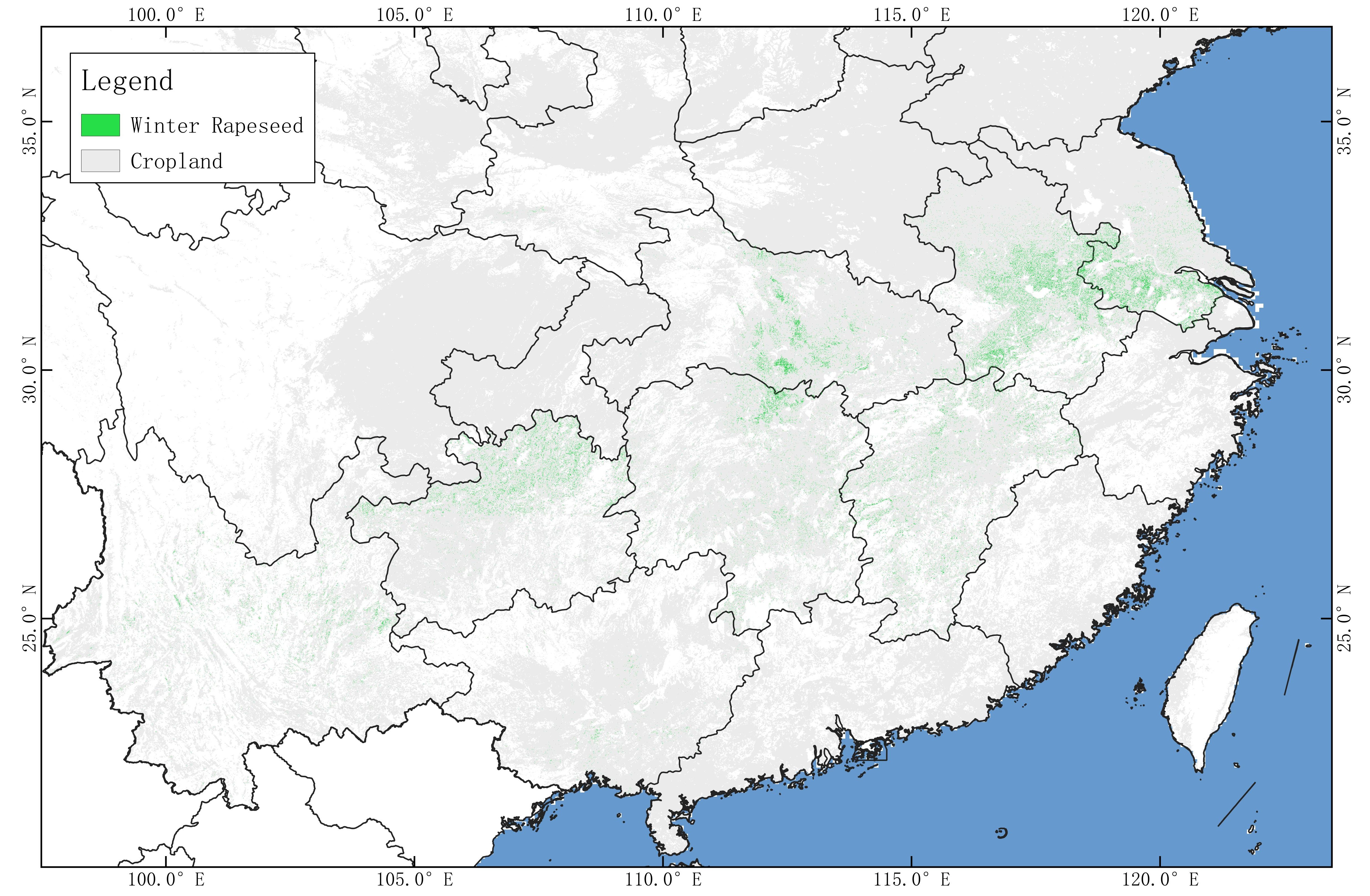
Figure 1: Spatial Distribution of Rapeseed in Eight Southern Provinces (Regions) of China in 2025
Table 3: Rapeseed Planting Area and Changes in Eight Southern Provinces (Regions) of China, 2024-2025
Province | 2024 (kha) | 2025 (kha) | ∆(%) |
Anhui | 569.0 | 583.3 | 2.5% |
Guizhou | 298.0 | 350.0 | 17.4% |
Jiangsu | 308.3 | 335.1 | 8.7% |
Jiangxi | 402.2 | 330.7 | -17.8% |
Hunan | 308.6 | 308.5 | 0.0% |
Hubei | 244.4 | 244.6 | 0.1% |
Yunnan | 203.7 | 214.1 | 5.1% |
Guangxi | 42.0 | 44.3 | 5.4% |
Subtotal | 2376.2 | 2410.6 | 1.4% |
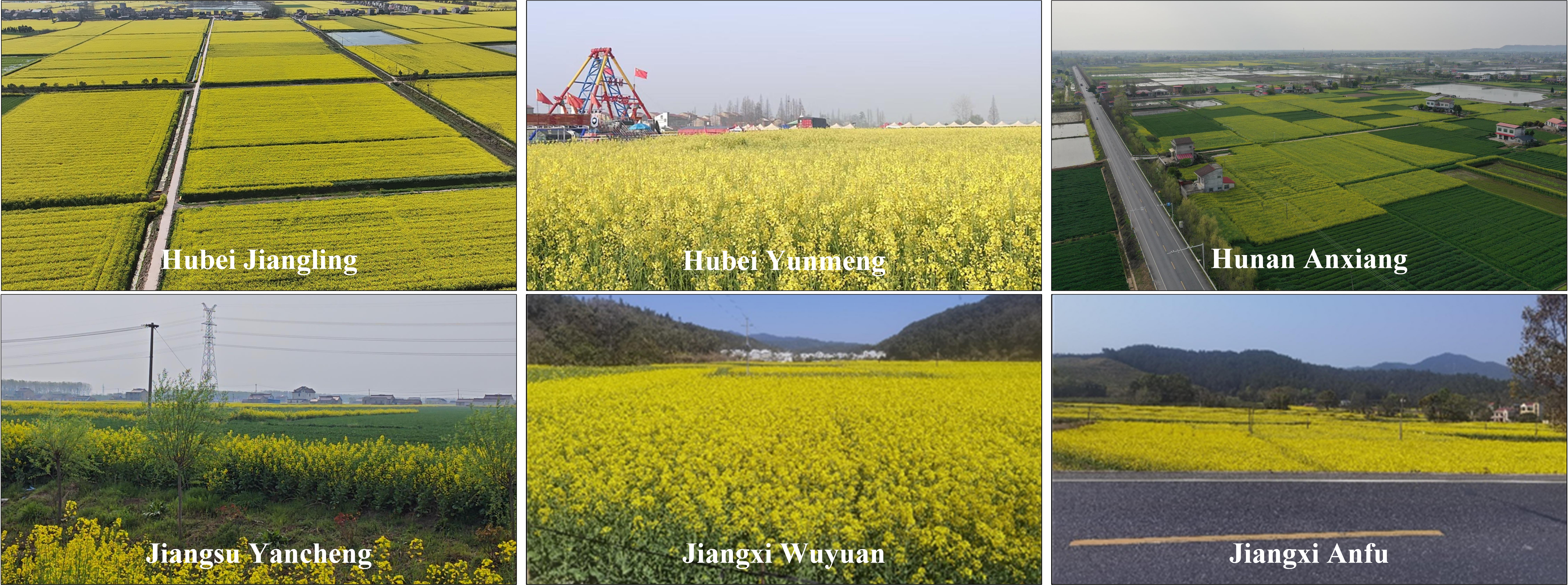
Figure 4: Field Survey Photos of Rapeseed in March-April 2025
During January-March 2025, the middle and lower reaches of the Yangtze River and South China experienced severe drought occurring once in 10 years or more, significantly increasing the regional water stress index. Affected by this, rapeseed growth in Jiangxi, Hunan, and parts of South China was generally weak, with the best vegetation condition index mostly between 0.50-0.80, which may affect rapeseed yield formation. In regions such as Anhui, northern Guizhou, and the border areas of Hubei and Hunan, rapeseed growth was relatively good, with index values between 0.80-1.00.
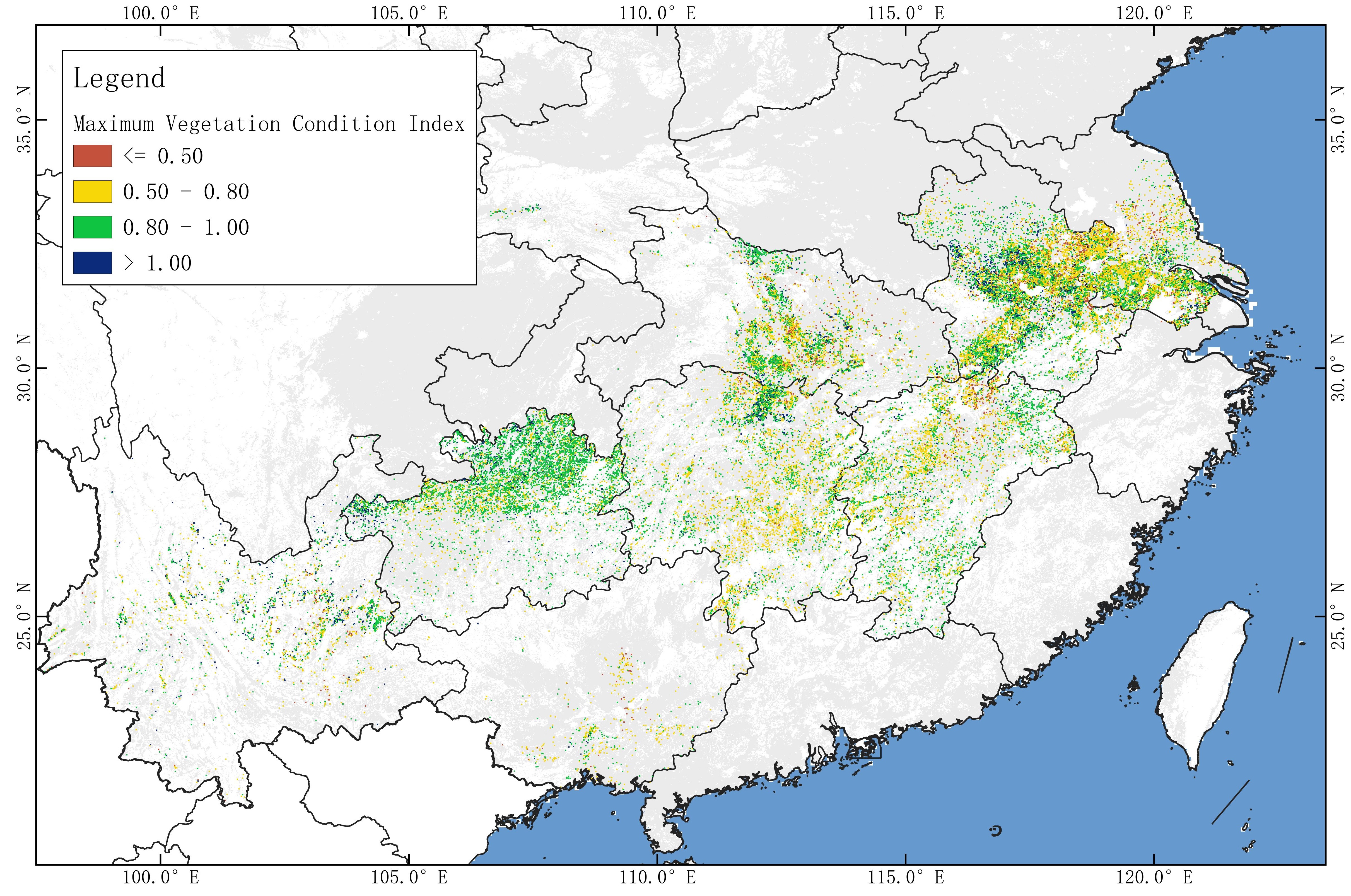
Figure 2: Distribution of Rapeseed Growth Condition Index in Eight Southern Provinces (Regions) of China in 2025
In view of the current situation, it is recommended that key regions strengthen drought emergency measures and rationally allocate water resources to reduce the impact of drought on final rapeseed yields. This monitoring will continue to track changes in rapeseed growth in the above eight provinces (regions), and consider gradually expanding to other rapeseed production areas according to resource conditions, to provide a more comprehensive assessment of regional rapeseed production status. Subsequent reports will combine actual harvest conditions to comprehensively assess the final yield and quality of rapeseed in major southern production areas, providing scientific basis for decision-making by relevant departments and industry development.