
 English
 中文

Bulletin
CropWatch bulletinMenu
Authors: lijunbin | Edit: qinxl
This section focuses on the rice production situation in four countries of the Indochina Peninsula: Vietnam, Thailand, Cambodia, and Laos. The first quarter of 2025 marks the primary harvest period for dry-season rice in the Indochina Peninsula, while it is also the preparation phase for rain-season rice. According to CropWatch, during the monitoring period, rice is primarily planted in the Chao Phraya River floodplain, the Mekong River deltas in Vietnam, and the Tonle Sap Lake plain in Cambodia (Figure 2.12). In Thailand, the rice planting area has decreased compared to the same period in 2024, while the rice planting areas in the other three countries have increased. The rice yield is higher in the Chao Phraya River plain of Thailand and the Mekong region of Vietnam, while the yield are lower in the Red River Delta. The rice yield in Thailand and Laos have decreased compared to last year.
The rice production situation in each country is analyzed as follows:
Vietnam: The rice planting area has increased by 3.86% compared to 2024. Vietnam experienced severe heat and drought conditions during the monitoring period, with precipitation was 6.01% lower than the 15-year average, while the average temperature rose significantly by 1.07°C. The agricultural drought area change(ADAC) was -43.27%, indicating some relief from agricultural drought. The yield has slightly increased by 2.1%, with total production increasing by 6.0%.
Thailand: Due to persistent unfavorable agro-meteorological conditions, Thailand experienced a 35.10% decrease in precipitation and a 1.30°C increase in temperature during the monitoring period compared to the 15-year average. The ADAC was -21.44%. The drought led to a 1.41% reduction in the rice planting area compared to last year. Although photosynthetically active radiation increased, the high temperatures triggered heat stress, disrupting normal grain filling in rice. This led to a 12.62% decline in potential accumulated biomass. The yield is expected to decrease by 0.3%, with a total production reduction of 1.75%.
Cambodia: Monitoring shows that the proportion of cultivated land planted has slightly increased by 1.7% compared to the 5-year average, and the rice planting area has increased by 1.64% compared to last year. This is likely related to the government's ongoing efforts to promote agricultural infrastructure development. During the monitoring period, Cambodia’s ADAC was -17.59%, indicating significant agricultural drought. However, thanks to the construction of water conservancy facilities, improvements in irrigation systems, and the introduction of new rice varieties and technologies (such as hybrid Japonica rice trials funded by China and technical guidance from agricultural experts), the yield has increased by 11.5% compared to last year. The total production is expected to increase by 13.33%.
Laos: Monitoring shows that the rice planting area in Laos has increased by 1.50% compared to last year. The agro-meteorological indicators reveal that during the monitoring period, photosynthetically active radiation increased by 15.32% compared to last year. However, the reduction in precipitation (73.52% lower than the 15-year average) and severe agricultural drought (with an ADAC of -17.95%) resulted in a 30.08% decrease in potential biomass compared to the 15-year average. The CroPI (Crop Production Index) is 0.88, indicating a poor rice production situation in Laos. The yield is expected to decrease by 1.6%, but thanks to the increase in planting area (+1.5%), rice production is expected to remain basically the same as last year (-0.14%).
The significant reduction in precipitation and persistent drought in the Indochina Peninsula have affected the normal planting and maturation processes of rice. Water shortage has not only limited the efficiency of solar energy conversion but has also greatly suppressed the potential yield of rice, ultimately resulting in decreased production. Monitoring data clearly shows that rice yields in Thailand and Laos have declined to varying degrees, further intensifying the difficult situation for rice exports in the Indochina Peninsula. The international market environment has complicated this challenge: India resumed rice exports, while demand from major importing countries such as Indonesia and the Philippines has contracted. These factors have collectively heightened market competition and price pressure in Southeast Asia.
| 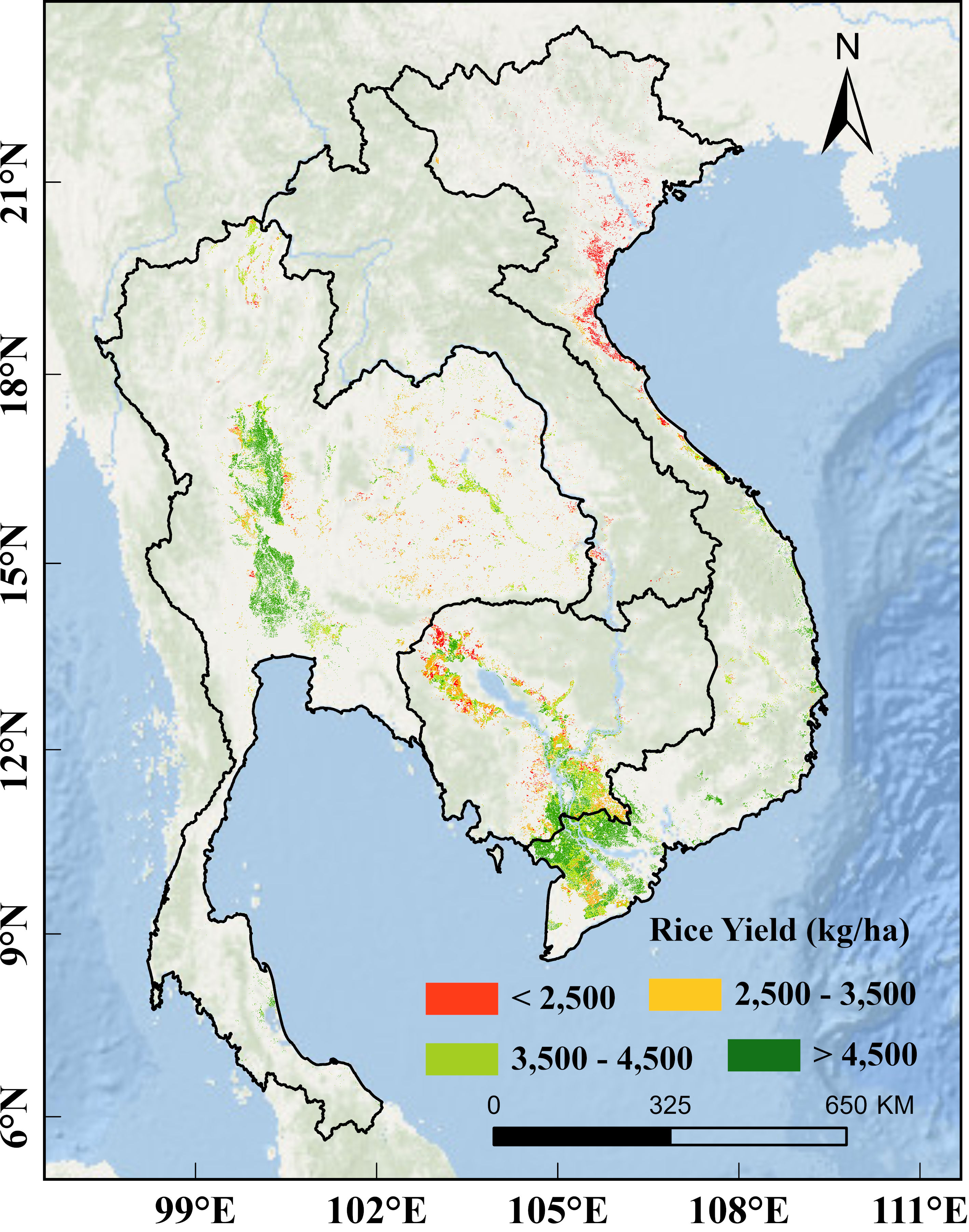 |
Figure 2.12. Spatial Distribution of Dry Season Rice Planting Area (Left) and Yield(Right) in the Indochina Peninsula During the Monitoring Period | |
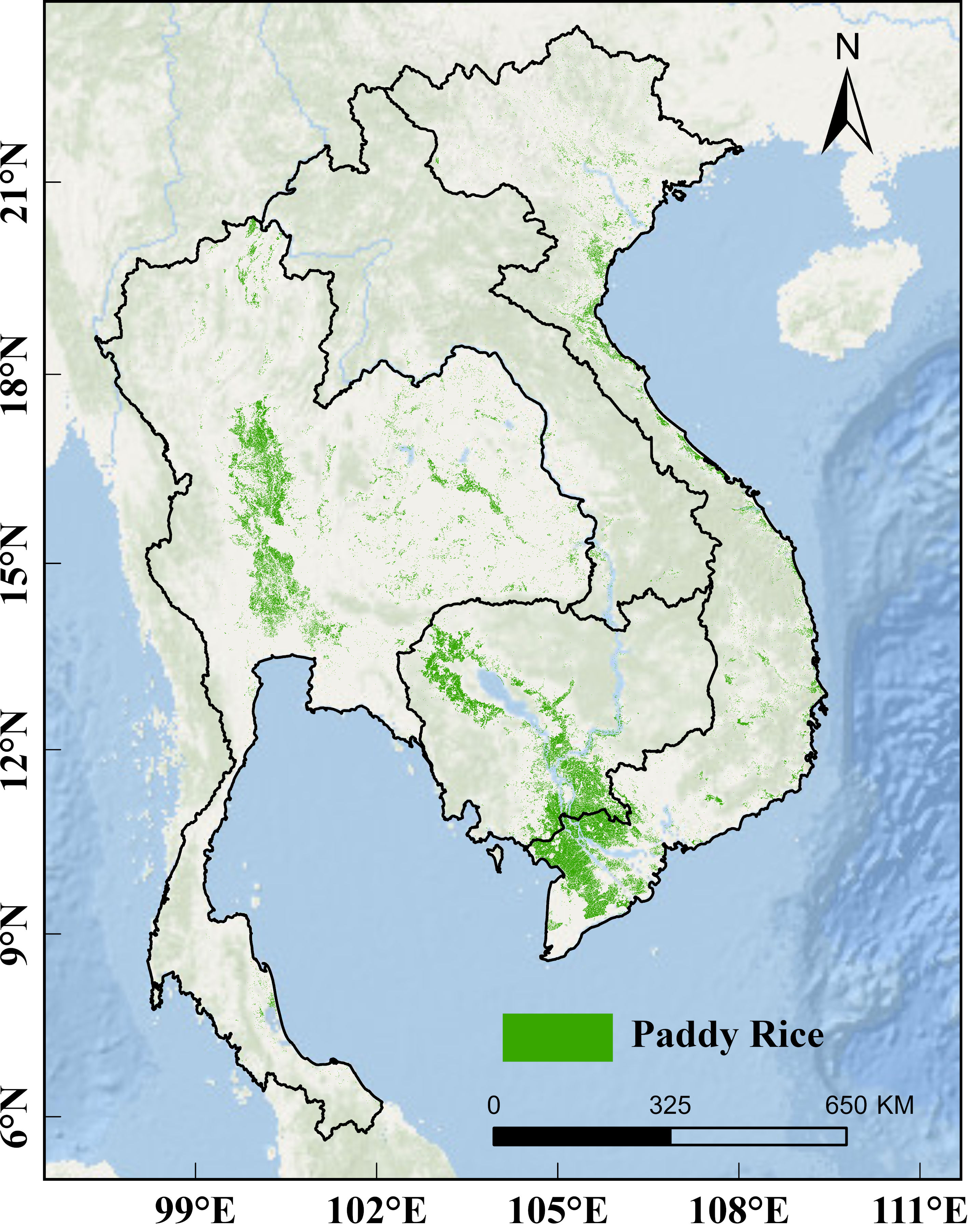
Table 2.3. Dry Season Rice Planting Area, Yield, and Total Production in the Indochina Peninsula During the Monitoring Period
| Area (Thousand Hectares) | Yield (kg/Hectare) | Production (10,000 Tons) | |||||||
| 2024 | 2025 | Variation | 2024 | 2025 | Variation | 2024 | 2025 | Variation | |
| Thailand | 2358.282 | 2325.052 | -1.41% | 4251.457 | 4236.781 | -0.3% | 1002.613 | 985.074 | -1.75% |
| Cambodia | 1730.568 | 1759.028 | 1.64% | 3376.367 | 3764.524 | 11.5% | 584.303 | 662.19 | 13.33% |
| Laos | 67.583 | 68.594 | 1.5% | 3077.064 | 3027.536 | -1.6% | 20.796 | 20.767 | -0.14% |
| Vietnam | 2285.736 | 2374.003 | 3.86% | 4051.822 | 4135.917 | 2.1% | 926.14 | 981.868 | 6.02% |