
 English
 中文

Bulletin
CropWatch bulletinMenu
Authors: lirui | Edit: qinxl
Global Agricultural Land Experiences Notable Heat Intensification from January to March, Exacerbating Meteorological Drought in Southern Brazil and Black Sea Regions
Compared to January 2025, when global agricultural land temperatures were predominantly higher in the interior of the Eurasian continent, March 2025 continued to show overall elevated temperatures but with a more diverse distribution of anomalies. Higher-than-normal temperatures were mainly observed in the central and western parts of the Eurasian continent, southern Brazil, and the central United States, while abnormally low temperatures were primarily found in central and western China, Spain, and eastern India. SMAP satellite microwave soil surface moisture monitoring indicated that global agricultural soil moisture content was significantly below the annual average in March. Severely low soil moisture conditions were concentrated in north-central Europe, Turkey, and southwestern mountainous regions, while above-average soil moisture was found in parts of Spain, West Africa, South Africa, Argentina, and North China Plain. There is notable spatial correlation between temperature and soil moisture anomalies.
Based on simulations of the impact of temperature anomalies on the Palmer Drought Severity Index (PDSI) using actual temperatures from January-March 2025 compared to multi-year average temperature scenarios, the results show that temperature anomalies intensified drought conditions across most global agricultural lands. This was particularly evident in Eastern Europe, Southern Brazil, Central American highlands, and parts of Southern Africa. Conversely, temperature anomalies in the Indochina Peninsula and parts of central and western China helped alleviate drought intensity.
Further assessment of the regional contribution of temperature anomalies to global meteorological drought revealed that, compared to precipitation and other factors, temperature increases significantly worsened drought conditions in southern Brazil, Southern Africa, Central American highlands, and northwestern Black Sea regions. Meanwhile, temperature anomalies in central Indochina, Spain, and localized areas of central and western China played a key role in driving meteorological drought index fluctuations. In contrast, temperature anomalies had limited impact on meteorological drought in the mid-latitudes of the Northern Hemisphere (eastern United States, southern Russia, northern Western Europe, northeastern China) and low-latitude regions (Africa's Sahel, Indonesia, and southern India), where meterological drought were indiced by precipitation shortage.
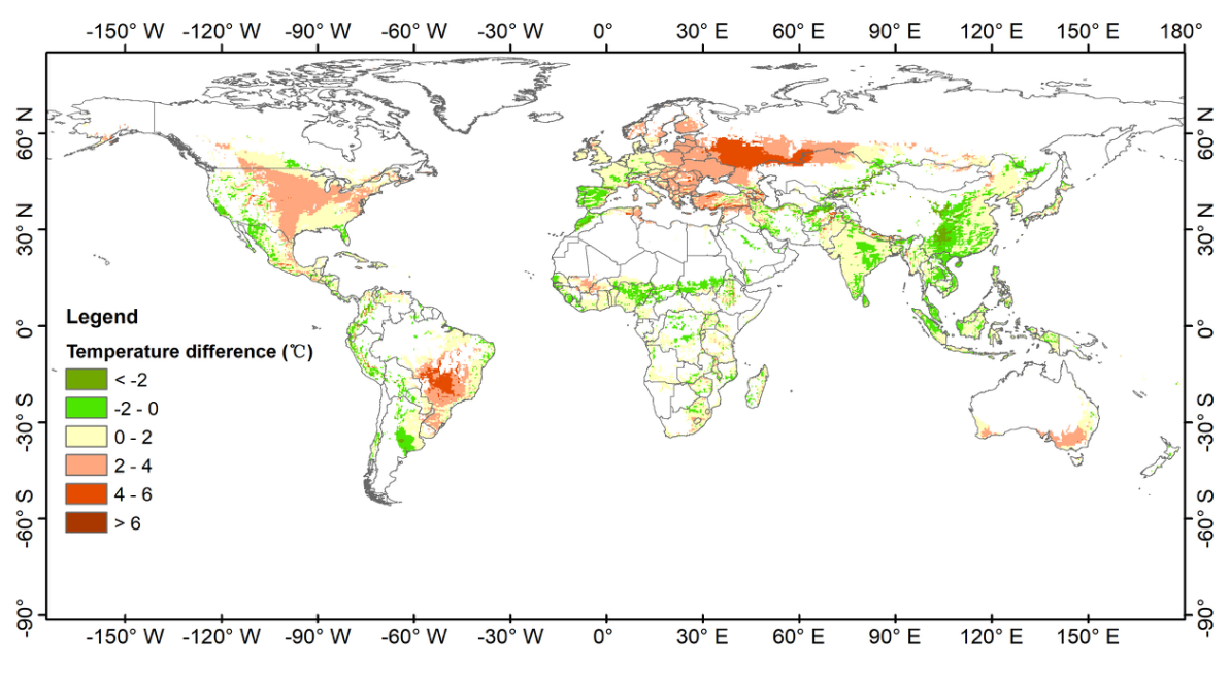
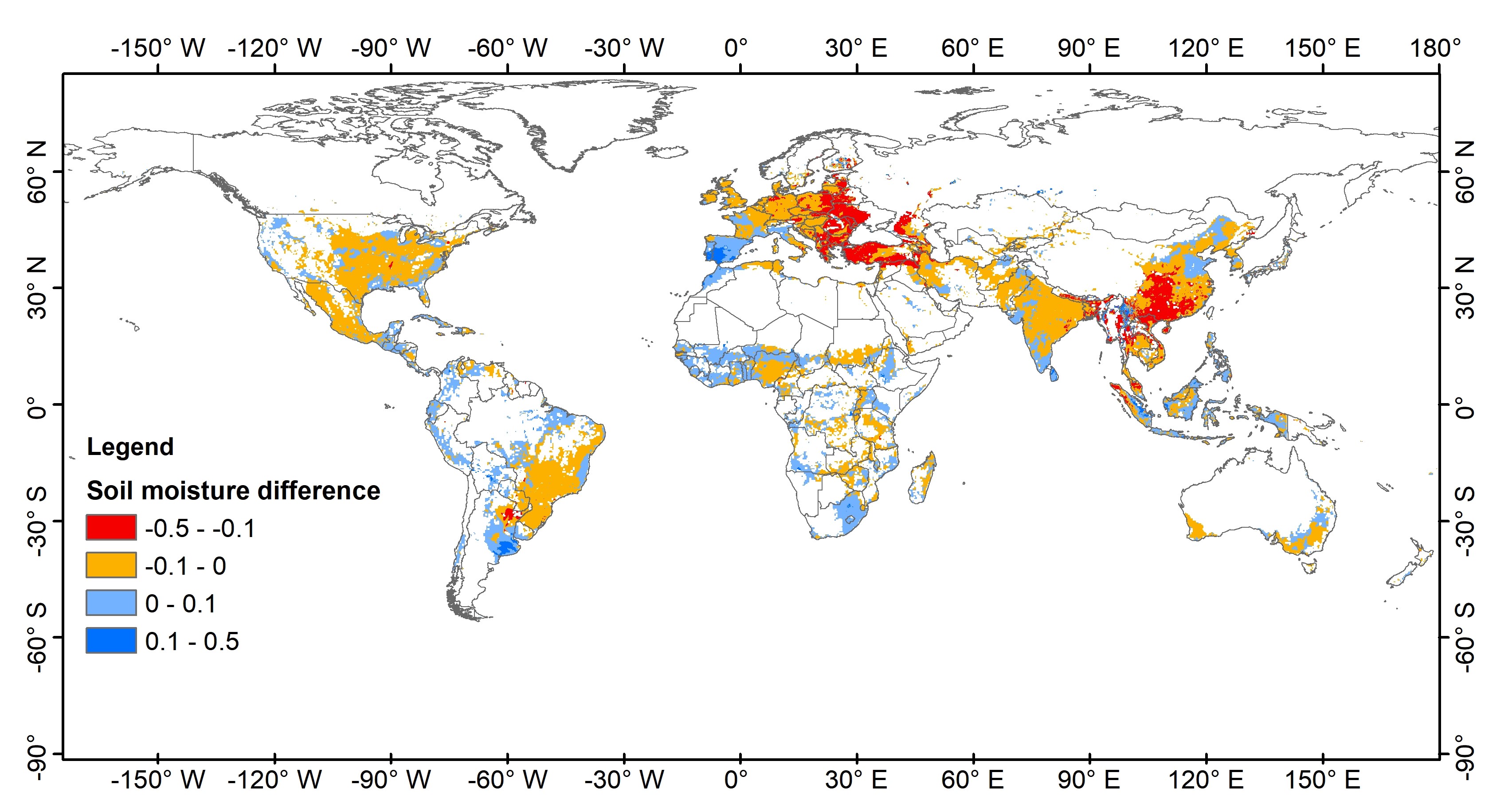
Figure 1: Global temperature anomalies and agricultural soil moisture anomalies for March 2025, showing NCEP temperature anomalies (°C) and SMAP satellite microwave remote sensing surface soil moisture anomalies (m³/m³)
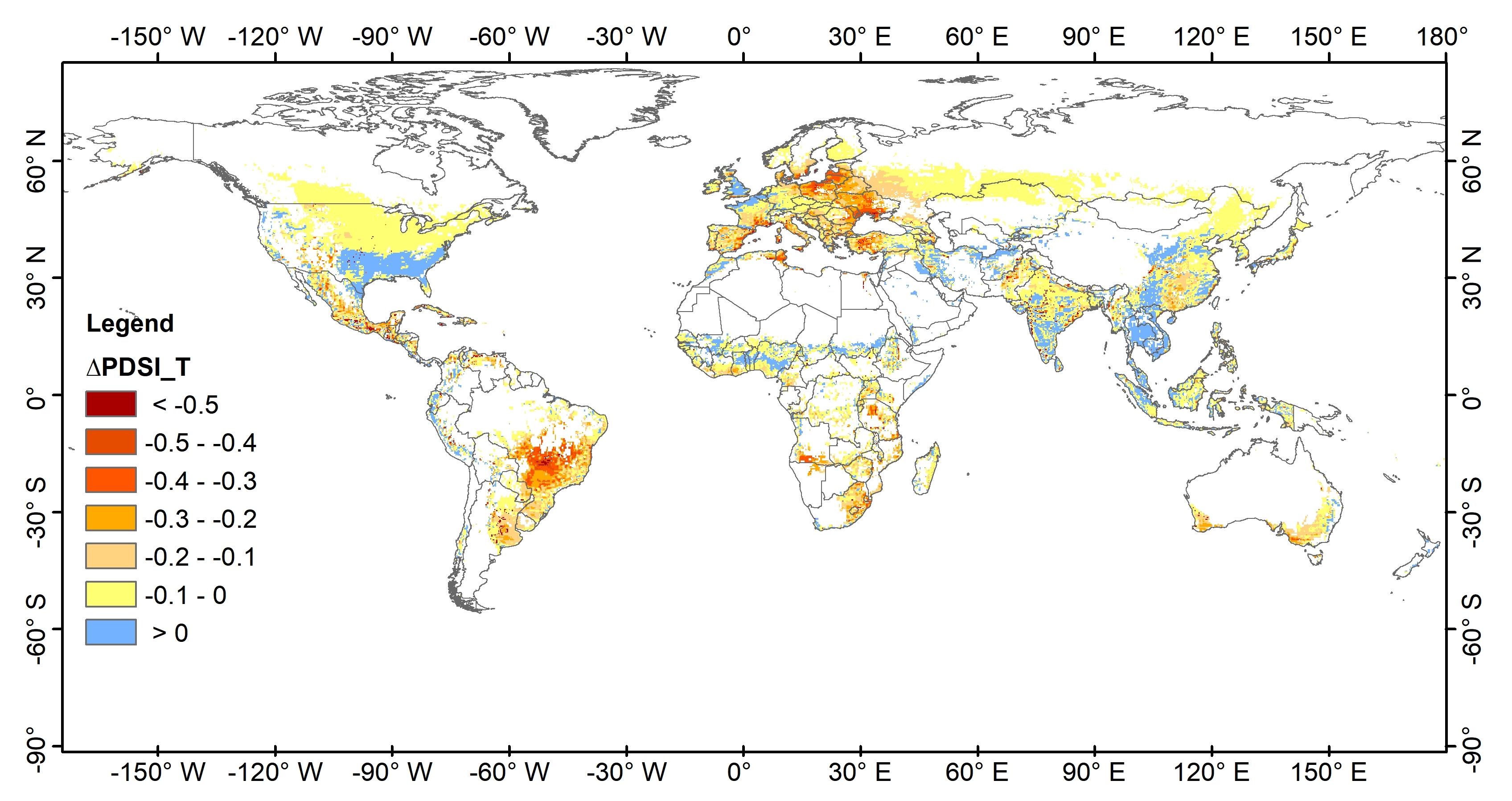
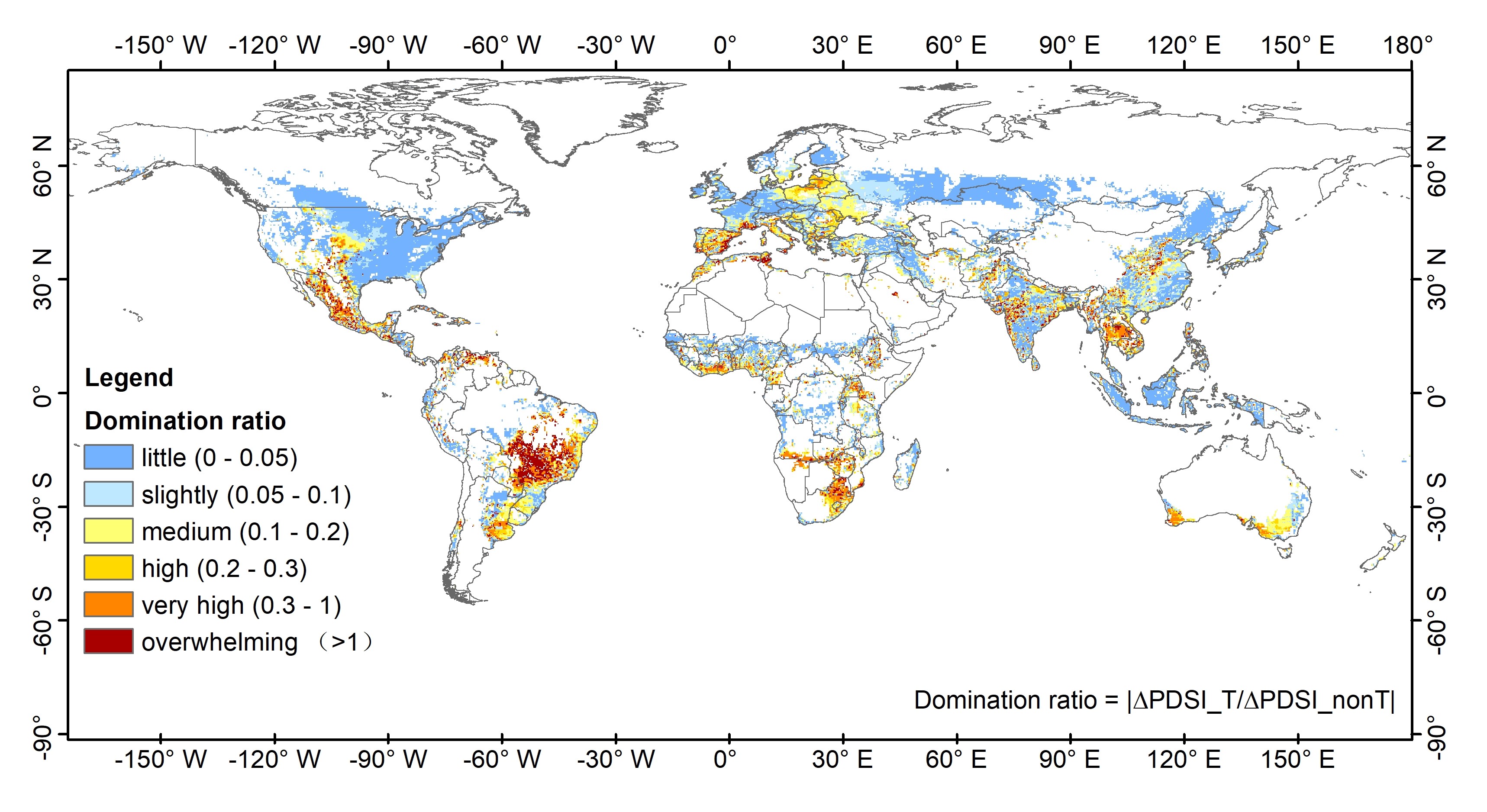
Figure 2: Impact of temperature anomalies on the Palmer Drought Index (PDSI) from January-March 2025 (negative values indicate increased drought) and regional contribution of temperature anomalies to the Palmer Meteorological Drought Index (PDSI)]
Compound Effects of Extreme Low-Temperature Events Intensify Risk Pressures on Regional Crop Growth
Against the warming of global temperatures in cropland, the compound effects of extreme low-temperature events present more complex uncertainty challenges for crop growth. In mid-March, persistent high temperatures in central-eastern India and Central America posed greater heat risks to winter wheat growth with 5-year or longer return period, while high temperatures in West Africa created similar risks for corn. Following extreme low-temperature events in the Northern Hemisphere, significant cooling occurred in the western United States, western Europe, North China, and the middle and lower Yangtze River regions. Crop growth risks were particularly evident in the western mountain regions of the United States and central-western China. Winter wheat in the Yellow River basin and southwestern regions, as well as corn and rice in southwestern regions, faced low-temperature threats with 5-year or longer return period. Even in Southeast Asia, specifically Malaysia, corn and rice growth faced low-temperature risks due to this event.
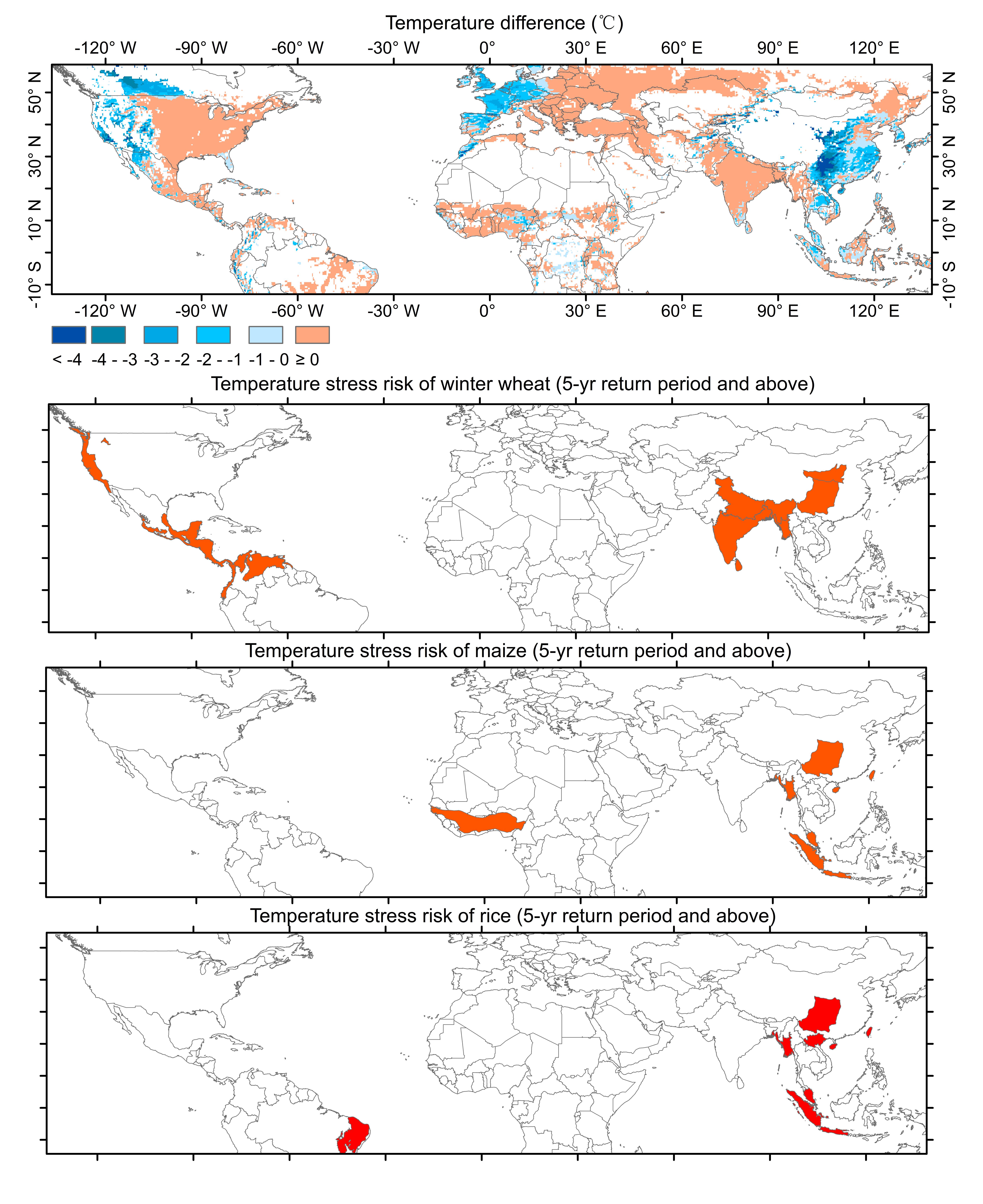
Figure 3: Impact of mid-March 2025 temperature anomaly events on temperature risks for winter wheat, corn, and rice in the Northern Hemisphere