
 English
 中文

Bulletin
CropWatch bulletinMenu
Authors: qinxl,lirui | Edit: lirui
1. Global Overall Situation
The Global Crop Production Situation Index (CroPI) from March to May 2025 was 1.05, remaining above the baseline, indicating that the global crop production conditions were generally slightly better than the normal level. From the time-series data from 2020 to 2025, it can be observed that the global CroPI showed a trend of fluctuating decline, dropping from 1.10 in 2020 to 1.05 in 2025. However, the decline was relatively gentle, and it always stayed above the baseline.
The regional differentiation of CroPI is obvious. The CroPI in the Northern Hemisphere was 1.03, which significantly decreased from 1.12 in 2024 but remained above the baseline; the CroPI in the Southern Hemisphere was 1.10, showing a clear rebound from 1.01 in 2024; the CroPI in tropical regions was 1.10, recovering above the baseline from 0.99 in 2024. This pattern of "stronger south and weaker north" is consistent with the previous monitoring period (January-March), but the overall level has increased (Figure 1).

Figure 1. Global CroPI Time Series Trends by Region, 2020-2025
During this monitoring period, the global climate featured significant dry and hot stress. Approximately 70% of agricultural areas experienced temperatures 1.5℃ above normal, while global precipitation distribution was extremely uneven. Widespread agricultural regions faced precipitation deficits, with about 52% of areas receiving 10% less than the long-term average and roughly 28% receiving 30% less. Although global photosynthetically active radiation (PAR) generally trended higher, with most regions showing a 5%-10% increase, potential biomass exhibited significant regional differentiation due to water constraints. Arid areas were unable to fully utilize the increased light resources.
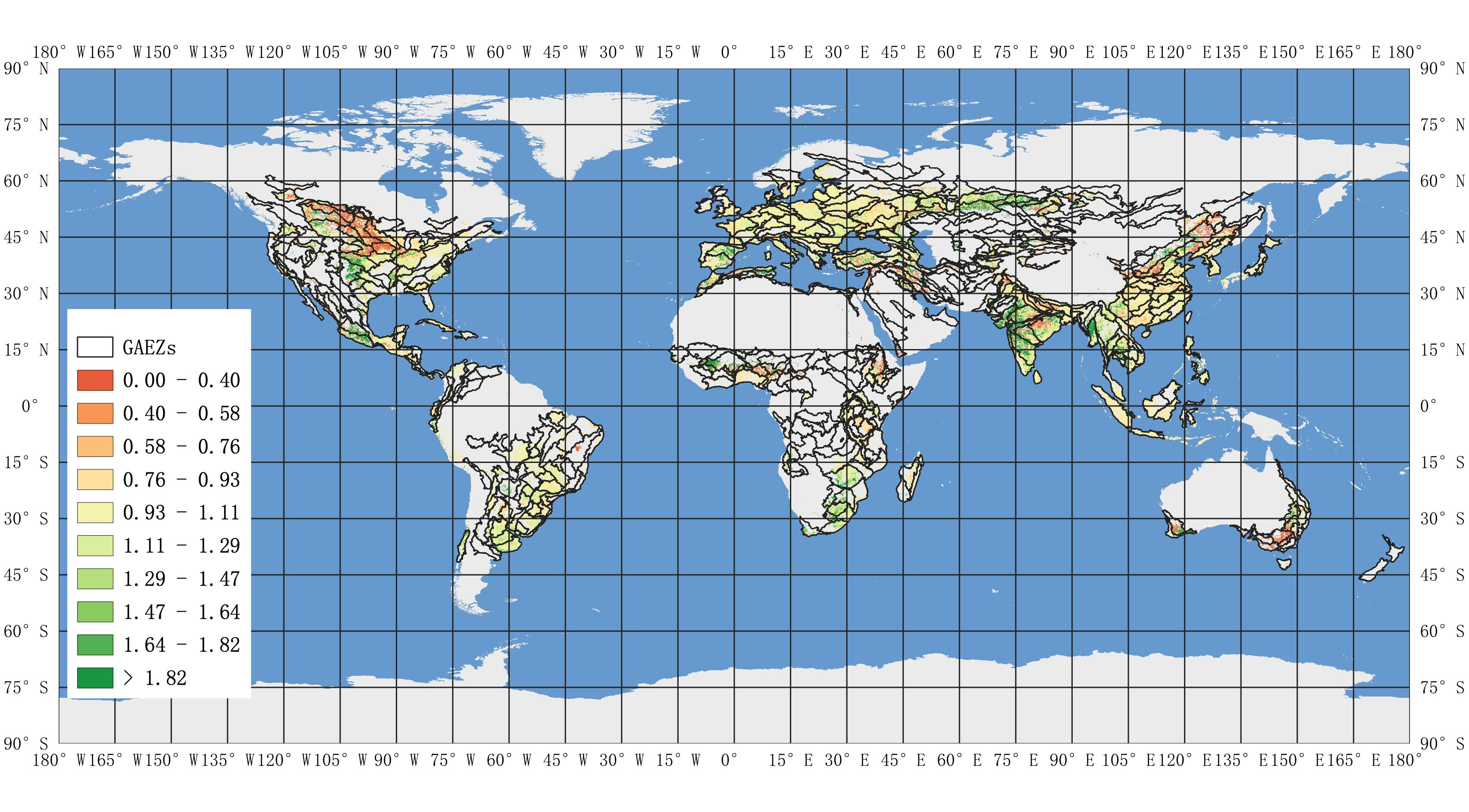
Figure 2. Global CroPI Distribution Map for March-May 2025
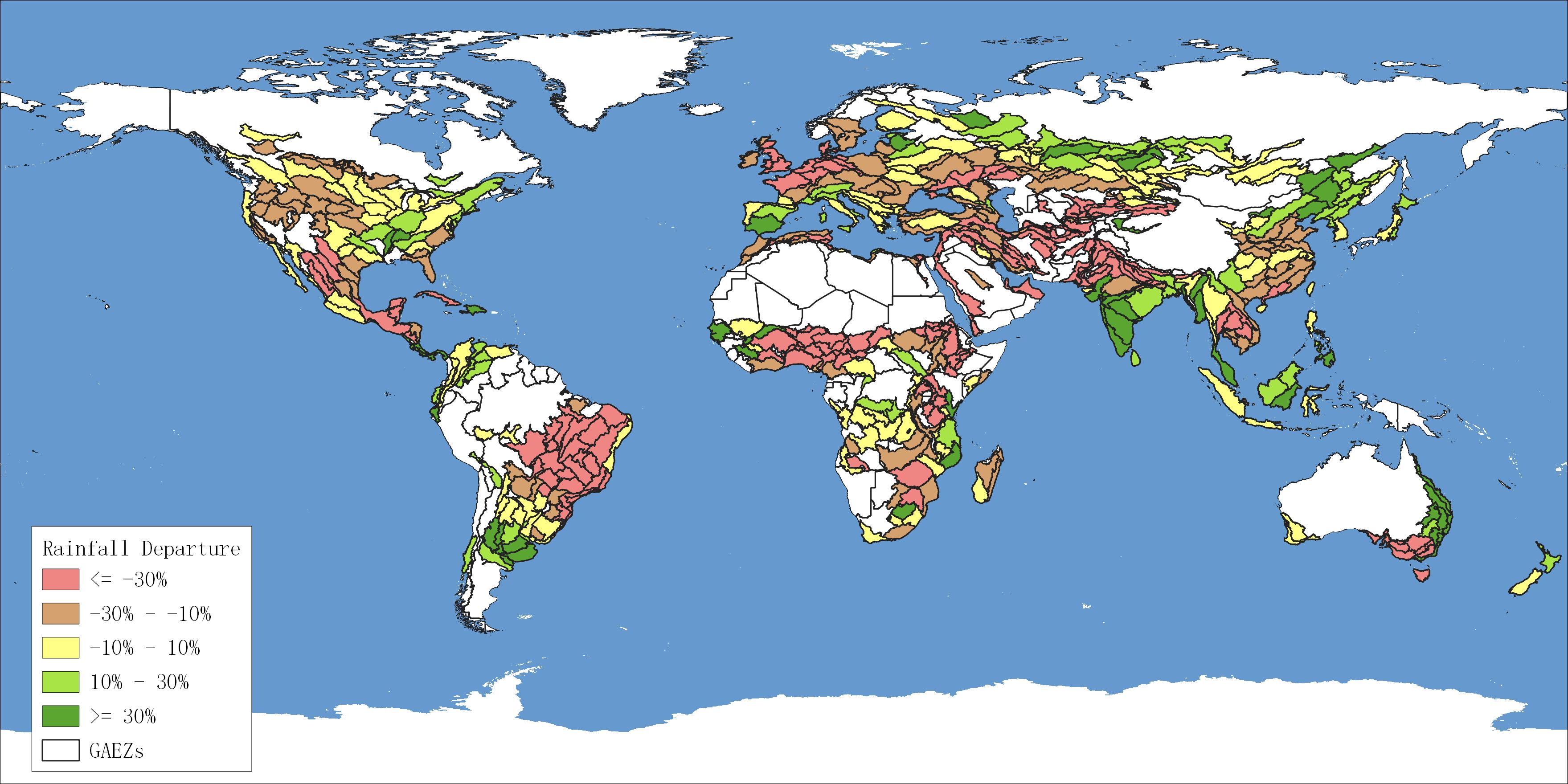
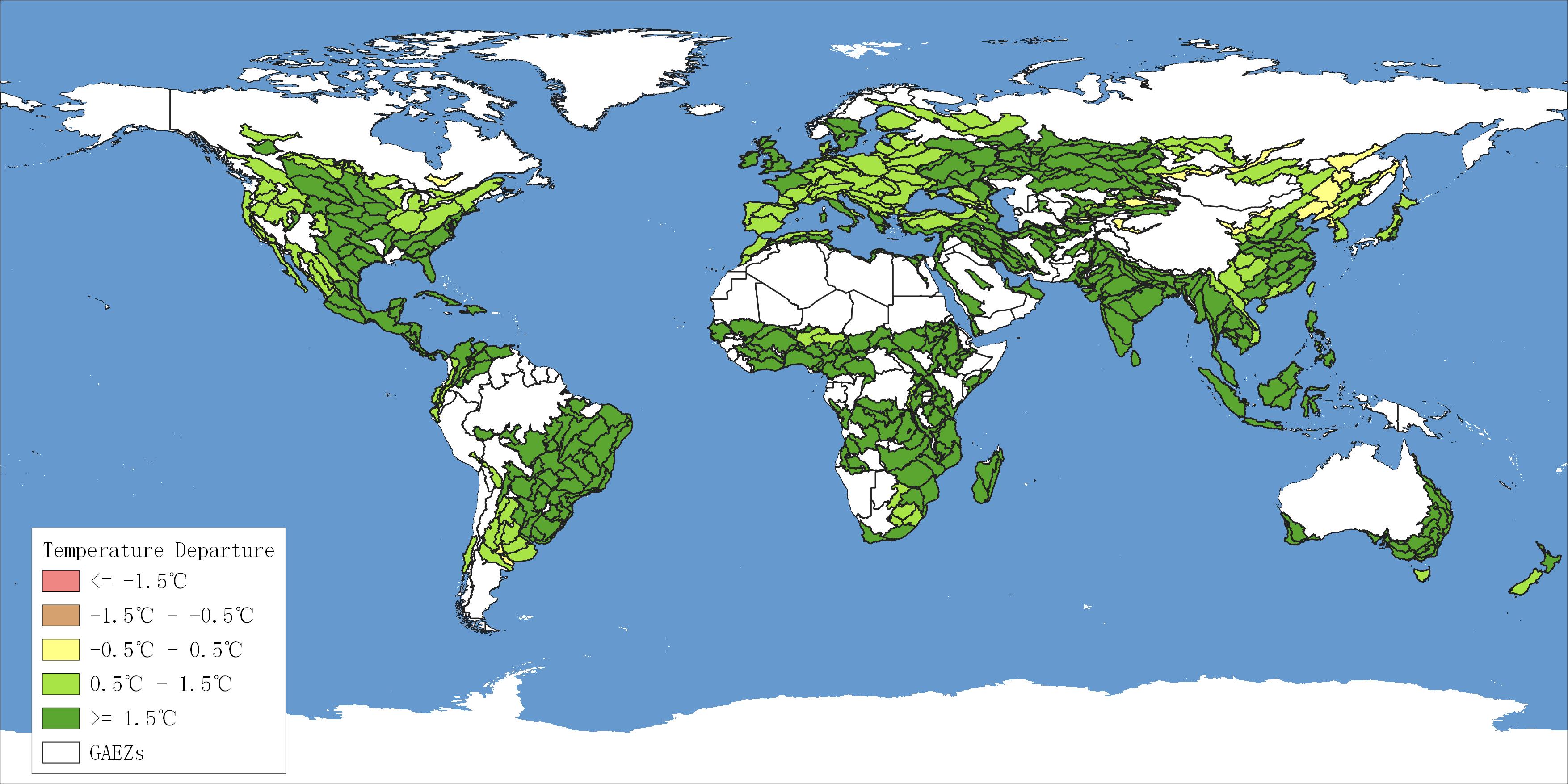


Figure 3. Global Agrometeorological Indicators Compared to 15-year Average for March-May 2025 (Cumulative Precipitation, Average Temperature, Photosynthetically Active Radiation, Potential Biomass)
U.S. Great Plains: Severe Conditions in the North, Relatively Stable in the South
The Great Plains region of the United States showed obvious north-south differentiation. The CroPI value in the northern region was low (0.00-0.58), reflecting a severe crop production situation, while the CroPI value in the southern region mostly remained between 0.76 and 1.11, basically at a normal level. This distribution is closely related to the meteorological conditions in the region. The Great Plains generally had high temperatures (exceeding 1.5°C). The northern region had severe precipitation deficits (-30% to -10%), while the southern region had relatively better precipitation conditions. Although the photosynthetically active radiation in the entire region increased by 5%-10%, and the light increase in some parts of the southern United States even reached more than 10%, in the water-deficient northern region, the enhanced light could not be converted into biomass improvement, but instead aggravated the dry and hot stress.
South America: Stable Performance in Argentina, Worsening Drought in Eastern Brazil
In major agricultural areas of South America, CroPI values generally range from 0.93 to 1.11, with local areas in Argentina and southern Brazil reaching relatively high levels of 1.11 to 1.29. However, eastern and central Brazil face severe challenges: major agricultural regions have experienced severe precipitation deficits (≤-30%), accompanied by significantly higher temperatures (exceeding 1.5°C). Although photosynthetically active radiation in the region increased by 5%-10%, water scarcity became a limiting factor, leading to a significant reduction in potential biomass (≤-10%). In southern Argentina, precipitation increased by 10%-30%, with more balanced hydrothermal conditions, demonstrating favorable agricultural production potential and a biomass growth trend (5%-10%).
China: North-South Contrast, Promising North and Concerning South
China's regions showed significant north-south differences: some areas in North China and Northeast China had favorable conditions with high CroPI values, and potential biomass increased by 5%-10%, with even some regions showing a significant increase (≥10%). This was closely related to the significant increase in precipitation (≥30%) and moderate light and heat conditions in these regions. In contrast, affected by high temperatures and uneven precipitation, potential biomass in parts of eastern and southern China was suppressed. In particular, the CroPI in the middle and lower reaches of the Yangtze River was relatively low, and agricultural production faced challenges.
South Asia: Significant Regional Differentiation, Concerning Outlook for the North
India showed obvious north-south differentiation. The CroPI values in the northern and northwestern regions were low, and potential biomass significantly decreased (≤-10%), mainly affected by severe precipitation deficits and high temperatures. In contrast, the hydrothermal conditions in central and southern India were more coordinated, with obvious biomass increase and better agricultural production prospects. Regions such as Pakistan and Afghanistan faced severe combined dry and hot stress, with low CroPI values and a substantial reduction in potential biomass, which is expected to significantly impact agricultural output.
Southeast Asia: Significant Internal Regional Differences, Challenges in Indochina Peninsula
Southeast Asia exhibited distinct regional differentiation. Biomass in the Indochinese Peninsula (including Vietnam, Cambodia, Thailand, and Laos) significantly decreased (≤-10%), primarily under the dual stress of high temperatures (generally exceeding 1.5°C) and insufficient precipitation, threatening dry-season rice yields. In contrast, equatorial regions (such as Indonesia, Malaysia, and southern Philippines) maintained a basic normal level (-5% to 5%), with relatively balanced hydrothermal conditions, causing minimal impact on agricultural production. Although the overall photosynthetically active radiation in Southeast Asia changed little, regional differences in moisture conditions became the key factor determining crop growth status.
Africa: Persistent Drought, Some Alleviation in Local Areas
Sub-Saharan Africa's CroPI fluctuated between 0.76 and 1.29, showing obvious patchy distribution. Drought remained the main challenge, especially in the equatorial regions with severe precipitation shortages (≤-30%), leading to a significant reduction in potential biomass (≤-10%). Some areas in East Africa and Southern Africa performed better, with increased precipitation (10%-30%) and a biomass growth trend (5%-10%), indicating signs of drought relief. The situation in the vicinity of the Gulf of Guinea was relatively weak and required continuous attention. Overall, photosynthetically active radiation in Africa increased by 5%-10%, with significant increases (≥10%) in parts of East Africa. However, due to insufficient irrigation infrastructure, rainfall conditions remained the key factor determining crop growth.
Australia: Worsening Drought in the Southeast
Australia showed an internal differentiation pattern: the coastal areas in the east and northeast had favorable CroPI conditions, but the southeastern coastal areas suffered severe precipitation deficits (≤-30%), leading to a significant reduction in potential biomass (≤-10%) and a worrisome situation. The western and northeastern coastal areas, however, benefited from increased precipitation (10%-30%) and suitable light-heat conditions, with biomass increasing by 5%-10% or significantly (≥10%), presenting an optimistic outlook for agricultural production.
In summary, the global crop production situation from March to May 2025 generally remained above the baseline, but regional differentiation was pronounced. Drought and high temperatures were the primary constraints on global agricultural production. Against the backdrop of global climate change, frequent extreme dry-heat events have posed challenges to food security. Strengthening targeted agricultural management strategies, enhancing trade transparency, and other measures are key to balancing regional disparities in global food supply.
2. Global Drought Situation and Outlook
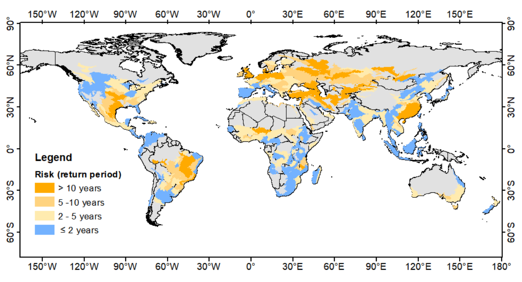
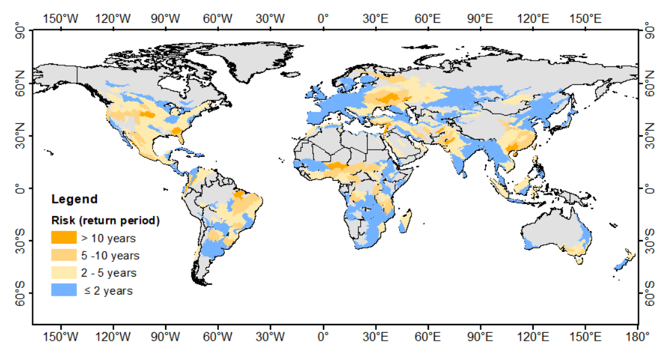
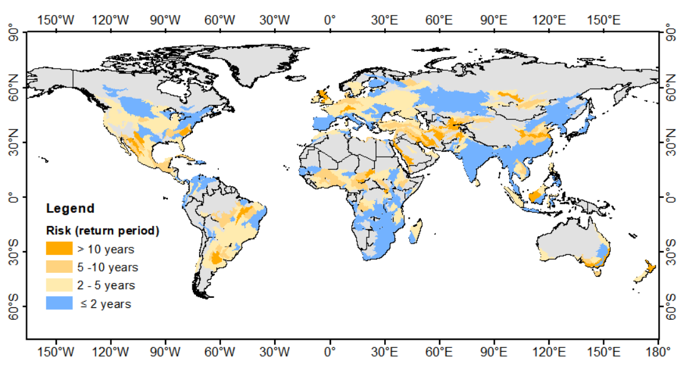
Based on crop water stress risk assessment results using remote sensing evapotranspiration data, global drought conditions showed overall improvement from March to May 2025, though local drought conditions persisted. Among 491 global agroecological zones, 37.7% experienced drought events with return periods of 5 years or longer in mid-March, decreasing to 18.3% and 21.1% in April and May. In March 2025, droughts with return periods of 10 years or more occurred in the neiborhoods of black sea, south-central United States, South China and the middle and lower reaches of the Yangtze River, and parts of eastern Brazil. In April, 10-year drought events occurred locally in Guangxi in South China, western India, eastern Ukraine, and western Africa including Niger and Nigeria. In May, drought conditions in these areas eased somewhat, however, 10-year drought events occurred in China's central-eastern Huai River basin, Central Asia, Pakistan, western Saudi Arabia, northern United Kingdom, and southeastern coastal Australia, while 5-year drought events occurred in central Laos and other parts of the Indochina Peninsula.
2025 mid-March (2025/03/13 - 2025/03/20)
2025 mid-April (2025/04/15 - 2025/04/22)
2025 mid-May (2025/05/17 - 2025/05/24)
Figure 4. Crop Water Stress Risk Assessment for Global Agroecological Zones, March-May 2025
Since March 2025, the high-temperature trend in global rainfed agricultural areas has moderated, with the overall Palmer Drought Severity Index (PDSI) showing a gradual slow increasing trend, and drought conditions gradually improving.
The latest NOAA ENSO report indicates that ENSO-neutral conditions continue in the tropical Pacific and will persist throughout the Northern Hemisphere summer, increasing the difficulty of seasonal predictions for global rainfall, temperature, and other climate patterns. TIGGE ensemble 10-days forecasts from June 20, 2025, and NCEP CFSV2 E3 precipitation and temperature prediction products for July and August indicate that temperatures in rainfed agricultural areas are trending toward neutral conditions. During July-August, influenced by the Northern Hemisphere rainy season, precipitation fluctuations will be relatively limited, with a more stable pattern. Overall climate conditions are expected to improve in the future, with the PDSI in global rainfed agricultural areas likely to moderate from moderate drought to mild drought after June. Compared to March-May, drought conditions in Eastern Europe, northern United States, and southern Brazil may improve in June-August, however, drought in parts of Central and Western Europe, India, and the Indochina Peninsula may worsen, requiring timely drought management.
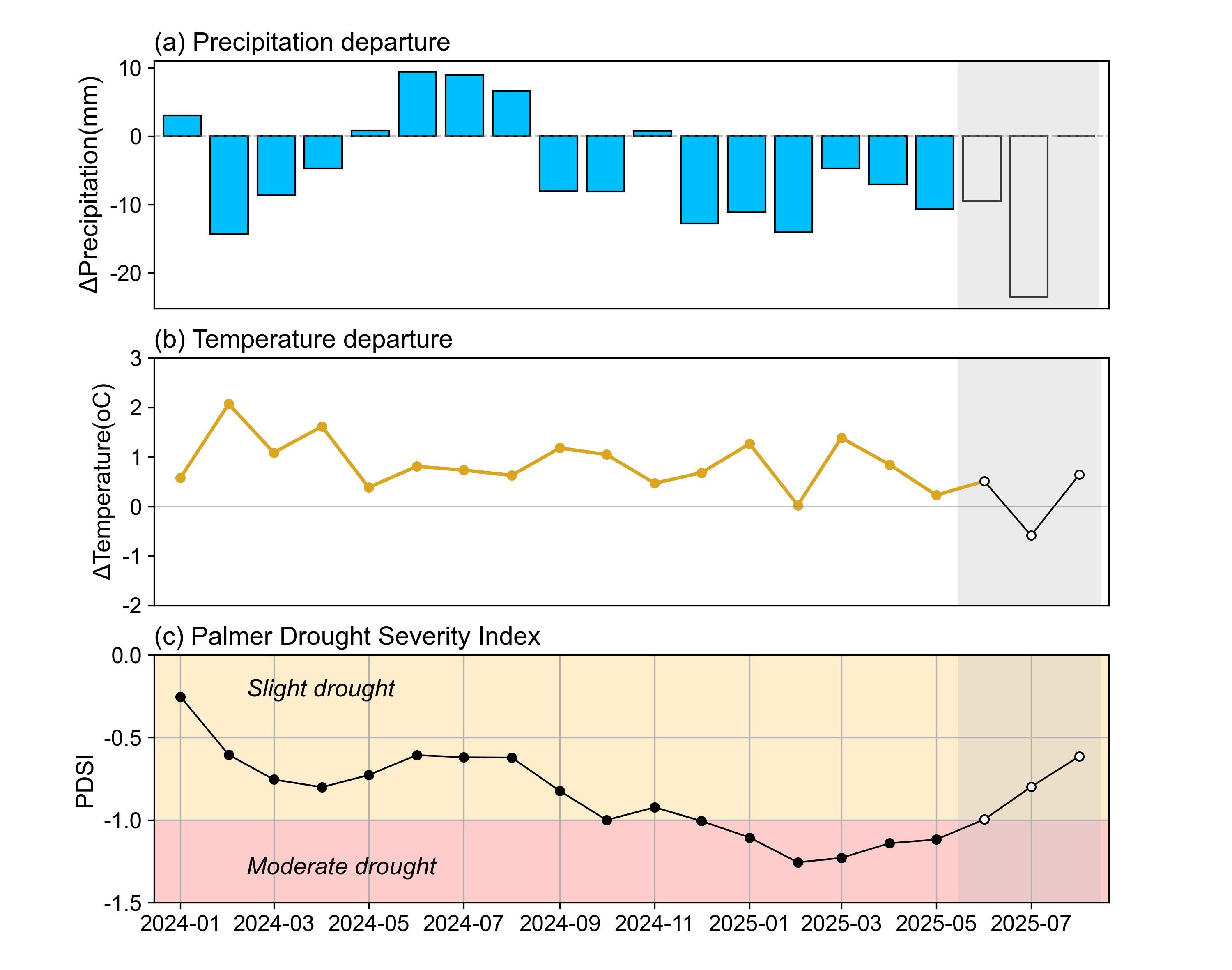
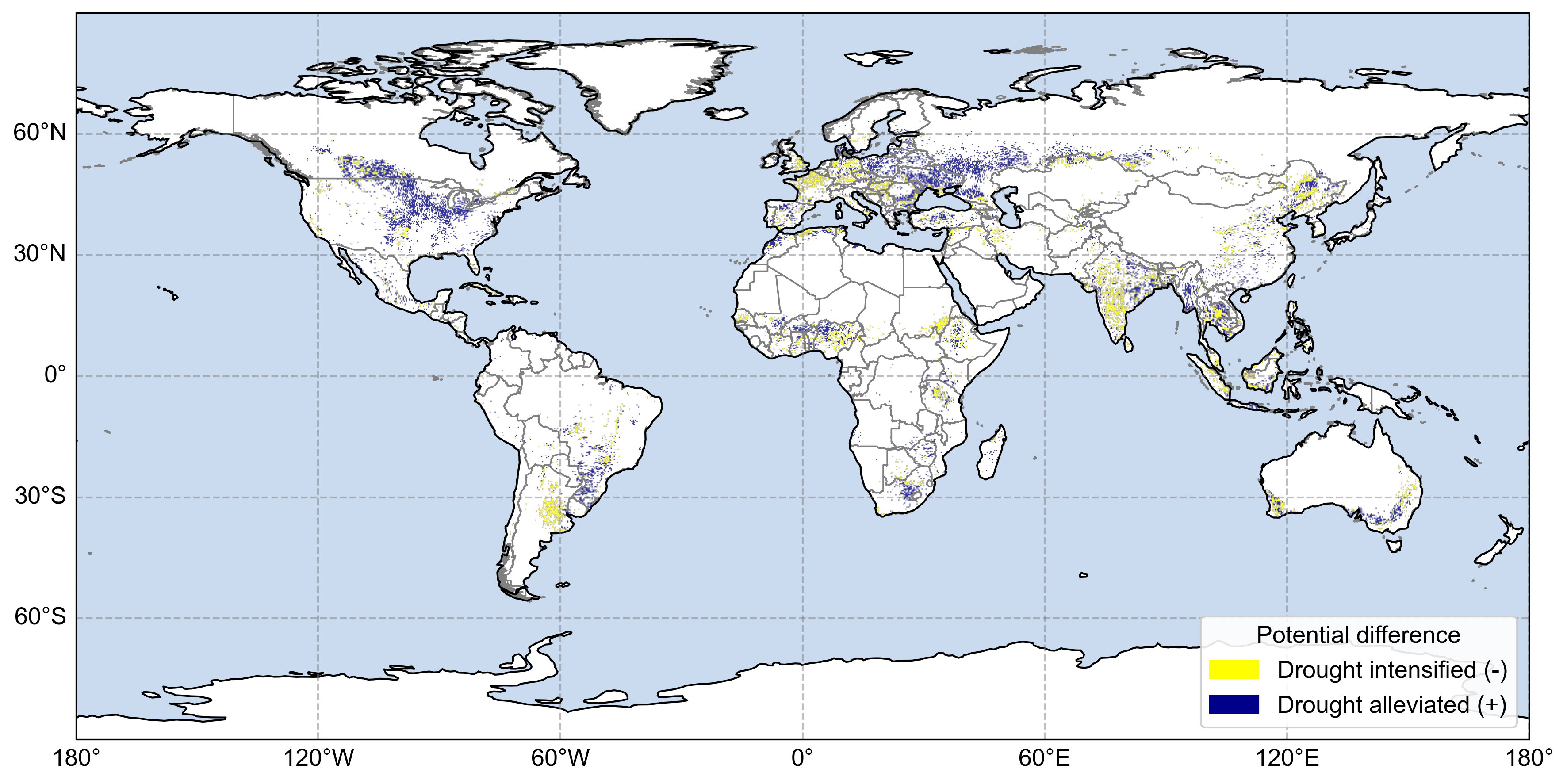
Figure 5. Monthly PDSI Changes in Global Rainfed Agricultural Areas (left) and Predicted PDSI Difference Between June-August 2025 and March-May 2025 in Rainfed Agricultural Areas (right)
3. Outlook
Global crop production conditions for March-May 2025 are generally slightly better than normal levels, but with significant regional differentiation. The Northern Hemisphere CroPI has declined significantly compared to 2024, while the Southern Hemisphere CroPI has notably improved from 2024. This monitoring period (March-May) continues to maintain a "strong south, weak north" pattern, with overall levels showing improvement. As sustained high temperatures gradually ease, the impact of meteorological conditions such as precipitation distribution on crop growth becomes more direct. Potential biomass is more than 10% below normal in central and eastern Brazil, the Indochina Peninsula, northern and northwestern India, West Africa, southeastern Australia, and Central and Western Europe, while relatively suitable water and heat conditions have led to significant biomass improvements in North and Northeast China, Central and East Africa, western and northeastern Australia, and Eastern Europe.
From a seasonal perspective, the current Northern Hemisphere CroPI remains above the baseline, with positive prospects for global crop production. During this monitoring period, winter wheat and late rice successively matured and were harvested, with remote sensing data showing increases in both global winter wheat and rice total production. Although winter wheat yields declined due to drought in Ukraine, Romania, India, and other places, and rice yields also declined in Bangladesh, The expansion of global wheat and rice planting areas has effectively ensured the stability of global grain (staple food) supply.
Key areas to monitor in the future include:
Precipitation conditions in water-constrained regions, especially in areas dominated by rainfed agriculture where drought is expected to worsen, such as parts of Western and Central Europe, India, and the Indochinese Peninsula.
Crop sowing progress and growth conditions during critical periods in major agricultural regions of the Northern Hemisphere.
Global water resource allocation, particularly reservoir storage and irrigation security capabilities in major irrigated agricultural areas.
Evolution trends of the global precipitation pattern under ENSO-neutral conditions and its potential impacts on agricultural production.
Overall, the main challenge for global agricultural production in 2025 is drought response. It is necessary to strengthen monitoring and early warning, optimize resource allocation, and enhance the climate adaptability and risk resistance of agricultural systems.