
 English
 中文

Bulletin
CropWatch bulletinMenu
Authors: Miao,limengxiao,lijunbin | Edit: lirui
This report utilizes multi-source remote sensing data from the European Space Agency's Sentinel 1/2 satellites and the U.S. Landsat 8/9 satellites, along with national 10-meter resolution farmland data and massive ground samples collected through the GVG agricultural information collection smartphone application. Artificial intelligence methods such as random forest and transfer learning were employed to monitor the 2025 national summer grain and winter wheat planting areas. Combined with the latest agricultural meteorological information and crop yield remote sensing monitoring models, the analysis predicts this year's summer grain and winter wheat production, with the following results.
1. Summer grain production forecast
In 2025, the total summer grain output in China was 145.34 million tons, an increase of 370,000 tons or 0.3% year on year. The growth rate significantly slowed down compared with the 2.1% year-on-year increase in 2024, and the increase range was significantly narrower than the output growth rate predicted at the end of April. The summer grain output of major producing provinces reached 131.22 million tons, an increase of 500,000 tons (0.4% increase) year on year; the output of non-major producing provinces decreased by 0.9% (a reduction of 130,000 tons). The national summer grain yield per unit area decreased by 1.9% year on year, but the planting area increased by 2.2%, supporting the total output to remain stable.
Table 1 2025 Summer Grain Yield and Production Forecast for Major Producing Provinces
2024 | 2025 | |||||
Province | Production (10,000 ton) | ΔArea (%) | ΔYield (%) | Production (10,000 ton) | Production change (10,000 ton) | ΔProduction (%) |
Hebei | 1301 | 5.9 | 0.5 | 1385 | 84 | 6.4 |
Shanxi | 237 | -1.7 | 1.8 | 238 | 0 | 0.1 |
Jiangsu | 1428 | -1.6 | -2.7 | 1367 | -60 | -4.2 |
Anhui | 1484 | 6 | -3.9 | 1512 | 28 | 1.9 |
Shandong | 2808 | 4.1 | -2.9 | 2838 | 30 | 1.1 |
Henan | 3347 | 0.8 | -0.9 | 3343 | -4 | -0.1 |
Hubei | 604 | 0.4 | -3.2 | 587 | -17 | -2.8 |
Shaanxi | 386 | 5.2 | -1.6 | 400 | 14 | 3.5 |
Gansu | 332 | -0.1 | -0.8 | 329 | -3 | -0.9 |
Xinjiang | 573 | -3 | -0.8 | 552 | -22 | -3.8 |
Subtotal | 12500 | 13122 | 50 | 0.4 | ||
Others | 1997 | 1412 | -13 | -0.9 | ||
Nation* | 14497 | 2.2 | -1.9 | 14534 | 37 | 0.3 |
From April to May, the Huang-Huai-Hai Plain and Loess Plateau regions generally suffered from persistent drought. In mid-May, parts of Henan and Shandong were hit by dry hot winds, leading to suppressed summer grain production in provinces such as Shandong, Anhui, Henan, Jiangsu, Hubei, and Shaanxi. The summer grain yield per unit area in these provinces all decreased compared with the April forecast. Hebei mainly benefited from a 5.9% expansion in summer grain planting area, with total output increasing by 840,000 tons (+6.4%). The growth in planting area in Anhui, Shandong, and Shaanxi offset the adverse impact of yield decline, and the summer grain output of the three provinces increased year on year.
2. Winter Wheat Production Forecast
In 2025, the national winter wheat planting area is expected to be 24,303 thousand hectares, a year-on-year increase of 2.2% (Table 2.2, Figure 2.1). The average yield per unit area is projected to be 5,422 kg/ha, a year-on-year decrease of 1.8%, with a total output of 131.75 million tons, a slight year-on-year increase of 0.3%.
Among them, the winter wheat planting area in 11 major producing provinces including Henan and Shandong reached 21,518 thousand hectares, an increase of 2.3% year on year, accounting for 88.5% of the national total. The Huang-Huai-Hai region (Hebei, Jiangsu, Anhui, Shandong, Henan) serves as the core production area for winter wheat, with its planting area accounting for approximately 72%. However, significant disparities exist within the region:
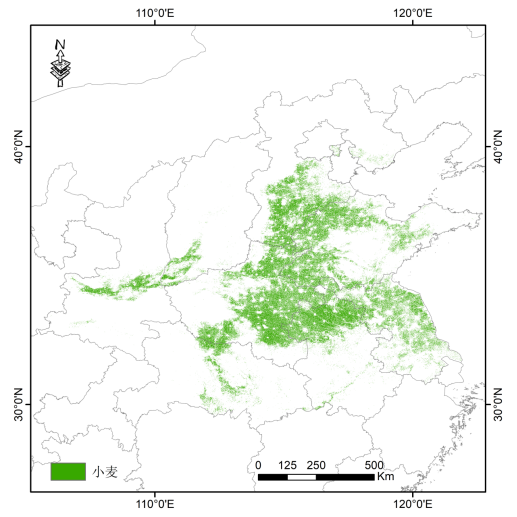
Figure 1 Spatial Distribution of Winter Wheat in North China and Huang-Huai-Hai Wheat Region in 2025
Table 1 2025 Winter Wheat Planting Area, Yield, and Production Forecast for Major Producing Provinces
Planting areas | Yield | Production | |||||
| Province | Areas | ΔAreas | Yield | ΔYield | Production | Changes | ΔProduction |
(1000 ha) | (%) | (KG/ha) | (%) | (10,000 ton) | (10,000 ton) | (%) | |
Hebei | 2258 | 5.9 | 5956 | 0.5 | 1345 | 81 | 6.4 |
Shanxi | 422 | -1.7 | 5571 | 1.8 | 235 | 0 | 0.1 |
Jiangsu | 2679 | -2.7 | 4995 | -2.7 | 1338 | -75 | -5.3 |
Anhui | 3134 | 6.7 | 4656 | -4 | 1459 | 35 | 2.5 |
Shandong | 4412 | 4.1 | 6356 | -2.9 | 2804 | 30 | 1.1 |
Henan | 5472 | 0.8 | 6083 | -0.9 | 3328 | -4 | -0.1 |
Hubei | 1139 | 0.4 | 3862 | -3.2 | 440 | -13 | -2.8 |
Shaanxi | 818 | 5.2 | 3708 | -1.6 | 303 | 10 | 3.5 |
Gansu | 533 | -0.1 | 4219 | -0.7 | 225 | -2 | -0.8 |
Xinjiang | 652 | -3 | 5682 | -0.2 | 371 | -12 | -3.2 |
Subtotal | 21519 | 2.3 | 5506 | -1.8 | 11848 | 52 | 0.4 |
Others | 2779 | 1.5 | 4773 | -1.9 | 1326 | -6 | -0.5 |
Nation | 24298 | 2.2 | 5422 | -1.8 | 13175 | 45 | 0.3 |
In Hebei Province, both the winter wheat planting area and yield per unit area increased year on year, with the total winter wheat output increasing by 810,000 tons, a growth rate of 6.4%, making it the province with the largest increase in output and growth rate among major producing provinces. Shandong, Anhui, Hebei, Shaanxi and other regions were affected by severe drought, leading to a general decline in winter wheat yield per unit area. However, the decline in yield was offset by the increase in planting area. The output of the four provinces increased by 300,000 tons (1.1% increase), 350,000 tons (2.5% increase), 810,000 tons (6.4% increase) and 100,000 tons (3.5% increase) year on year respectively. The yield per unit area of winter wheat in Shanxi Province increased by 1.8% year on year, but the increase in yield was equivalent to the reduction in planting area. The yield per unit area of winter wheat in Henan, Hubei and Jiangsu provinces all decreased year on year. Due to the impact of reduced planting area, the total output of all three provinces declined. In this year, Xinjiang did not continue the trend of continuous expansion of planting area and increasing output in recent years.
In 2025, winter wheat production showed the characteristics of "increased planting area, decreased yield per unit area, and stable total output". The stability of major producing provinces was highlighted, but the continuous drought in major producing areas led to a lack of scientific data support for disaster prevention and mitigation in most planting areas. The decline in yield per unit area in multiple major winter wheat producing provinces needs to be concerned.
3. Crop Planting Progress Monitoring in Northeast China
CropWatch monitoring indicates that the total cultivated area in Northeast China is 29.686 million hectares. As of June 15, 2025, the actual planted area is 18.358 million hectares, with a planting ratio of 61.84% (Figure 2.2), which is significantly higher than the 15-year average. This reflects an improvement in farmland utilization and an expansion of the planted area.
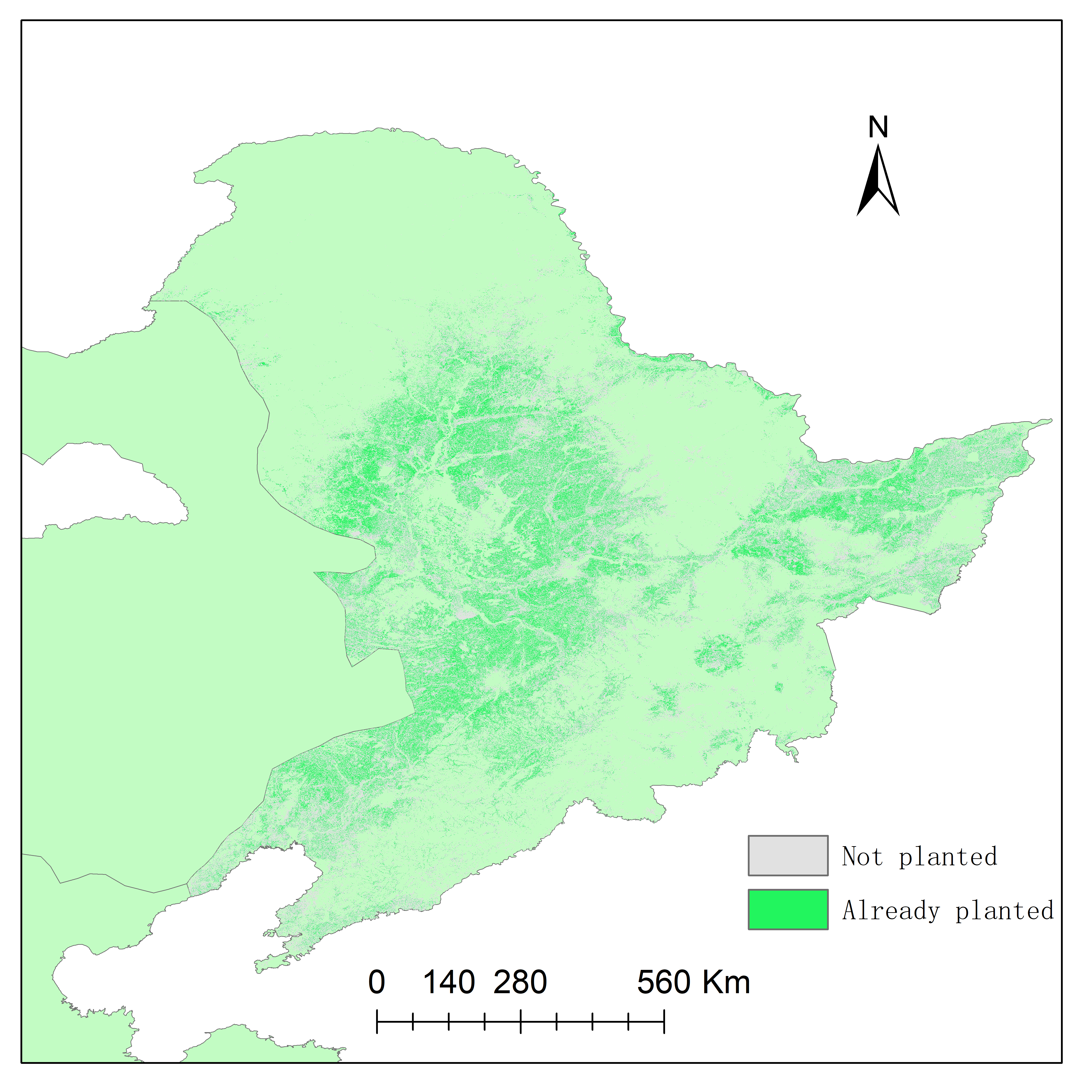
Figure 2 Spatial Distribution of Crop Planting Progress in Northeast China