
 English
 中文

Bulletin
CropWatch bulletinMenu
Authors: Jingkangjian | Edit: lirui
This monitoring period primarily focuses on France's northern-western mixed cropping regions, encompassing the Northern barley zone, the Mixed maize_barley and rapeseed zone from the Centre to the Atlantic Ocean, and the Maize_barley and livestock zone along the English Channel. These regions represent France's major cereal production areas.From March to May 2025, cereal crops in the region were in the grain-filling to maturity stages and are expected to be harvested in June.
Remote sensing monitoring indicates that the total sown area of cereals reached 4,587.3 thousand hectares, representing a 2.7% increase compared to 2024 (4,465.0 thousand hectares). Among them, wheat accounted for approximately 3,776.3 thousand hectares and barley about 810.0 thousand hectares. The average yield is projected to decline by 2.94% year-on-year, reaching 7.4 tons per hectare, with total production estimated at 33.92 million tons—down 0.28% from the previous year.
The main factors behind this decline include persistent rainfall in the northwest since spring and localized heatwaves during the monitoring period. In northern wheat and barley-growing areas, cumulative precipitation was 50% below the 15-year average, while temperatures were 1.8°C above normal. These conditions imposed stress on crops in the grain-filling stage, although the high temperatures also accelerated the maturation and harvesting of varieties nearing ripeness. Overall, the impact of adverse weather conditions was limited.
In summary, although the sown area of cereals in France increased, unfavorable climatic conditions in major production areas placed downward pressure on yields. As a result, total output is expected to be slightly lower than in previous years.
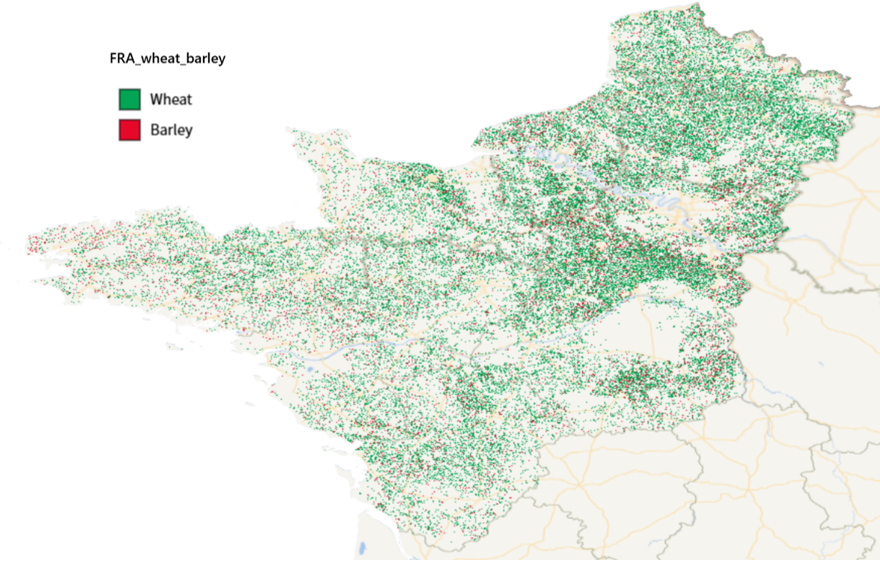
Figure 1. Spatial pattern of Barley and Wheat in Major Production Areas of Franch
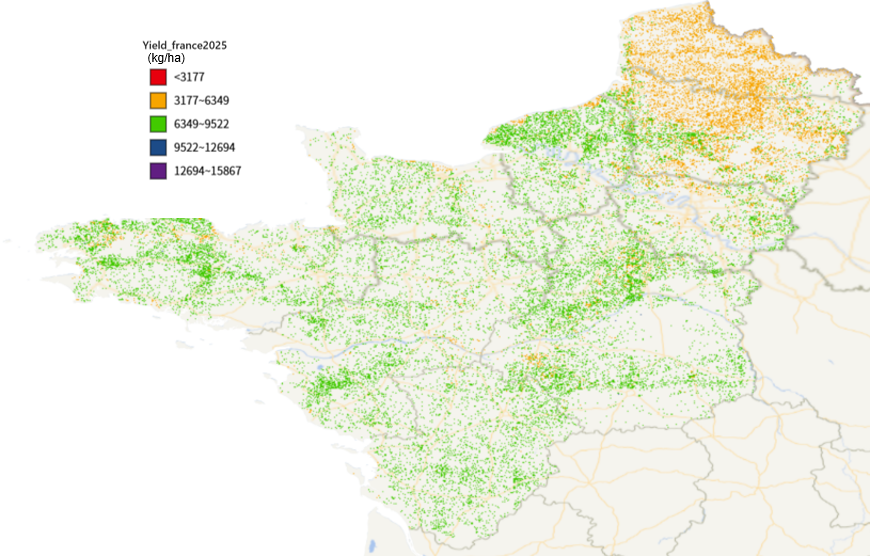
Figure 2. Yield Distribution in Major Production Areas