
 English
 中文

Bulletin
CropWatch bulletinMenu
Authors: qinxl | Edit: lirui
Winter wheat in Russia is primarily concentrated in the country's Central Black Earth region and the southern Caucasus region, which are ideal for winter wheat cultivation due to their fertile black soil and relatively moderate climate conditions. Winter wheat is typically sown in autumn from September to October, undergoes a dormant period during winter, and is harvested from May to July of the following year.
Remote sensing monitoring results show positive changes in Russian winter wheat production from 2024 to 2025: in terms of planting area, winter wheat cultivation in the Central Black Earth and Caucasus regions increased from 14,392.3 thousand hectares in 2024 to 15,092.5 thousand hectares in 2025, an increase of 4.9%; yields also showed an upward trend, rising from 4,882.2 kg/hectare in 2024 to 5,146.7 kg/hectare in 2025, an increase of 5.4%; driven by increases in both planting area and yield, total production is expected to increase from 70.266 million tons in 2024 to 77.676 million tons in 2025, a significant increase of 10.6%. As shown in Figure 3, areas with improved yields in 2025 are mainly concentrated in the southern Caucasus and Black Sea coastal regions. According to CropWatch agrometeorological indicators, temperatures in these regions in 2025 were 0.5-1.5°C above the 15-year average, with significantly increased solar radiation and near-normal precipitation, resulting in slight increases in potential biomass, thereby improving yield levels. Improvement in production conditions in these regions will be key factors driving overall yield and production increases.
This production growth trend is noteworthy as it may have important positive implications for Russia's domestic food supply, export capacity, and the global wheat market landscape, further consolidating Russia's position as a major global wheat exporter.

Figure 1. Spatial Pattern of Winter Wheat Yields in Russia's Major Production Areas, 2024
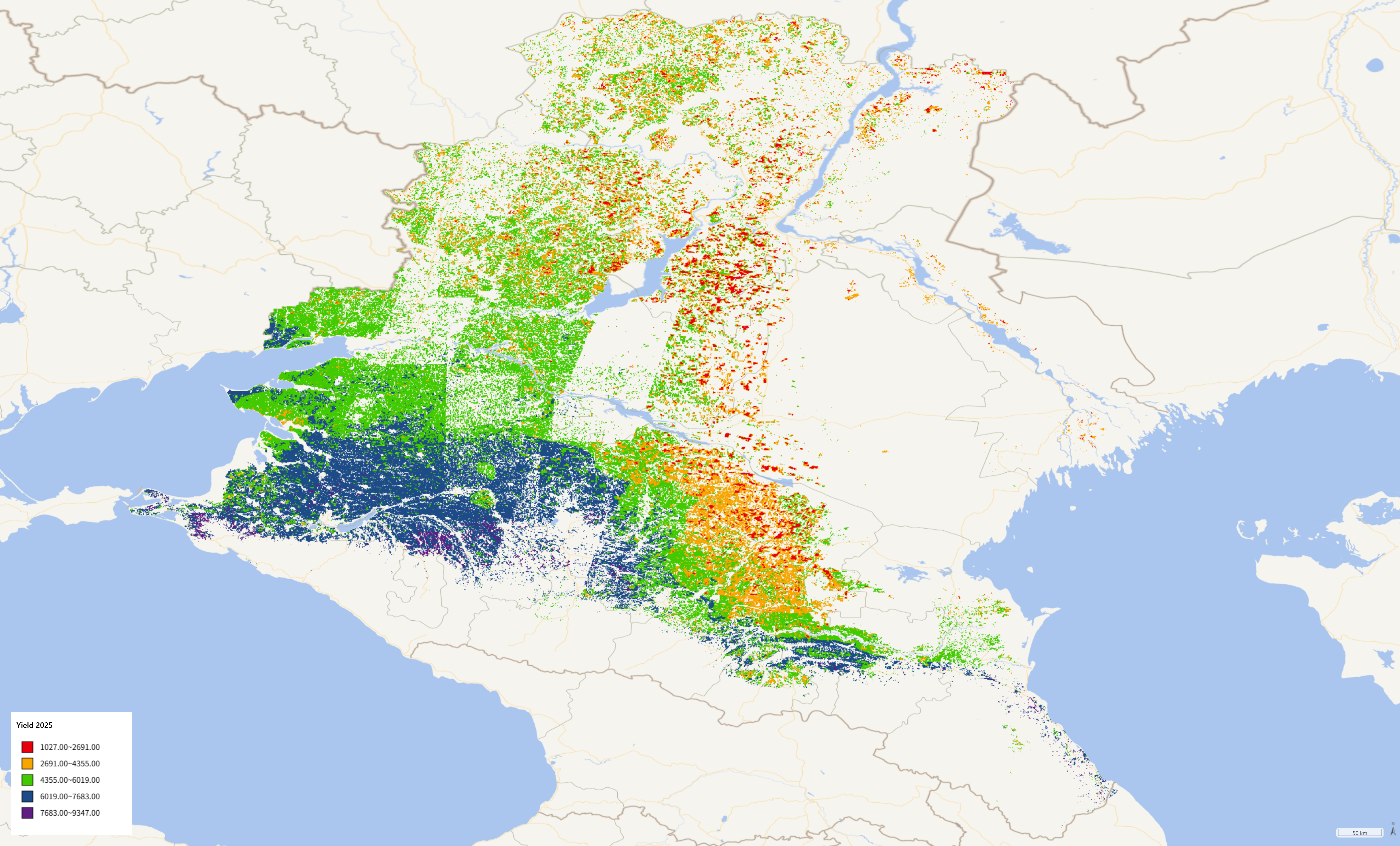
Figure 2. Spatial Pattern of Winter Wheat Yields in Russia's Major Production Areas, 2025

Figure 3. Spatial Pattern of Winter Wheat Yield Differences in Russia (2025-2024)