
 English
 中文

Bulletin
CropWatch bulletinMenu
Authors: air_panqc,lijunbin | Edit: lirui
Between March and May 2025, India’s winter wheat and winter rice entered their harvest period, while maize and summer rice began sowing in May. Remote sensing monitoring indicates that India’s wheat planting area in 2025 reached approximately 32.998 million hectares, showing an overall expansion trend with a year-on-year increase of about 3.3%.
At the administrative level, Uttar Pradesh, Madhya Pradesh, Punjab, Haryana, and Gujarat all recorded area increases exceeding 10%, reflecting strong momentum in wheat expansion. However, Chhattisgarh and Telangana witnessed significant reductions, with planting areas declining by 20.3% and 21.9%, respectively.
From an agro-ecological perspective, the main wheat-producing zones saw varying trends. The Western Arid Region and the Ganges Plain experienced increases in wheat planting area by 9.2% and 7.6%, respectively, likely due to improved irrigation infrastructure and enhanced water availability. In contrast, the Central Region saw a decrease of 6.4% in wheat area, possibly due to persistently low rainfall.
Despite the expansion in planting area, India’s wheat yield per hectare declined compared to the previous year. The average yield in 2025 was 3.56 tons per hectare, representing a 3.68% year-on-year decrease. Agrometeorological indicators suggest that the key growth and maturation periods of wheat were affected by prolonged heat and drought. Precipitation during the season was 47.08% below the 15-year average, while the mean temperature was 2.17°C higher. These extreme weather conditions had a significant adverse impact on wheat grain filling and maturation.
Regionally, the Central Region and the Ganges Plain experienced yield declines of 7.3% and 3.1%, respectively. Compared to the 15-year average, precipitation in these two areas fell by 98.13% and 76.91%, while average temperatures rose by 2.08°C and 1.8°C, respectively — anomalies rarely seen in historical records. In contrast, the Western Arid Region saw a 6.2% increase in wheat yield. Although precipitation in this area dropped by 77.18%, the agricultural drought mitigation index reached -100%, indicating that no agricultural drought occurred and wheat growth remained largely unaffected.
At the provincial level, performance varied significantly. Haryana recorded the most notable yield increase at 18.82%, while Telangana, Gujarat, and other regions also achieved stable yield improvements. In contrast, although Uttar Pradesh and Madhya Pradesh expanded their wheat area, their yields fell by 6.50% and 6.07%, respectively, suggesting that climatic variability negatively affected productivity. Bihar and Chhattisgarh faced both reductions in planting area and yield, highlighting their vulnerability to climate risks and the challenge of maintaining stable production capacity.
Overall, the high temperature and drought conditions during the 2025 winter wheat growing season placed pressure on India’s wheat production. While the planting area slightly increased, the decline in yield offset the benefits of expansion. As a result, total national wheat output is expected to remain roughly the same as the previous year, with a slight decrease of 0.34%, reaching approximately 118.16 million tons.
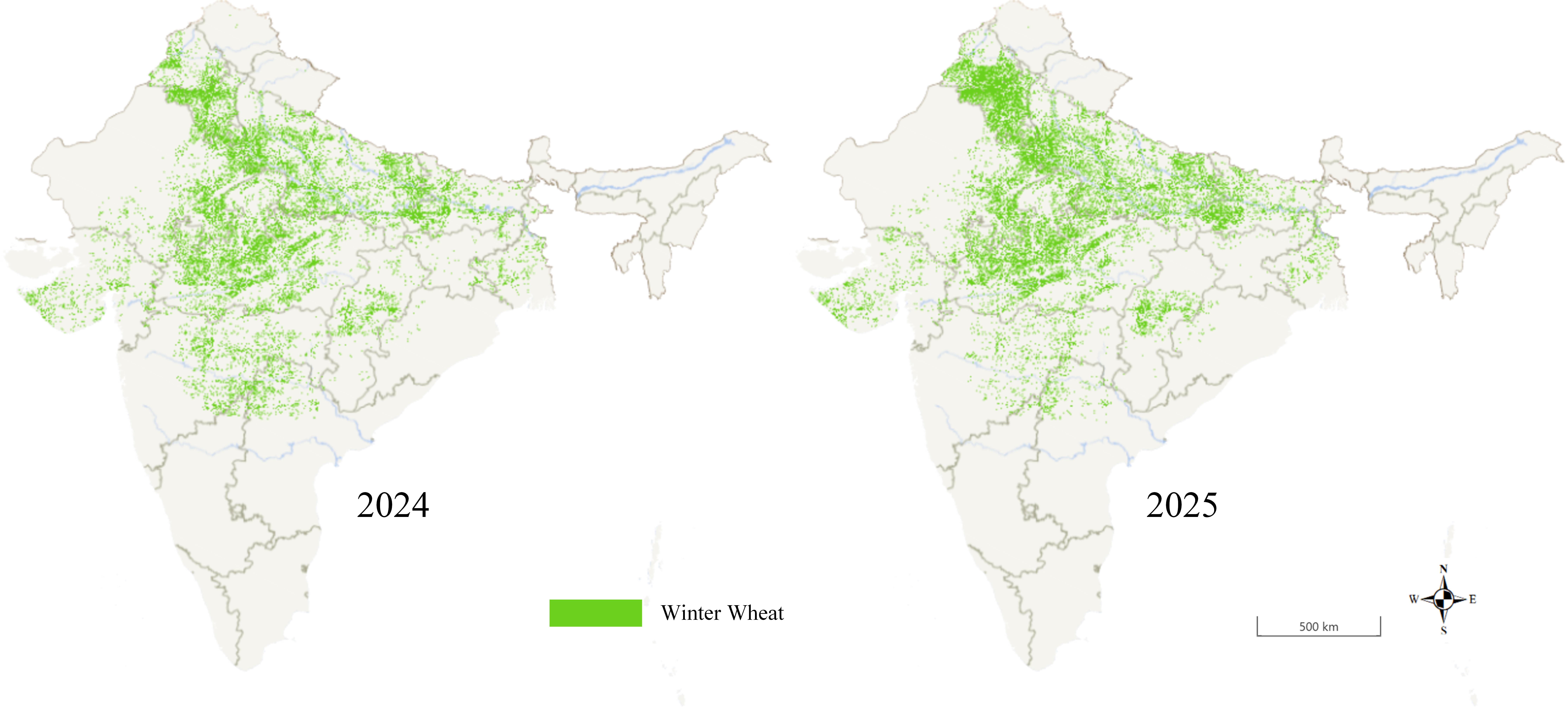
Figure 1 Spatial Pattern of Winter Wheat in India in 2024 and 2025
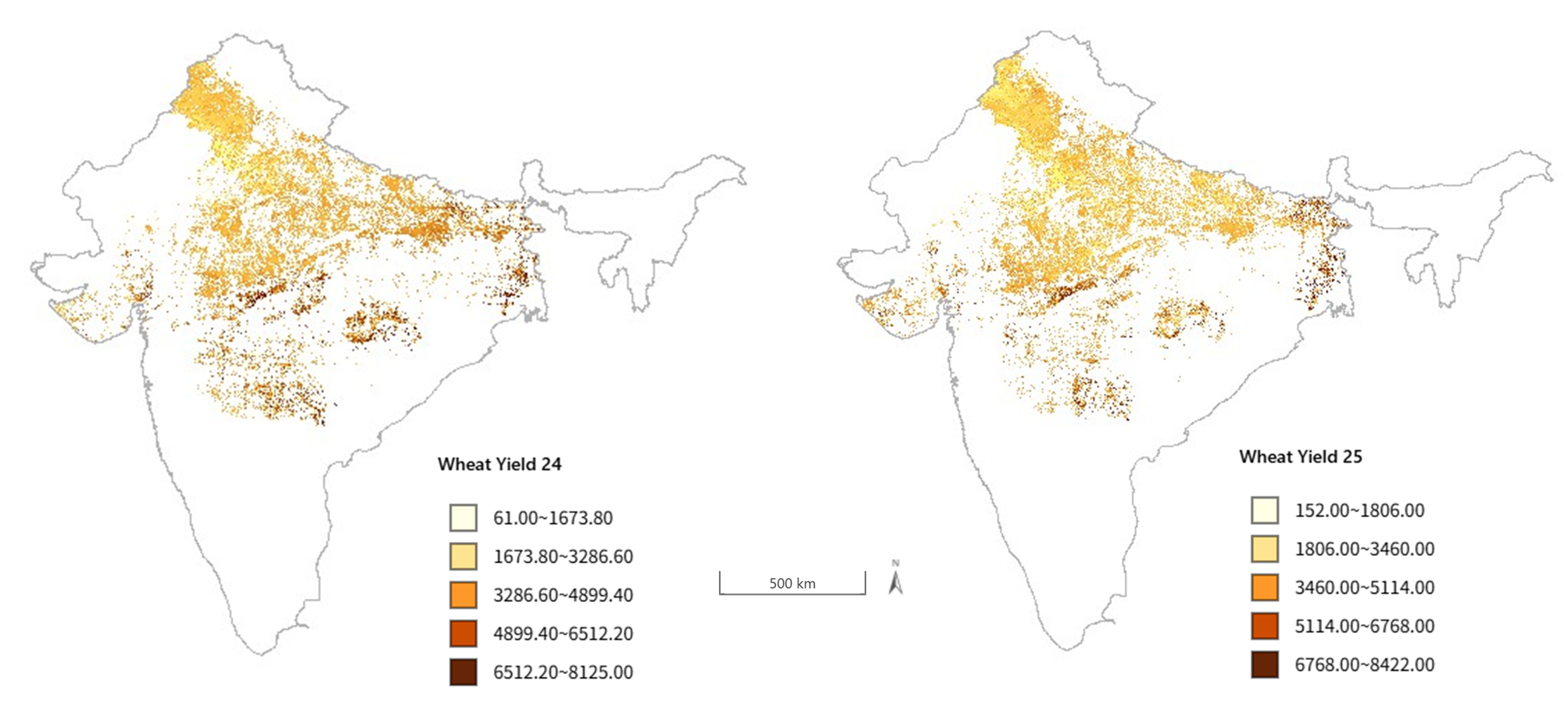
Figure 2 Spatial Pattern of Winter Wheat Yield in India in 2024 and 2025