
 English
 中文

Bulletin
CropWatch bulletinMenu
Authors: limengxiao | Edit: lirui
The CropWatch team completed the crop planting progress monitoring report for Canada from March to May 2025. According to the monitoring results, the total cultivated area in Canada is 47.499 million hectares, with 17.136 million hectares of uncultivated land, accounting for 36.1%, and 30.364 million hectares of cultivated land, accounting for 63.9%. During this period, agricultural activities mainly focused on the sowing of corn, soybeans, and spring wheat starting in May, while winter wheat was in its growing stage.
From the agricultural meteorological and crop condition indices, Canada experienced favorable weather conditions during the monitoring period. Precipitation was 175.69 mm, which is 7.35% higher than the 15-year average, indicating slightly above-average rainfall, which has a positive impact on crop growth. Additionally, the average temperature was -7.23°C, which is a slight increase of 0.26°C compared to the 15-year average, reflecting a mild warming trend that is expected to help mitigate the negative effects of cold weather on crops. The photosynthetically active radiation (RADPAR) during this period reached 609.27 MJ/m², 2.31% higher than the 15-year average, which helps enhance crop photosynthesis, promoting growth and increasing yield. The potential cumulative biomass (BIOMSS) was 256.34 gDM/m², which is 3.38% higher than the 15-year average, indicating that favorable weather conditions have increased the potential for biomass production. The maximum vegetation condition index (VCIx) was 0.80572, indicating that the current vegetation condition is good compared to historical data, reflecting favorable growth conditions for vegetation in Canada's agricultural areas. Overall, crop planting progress in Canada during the spring of 2025 was relatively smooth, and the changes in climatic conditions had a positive impact on crop growth.
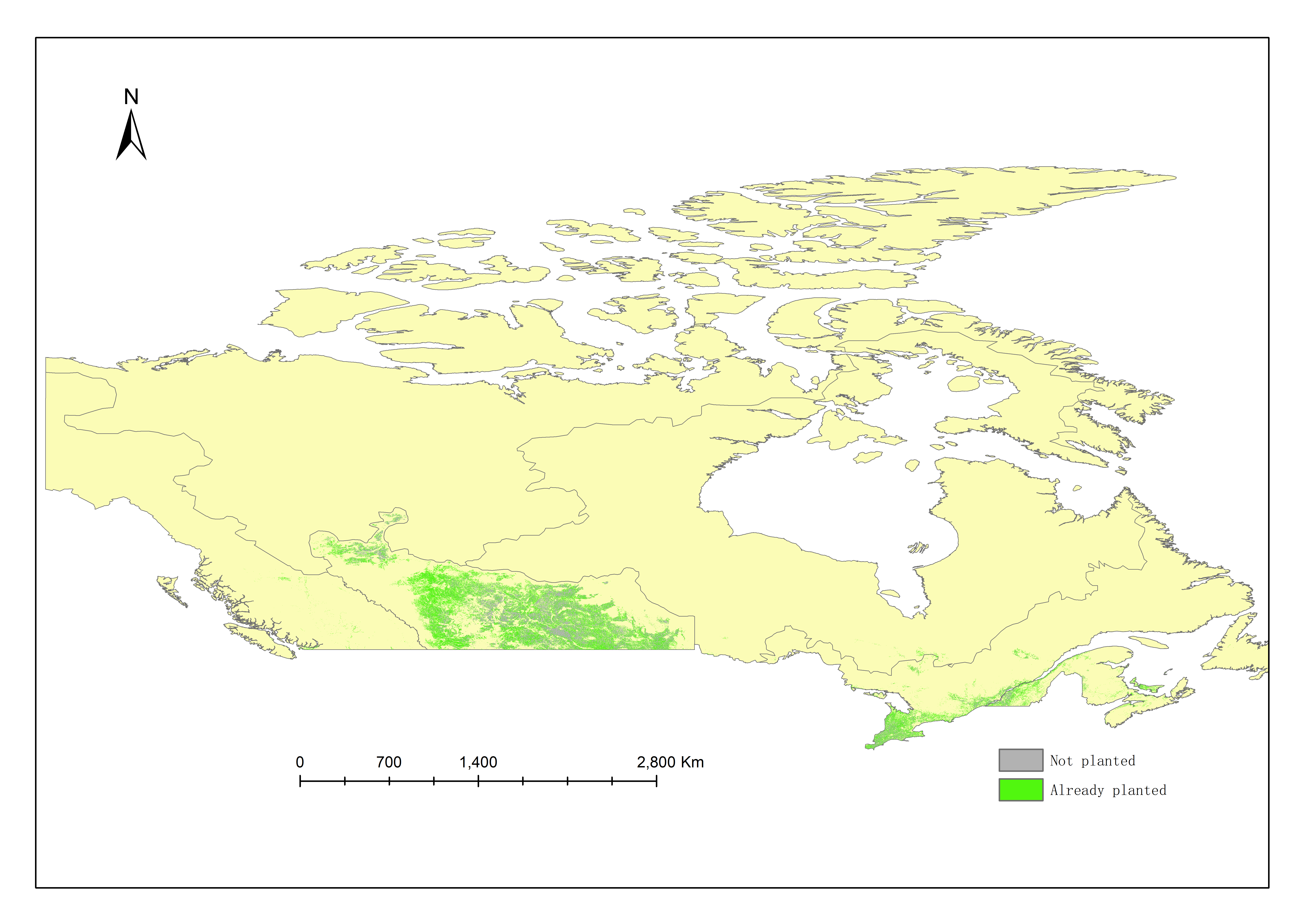
Figure 1 Spatial Pattern of Crop Planting Progress Monitoring in Canada