
 English
 中文

Bulletin
CropWatch bulletinMenu
Authors: lirui | Edit: lirui
Agricultural drought has been alleviated to a certain extent, but the situation remains severe
CropWatch monitoring shows that the global soil moisture in May 2025 presented a complex situation of "partial improvement, overall weakness". Compared with April, the soil moisture shortage in more than half of the regions has been relieved, and the soil water content in areas with severe drought such as southern China, western India, eastern Europe, and southeastern United States has significantly rebounded. However, the moisture of more than 60% of global farmland is still lower than the same period in previous years, and the problem of large-area moisture shortage in southwestern China and central-northern Europe remains prominent. As it is the critical period for summer harvest and spring sowing, the low soil moisture has obviously restricted local agricultural production.
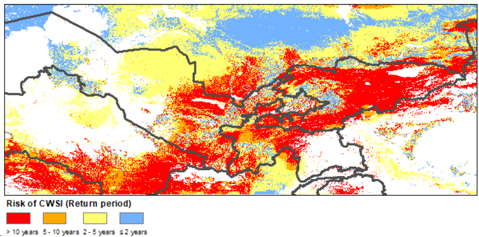
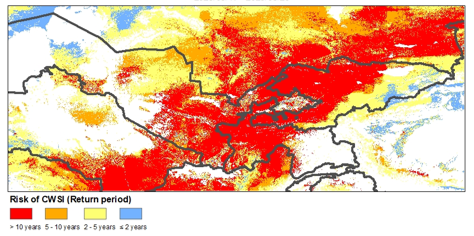
Central Asia is located in the hinterland of the Eurasian continent, relying on alpine snowmelt, rivers, lakes and groundwater to maintain relatively stable irrigation water supply. The CropWatch Crop Water Stress Index (CWSI) assessment shows that the drought in the region has deteriorated sharply from April to May: the drought first appeared in April, and the oases in river valleys could still maintain a low risk; in May, the ecological environment in Central Asia deteriorated, and once-in-a-decade high-risk areas spread rapidly, putting oasis agricultural production under great pressure; by the middle and late May, some oases in the upper reaches of the Amu Darya-Syr Darya River basin even encountered severe drought exceeding once-in-a-decade. Against this background, relieving the threat of drought through tapping new water sources, saving water and optimizing water resource allocation has become an urgent task for the sustainable development of agriculture in Central Asia.
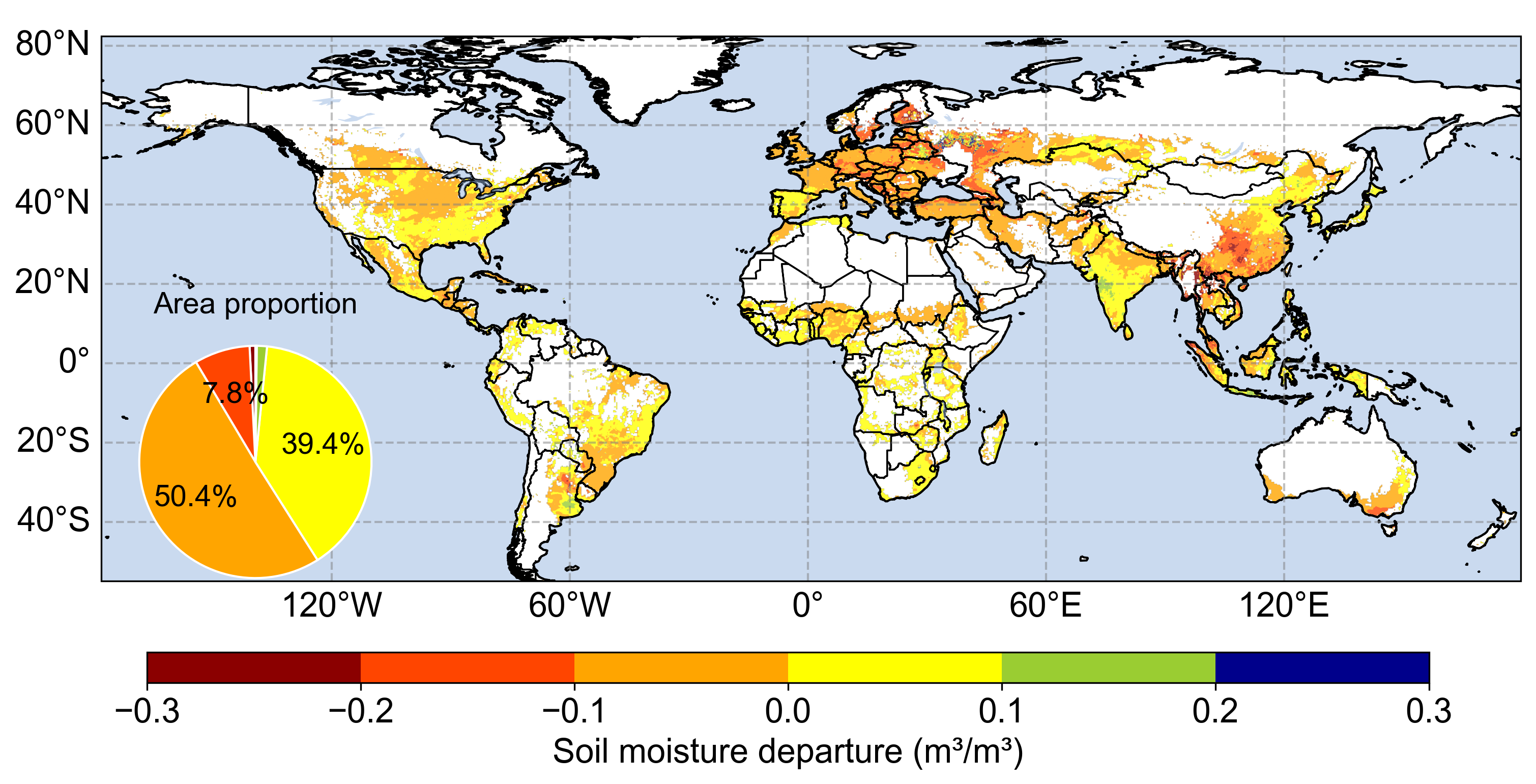
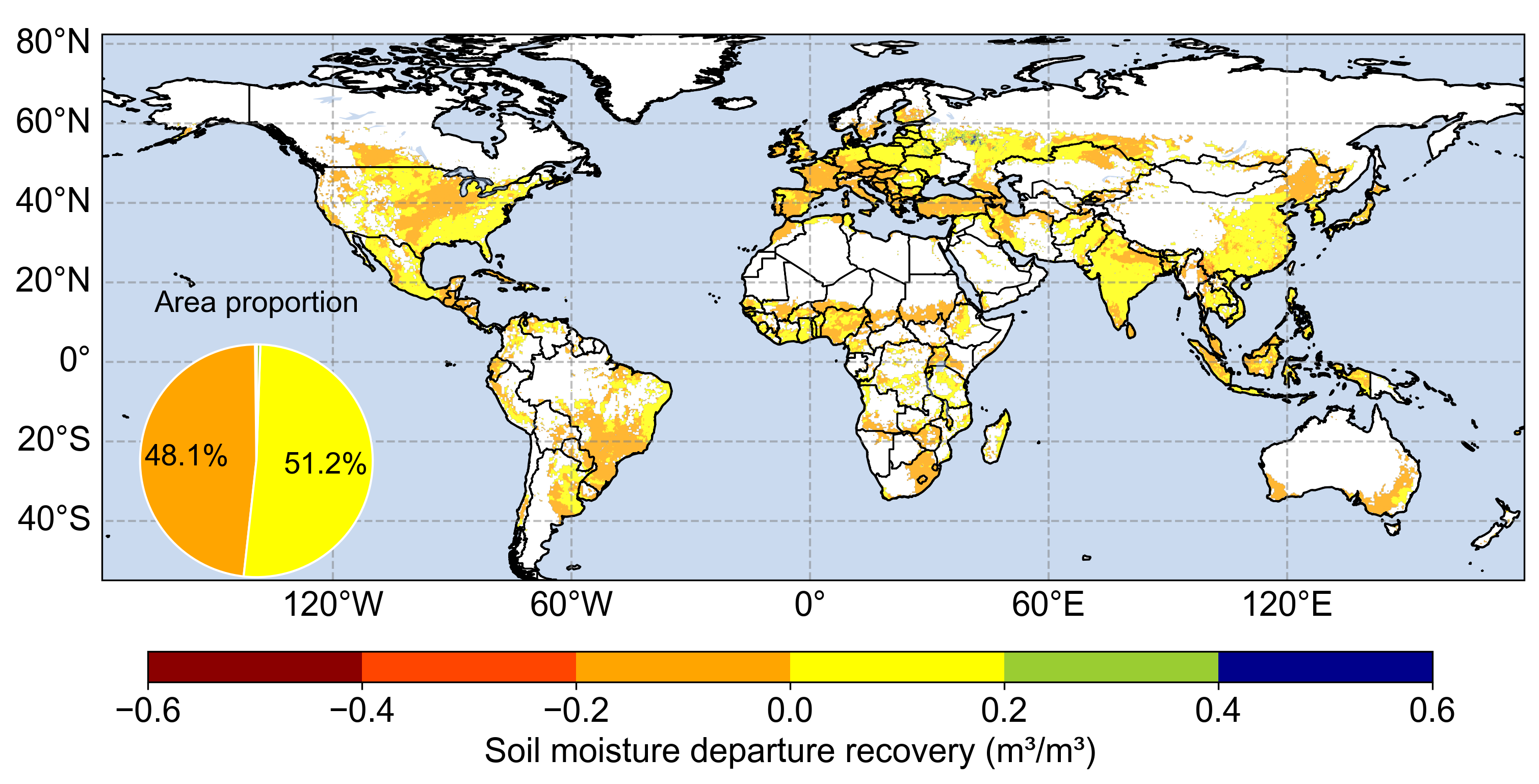
Figure 1. SMAP Satellite cropland Soil Moisture Anomaly in May 2025 and Soil Moisture Recovery from April to May
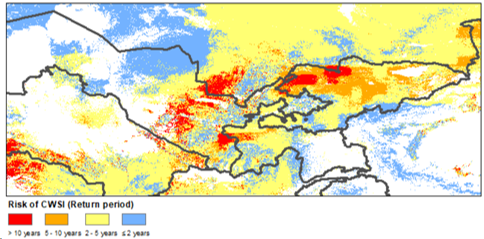
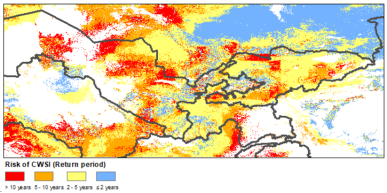
April 7th - April 14th April 23th - April 30th
May 1st - May 8th May 17th - May 24th
Figure 2. Changes in Crop Water Stress Risks in Vegetation Distribution Areas of Central Asia from April to May 2025
Convection is vigorous in mid-low latitudes, and cropland shelterbelt systems play a role.
CropWatch's monitoring of maximum hourly wind speed in cropland shows that from March to May 2025, wind speeds in global mid-latitude farmlands exhibited significant spatial differentiation characteristics: the hourly wind speed in mid-latitudes was generally significantly higher than that in low-latitude regions, a phenomenon that corresponds to CropWatch's pattern of global farmland shelterbelts concentrated in mid-latitudes.
Specifically, in areas near 30°N, such as the North China Plain and the Central-Southern Great Plains of the United States, the maximum hourly wind speed in spring showed a clear upward trend compared to the average during the same period from 2010 to 2024. In contrast, regions near 50°N, including Central Europe, northern North America, and Northeast China, became significant zones of wind speed reduction globally, forming a pattern of strengthened mid-low latitude convection in the spring of 2025.
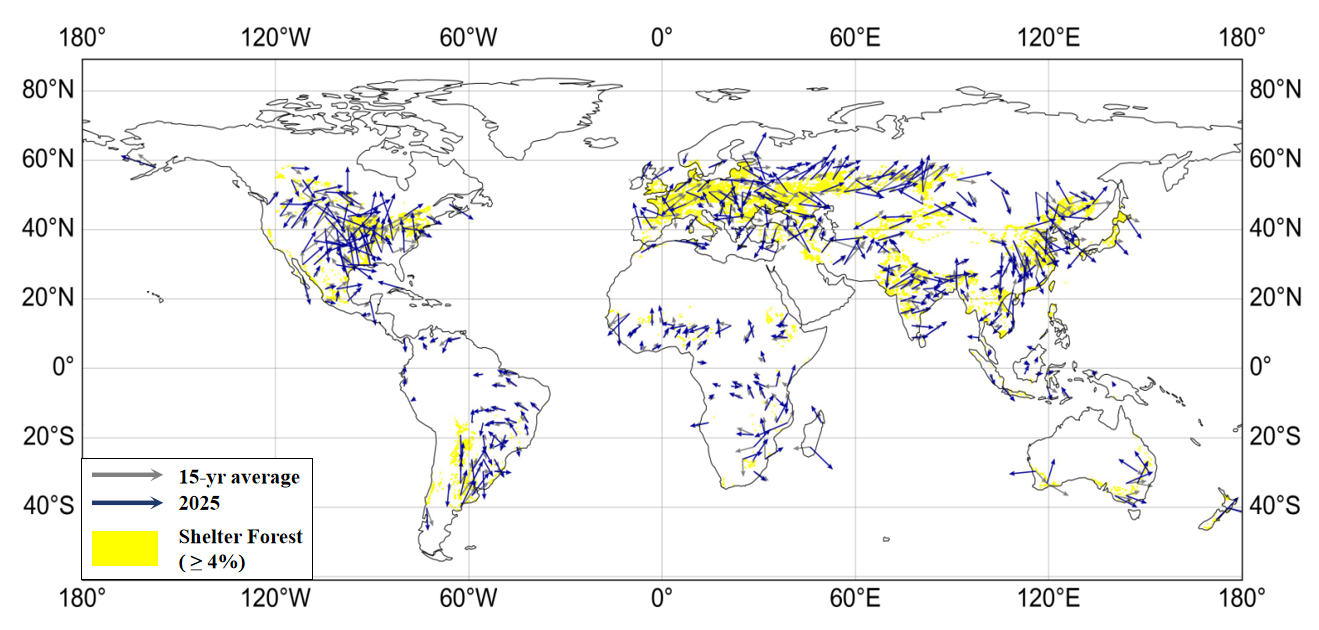
Figure 3. Wind Directions of Global Cropland Maximum Hourly Wind Speed from March to May and Remote Sensing Monitoring of Global Farmland Shelterbelts
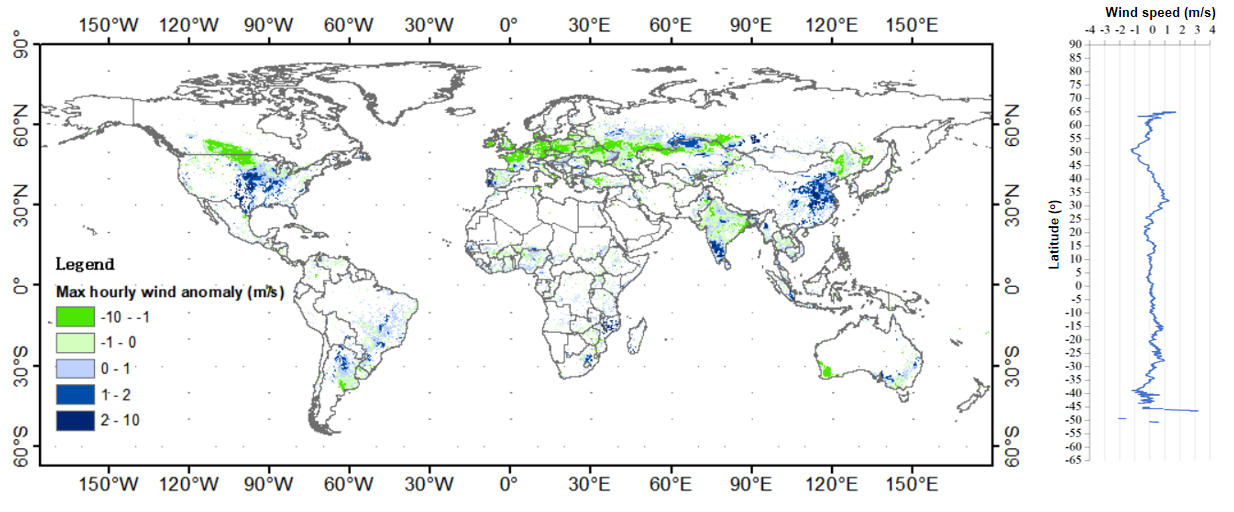
Figure 4. Spatial Differentiation of Anomalies in ERA5-Land Maximum Hourly Reanalysis Wind Speed over Global Croplands from March to May 2025