
 English
 中文

Bulletin
CropWatch bulletinMenu
Authors: tianfuyou | Edit: Miao
During this monitoring period, Ukraine’s agricultural production faced the dual challenges of extreme drought and ongoing conflict. CropWatch agro-climatic indicators show that the rainfall in Ukraine’s arable regions from May to July was only 150mm, significantly 34% below the average of the past 15 years. This directly led to a 19% reduction in potential biomass compared to the average level, adversely affecting wheat grain filling and maize yield formation. Multiple drought indices corroborate the severe situation: the water stress index reached 5.05, and the Palmer Drought Index was -4.69, indicating a severe drought range, meaning severe soil moisture deficit and inhibited crop growth. The agricultural drought area mitigation index was -2.8, indicating weak drought relief capacity.
The impact of the drought shows significant regional differences, with the southeastern regions, as major agricultural areas, being the most severely affected. This area is also a zone of ongoing conflict, posing systemic threats to local agricultural production. CropWatch monitoring shows that crop yields in southern states such as Kherson and Mykolaiv are significantly lower than in northwestern provinces, closely aligning with areas of rainfall deficit.
(1) Expansion of Wheat Planted area Offsets Yield Decline
Stimulated by post-war reclamation subsidy policies, Ukraine’s wheat planted area expanded significantly, reaching 6,220 thousand hectares, an increase of 8.2% over the previous year, the highest level in five years. Despite severe drought during the monitoring period and reduced irrigation efficiency due to conflict-damaged agricultural infrastructure, wheat yields remained at a relatively high level of 4,186 kg/ha, down only 2.2% year-on-year. The positive effect of area expansion completely offset the negative impact of yield decline, increasing total wheat production to 26.04 million tons, an increase of 1.43 million tons (5.8%) over 2024, restoring production to pre-conflict levels for the first time.
(2) Record maize Production
Farmers significantly adjusted planting structures, converting some sunflower fields to maize, increasing maize planted area to 5,560 thousand hectares, up 5.8% year-on-year. Despite drought stress during the maize jointing stage in July, favorable rain-heat conditions during other periods resulted in only a slight 0.7% decrease in yield, with total production expected to reach 4,289 tons, exceeding pre-Russia-Ukraine conflict levels.
Regional differences in maize production are more pronounced, with its yields in conflict-affected areas such as northern Crimea and Kherson more than 30% below the national average. Some plots were abandoned due to destroyed irrigation systems and labor shortages. In contrast, the central Dnieper River region, with relatively well-developed irrigation facilities and being far from conflict zones, achieved yields generally between 7-10 tons/ha, becoming the core area supporting total production.
Ukraine’s agricultural production this season demonstrated resilience under the dual pressures of severe drought and ongoing conflict. Through policy incentives to expand planted areas and farmers adjusting planting structures, positive outcomes were achieved in restoring total wheat production and setting a new record for maize production.
Future risks are mainly concentrated in two areas: first, the drought range may expand. If autumn rainfall remains below average, it will lead to a larger reduction in maize yields and affect the sowing of the next season’s winter wheat in September-October. Second, the ongoing Russia-Ukraine conflict may further damage agricultural infrastructure and affect grain harvesting, leading to high yields but poor harvests in some areas. This could also cause Ukraine’s future maize export window to be interrupted again, forcing global maize trade flows to shift to the Americas.
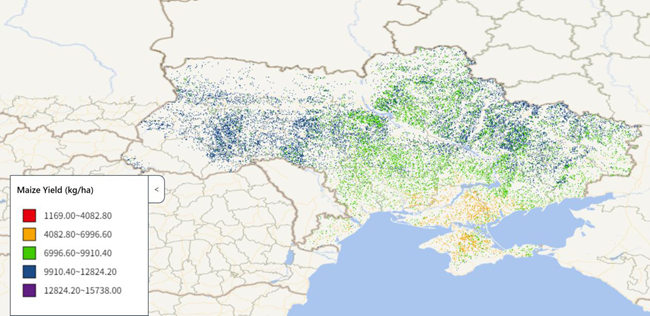
Figure 2.11 Projected Maize Yield in Ukraine for 2025