
 English
 中文

Bulletin
CropWatch bulletinMenu
Authors: lirui | Edit: zenghongwei
This bulletin focuses on two key issues: disaster response during key agricultural production periods and global water resources. It provides an in-depth analysis of the impacts of waterlogging damage on croplands in China's Huang-Huai-Hai region during the autumn harvest season and the basis for response measures. Furthermore, it highlights the risks of water scarcity arising from low reservoir levels in regions such as North America, South America, Southern Africa, and Eastern Europe, offering references for regional disaster prevention, mitigation, and agricultural production scheduling.
2.2.1 Autumn cropland waterlogging in the Huang-Huai-Hai region of China
Since the beginning of autumn in 2025, under the influence of an abnormally early autumn rainy season and significantly higher-than-average precipitation, the Huang-Huai-Hai region (core areas covering the entire province of Henan, central and southern Shandong, northern Anhui, and northern Jiangsu—traditional primary agricultural zones) has experienced prolonged, intense, and widespread continuous overcast and rainy weather starting from early September. By mid-October, cumulative precipitation in some counties and regions was 1 to 3 times higher than the multi-year average for the same period.
This has led to highly saturated soil moisture across the region, exacerbating waterlogging in farmland in some areas. The roots of autumn-harvest crops such as corn and peanuts have been submerged for extended periods, and waterlogged, muddy fields have hindered the operation of wheeled harvesters, delaying both the autumn harvest and the sowing of autumn crops.
According to the Cluster Monitoring Results of SMAP Daily Soil Air Content from September 1 to October 15 by CropWatch, soil air content in parts of southeastern and southern Henan has been significantly lower than normal, particularly since mid-September and into October. This indicates severely insufficient soil aeration in these areas, which impedes normal root respiration and soil microbial activity, pointing to a relatively serious waterlogging disaster.
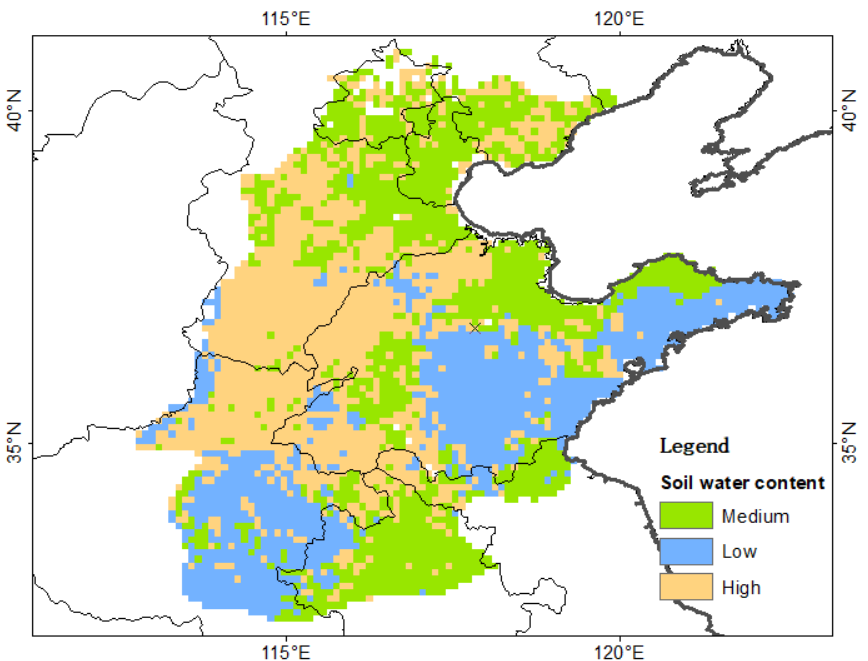
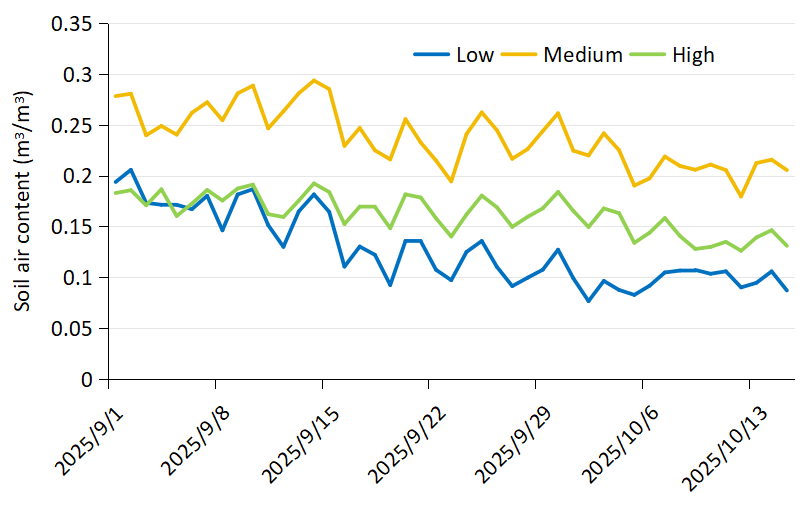
Figure 2.19 Zoning of Daily Soil Air Content Based on K-means Clustering and Variation of Regional Average Soil Air Content in the Huang-Huai-Hai Region (September to Mid-October)
2.2.2 Water surfaces (or levels) of Reservoirs are at low levels in North America, South America, Southern Africa, and Eastern Europe
According to the monitoring from CropWatch, in September 2025, the water storage conditions of reservoirs in major agricultural regions of southern North America, southeastern South America, southern Africa, and parts of Eastern Europe continued to deteriorate. The surface areas of multiple key reservoirs remained at low levels, highlighting regional water supply-demand imbalances and posing potential threats to agricultural irrigation and ecological stability. Specifically, reservoirs such as Falcon in the United States, Negro in Uruguay, Tshangalele in the Democratic Republic of Congo, and Klev in Ukraine were all at their lowest surface area levels in recent years, leading to shortages in regional irrigation water supply
The underlying causes of these low reservoir levels are linked not only to localized climatic anomalies, such as below-average summer precipitation in southern North America and an extended dry season in southern Africa, but also to long-term imbalances in water resources development and utilization. If subsequent precipitation continues to fall short of expectations, the concerned nations need to proactively initiate drought prevention and response plans. These measures may include deploying emergency irrigation equipment, optimizing crop planting structures, and enhancing inter-regional water resources allocation. Such actions are crucial to mitigating the impact of water scarcity on agricultural production and reducing the cascading effects on river ecosystems and urban water supply.
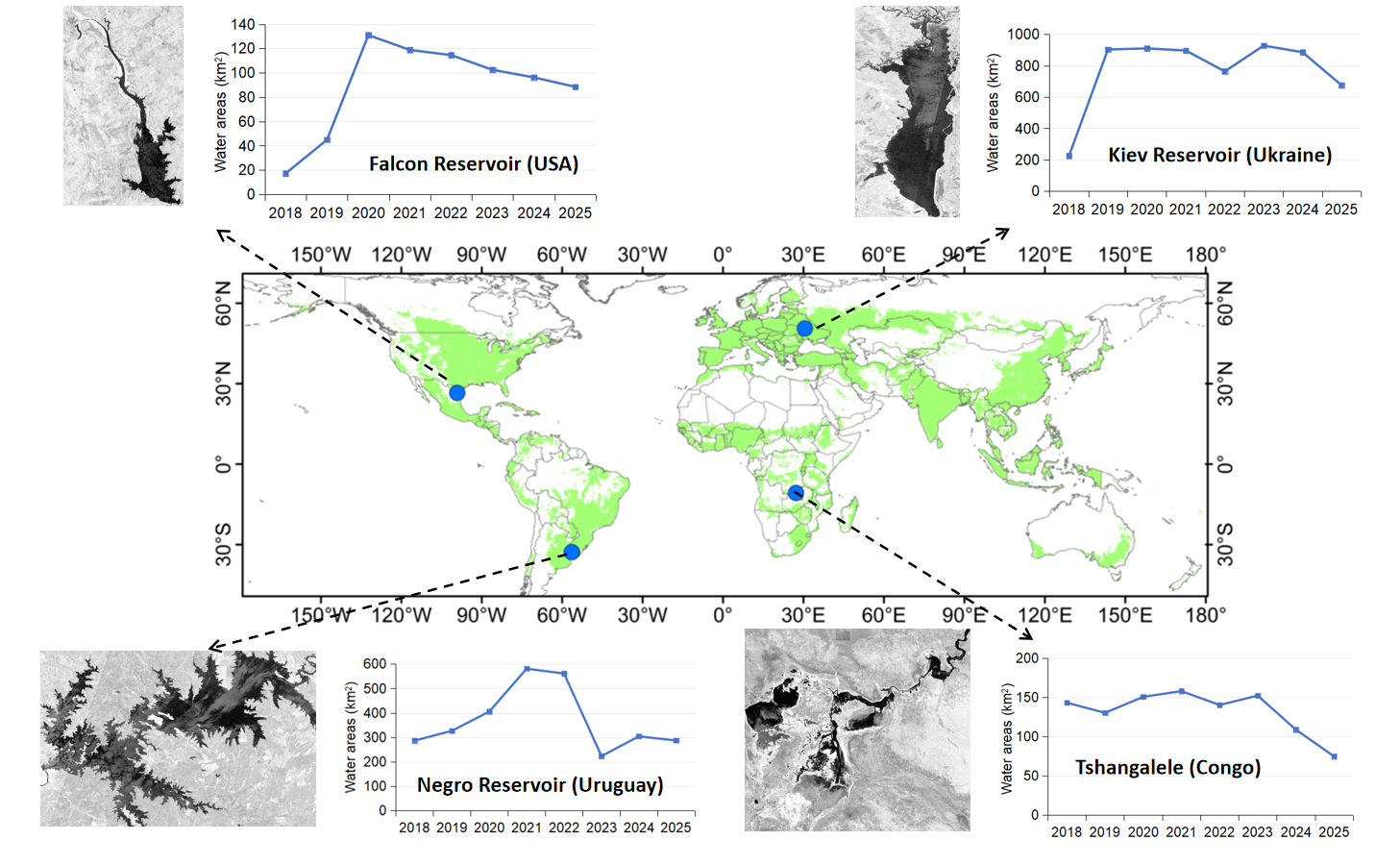
Figure 2.20 Remote Sensing Monitoring of Water Surface Area for Representative Reservoirs in North & South America, Southern Africa, and Eastern Europe (September 2025)