
 English
 中文

Bulletin
CropWatch bulletinMenu
Authors: Wangyixuan | Edit: qinxl
During the monitoring period from July to September 2026, Brazil experienced generally wetter conditions, with rainfall 50% above the 15-year average, average temperatures reaching 21.5°C (+0.3°C), and PAR 10% below average. The wetter conditions supported biomass accumulation, with potential biomass increasing by 15%. However, persistent rainfall and reduced solar radiation also adversely affected wheat during its late growth stages. In the Paraná Basin, a major wheat-producing region, precipitation reached 321 mm, 65% above average, while PAR was 12% below average. Potential biomass increased by 23%, and the maximum VCI was 0.92. In the Southern Subtropical Grasslands, precipitation was 23% above average, PAR was 10% below average, and potential biomass increased by 9%, with a maximum VCI of 0.81. Overall, moisture conditions were generally favorable across the southern wheat-producing regions, but persistent wet conditions and insufficient sunlight adversely affected grain filling, maturation, and harvesting, resulting in regional variations in crop conditions.
Brazil's wheat area in 2026 was estimated at 1.94 million hectares, down 19.73% from 2.413 million hectares in 2025. Yield declined slightly by 1.73% to 2.958 t/ha, resulting in production of about 5.730 million tonnes, 21.11% lower than the 7.263 million tonnes produced in 2025. The substantial decline in wheat area was the primary driver of the production decrease, while the slight reduction in yield further contributed to the losses. According to Brazil's National Supply Company (Conab) and agricultural media reports, weaker wheat profitability, high production costs, competition from second-season maize, and rising climate risks reduced farmers' incentives to plant wheat, leading to a contraction in wheat area in major producing states such as Rio Grande do Sul and Paraná. Meanwhile, excessive rainfall and insufficient sunlight during the late growing season, together with localized lodging, Fusarium head blight, and wheat blast, adversely affected grain filling and grain quality in parts of the southern wheat-producing regions. Overall, Brazil's wheat production in 2026 was characterized by a marked contraction in wheat area, relatively stable yields, and a substantial decline in total production, with the decrease driven primarily by reduced planting area.
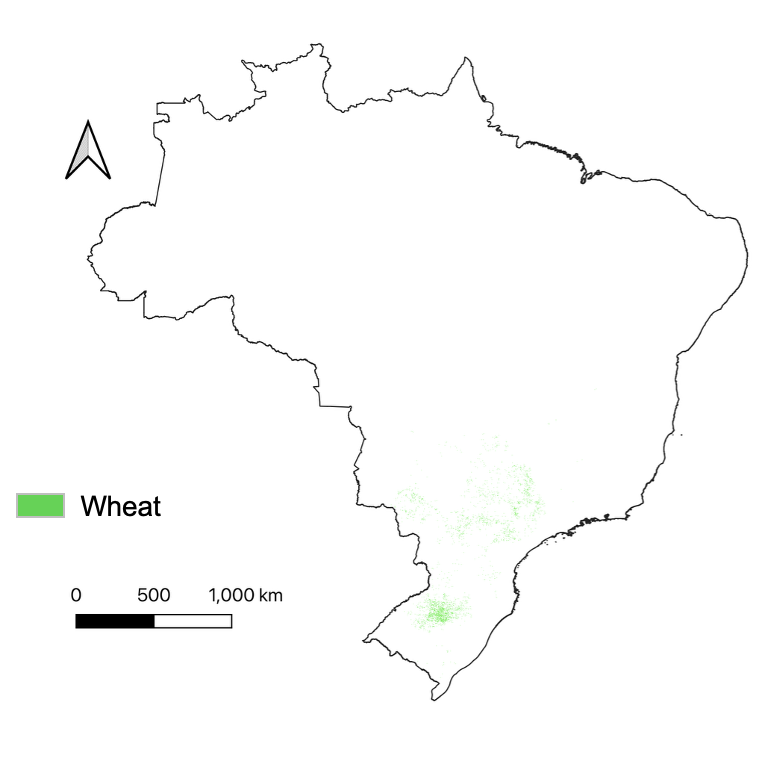
Figure 2.7 Brazil wheat map in 2026