
 English
 中文

Bulletin
CropWatch bulletinMenu
Authors: zhuweiwei | Edit: qinxl
During this monitoring period, Thailand's main-season rice was in a stage of continuous crop development, with sowing completed and the crop entering vigorous growth; most rice-growing areas were experiencing the critical stages of tillering, stem elongation, and panicle initiation to heading. CropWatch agro-meteorological indicators show that the thermal and moisture conditions in Thailand's main-season rice areas during this period were generally characterized by above-average precipitation, near-normal heat, and insufficient sunshine. Cumulative precipitation reached 863 mm, 12% above the 15-year average for the same period, effectively improving soil moisture and providing favorable support for the water-demanding critical stages of transplanting, tillering, stem elongation, and panicle initiation. The average temperature was 26.7°C, slightly below the 15-year average by 0.1°C; thermal conditions were generally suitable and largely able to support the coordinated advancement of vegetative growth and reproductive development in rice. Photosynthetically active radiation was 577 MJ/m², 14% below the 15-year average, while the potential cumulative biomass was 1426 gDM/m², slightly higher by 1% than the 15-year average. Under the combined effect of adequate water supply and stable thermal conditions, the constraint imposed by weak sunshine on biomass accumulation was generally limited.
CropWatch agronomic indicators show that the CALF in Thailand increased by 10% compared with the average of the same period over the past five years, reflecting relatively active cropland use intensity and seasonal sowing arrangements. The Maximum VCI was 0.98 and the CroPI was 1.08, indicating that the growth of sown crops was generally better than in recent corresponding periods and that field growth conditions were favorable. Meanwhile, the Palmer Drought Severity Index (PDSI) was −0.97, the crop water stress index (CWSI) was 2.58, and the Agricultural Drought-Affected Area Change Index (ADAC) index was −7.0%, indicating that soil moisture deficits and crop water stress still existed in some main-season rice areas, although drought pressure had generally eased compared with the earlier period. Continued attention should be paid to irrigation security in rainfed rice areas and to weather changes during the panicle initiation and heading stages.
Overall, above-average precipitation, stable thermal conditions, and better crop growth than in recent corresponding periods have laid a relatively good foundation for improving Thailand's main-season rice yield; however, weak sunshine still imposes some constraint on dry matter accumulation and later yield formation. CropWatch monitoring results show that Thailand's rice production during this period exhibited a pattern of "slight area contraction, slight yield increase, and marginal total production increase": the planted area was 5,503.20 thousand ha, down 0.31% from the same period in 2025; yield was 4,252.15 kg/ha, up 2.46% year on year; and total production was 23.4004 million tons, up 2.14% year on year. This yield components indicates that Thailand's rice production is shifting from an "area-expansion" model to a "yield-improvement" model. The area reduction may stem from subsidies for switching to cash crops, weakened rice price competitiveness, and conservative strategies under expectations of El Niño-related drought. In general, the current crop growth is generally favorable, but vigilance is still needed in the later period against the possible impacts of El Niño on rice growth and harvest. If no extreme weather occurs in the later period, Thailand's total rice production in 2026 is expected to remain at a relatively high level, although exports will still face price competition from India and Vietnam.

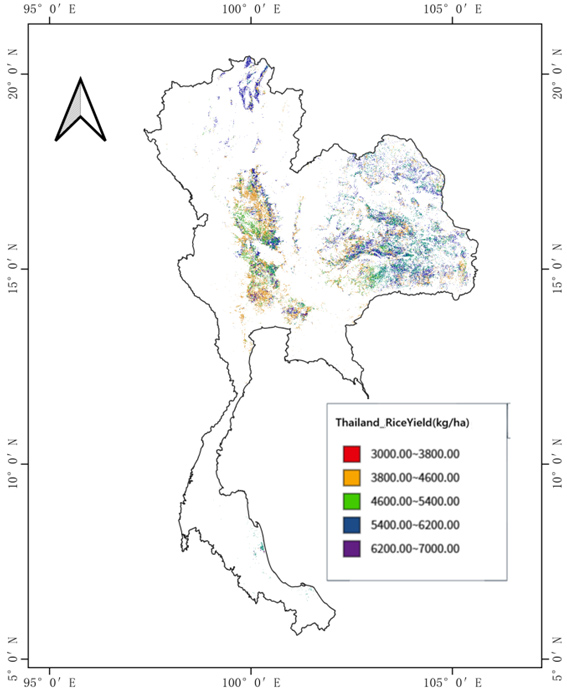
Figure 2.22 Spatial distribution of Thailand's 2026 main-season rice area and yield