
 English
 中文

Bulletin
CropWatch bulletinMenu
Authors: gxm | Edit: qinxl
From July to September 2026, winter wheat in Ukraine entered the harvesting stage in July, with harvesting largely completed by September. Consequently, its remote sensing signals gradually shifted to a background characterized by wheat stubble, crop residues, and bare soil. In contrast, maize was in its critical period of vigorous vegetative growth, reproductive development, and grain filling during July and August, before gradually reaching maturity and entering the harvesting stage in September. Therefore, at the national scale, vegetation indices and crop condition signals during the monitoring period were primarily dominated by maize and other summer crops. CropWatch monitoring indicates that overall crop conditions across Ukraine were generally favorable during this period. The Cropped Arable Land Fraction (CALF) shows that green vegetation cover was mainly concentrated in maize and other summer crop fields, while the contribution of winter wheat to national-scale vegetation greenness declined rapidly following harvest. The Vegetation Condition Index (VCIx) reached a high level of 0.91, indicating that peak canopy conditions during the growing season were close to historically optimal levels. The Crop Production Situation Index (CroPI) stood at 1.13, above its long-term baseline, further confirming that overall production conditions were better than the recent average. These agricultural indicators were consistent with the prevailing meteorological conditions: precipitation was generally near to slightly above average, while temperatures were slightly below average. Such conditions helped maintain soil moisture and reduce atmospheric evaporative demand, thereby supporting maize canopy vigor throughout the summer. However, increased cloud cover resulted in slightly reduced solar radiation, imposing some constraints on crop productivity. This suggests that potential yield gains were more likely constrained by the alignment between solar radiation and crop phenological development than by typical drought-related stress.
In terms of production, maize in 2026 exhibited a structural pattern characterized by a slight decrease in planted area, an increase in yield, and a modest rise in total production. The latest data indicate that the maize harvested area decreased slightly from 4.596 million hectares in 2025 to 4.535 million hectares in 2026 (-1.0%). Meanwhile, yield increased from 8,646 kg/ha to 8,865 kg/ha (+2.53%), resulting in an increase in total production from 39.74 million tonnes to 40.20 million tonnes (+1.17%). Thus, the increase in total maize production in 2026 was primarily attributable to improved yields rather than area expansion. This reflects a production recovery driven more by improved management practices and favorable meteorological conditions within existing cultivable areas than by an expansion of the cultivated area. Several factors may have contributed to this pattern. First, although the phased recovery of Black Sea shipping and agricultural export routes has helped create more favorable conditions for expanding cultivated areas, persistent security and geopolitical risks have continued to constrain large-scale expansion. Uncertainty regarding access to farmland, land fragmentation, and infrastructure availability has encouraged farmers to maintain relatively stable planted areas or make slight reductions. Second, the near- to slightly above-average precipitation and slightly below-average temperatures during the monitoring period were favorable for maintaining maize canopy vigor during critical growth stages and reducing the likelihood of heat damage and water stress, thereby potentially improving grain-filling efficiency and thousand-kernel weight. Third, under the constraints imposed by the ongoing war, Ukrainian farmers have placed greater emphasis on input efficiency and risk mitigation. Financial and logistical limitations have made substantial area expansion difficult. However, within core agricultural areas where cultivation, crop management, and harvesting remain feasible, the restoration of key production practices—including improved variety selection, optimized sowing dates, mechanized harvesting arrangements, and the recovery of essential inputs such as nitrogen fertilizers and effective pest, disease, and weed control—has been more readily reflected in statistical yield improvements.
Looking ahead to September–November 2026, winter wheat will progress from autumn sowing to emergence, seedling establishment, and pre-winter development. Meanwhile, maize will primarily undergo maturation and concentrated harvesting. The final realization of maize production will depend largely on harvesting progress, field accessibility and suitability for mechanized harvesting, and the effective control of field-level harvest losses.
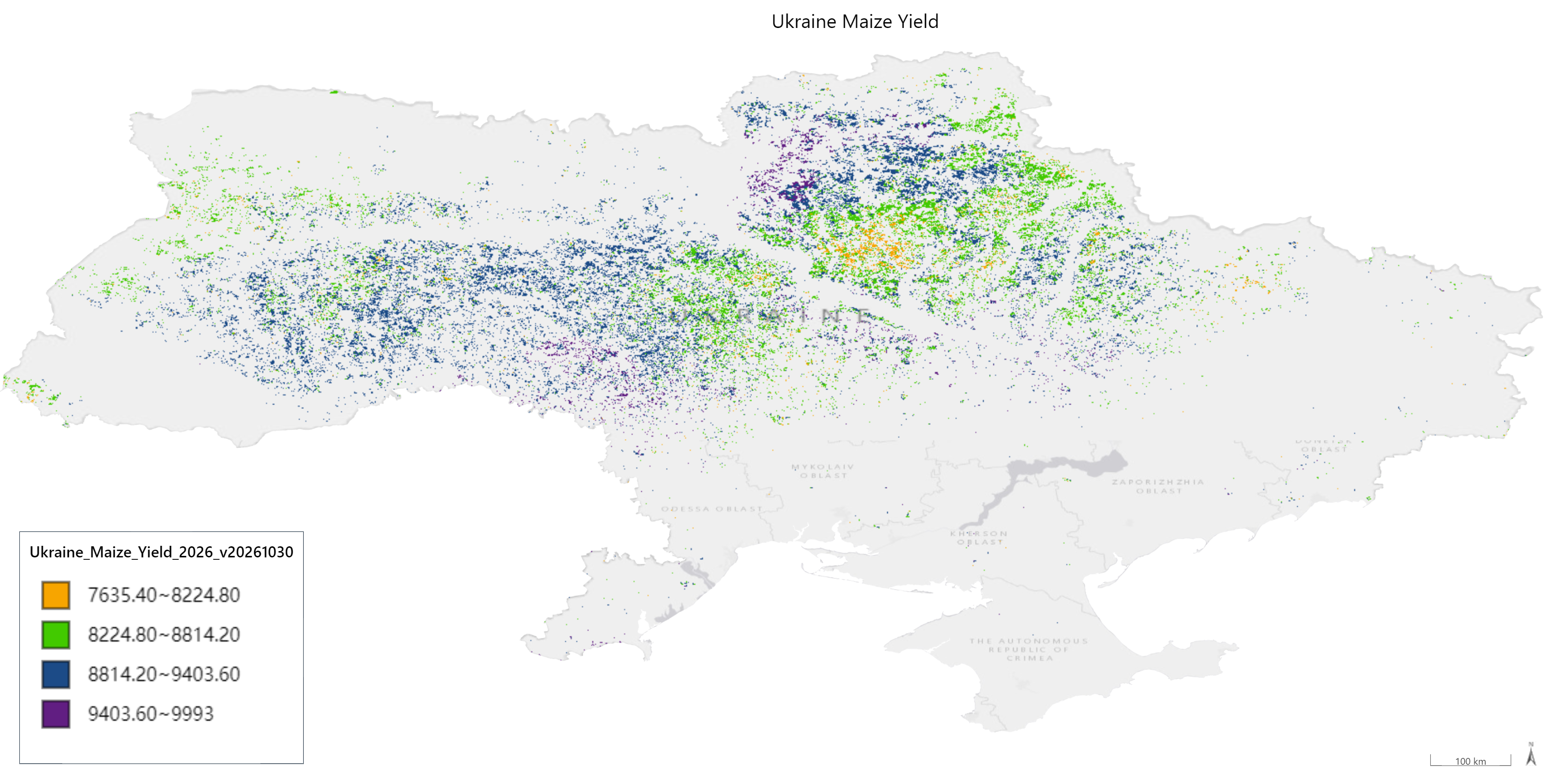
Figure 1 Maize Yield distribution of Ukraine in 2026