
 English
 中文
中文
Bulletin
CropWatch bulletinMenu
Authors: 超级管理员 | Edit: tanshen
Over the monitoring period, the harvest of spring wheat was completed by September, while the harvest of maize lasted into October. Winter wheat was also harvested, and the planting of the 2017-18 crop started in September and October.
Compared to average, CropWatch agroclimatic indicators show that the conditions were unfavorable. This includes the following: a 42% drop in RAIN, about average temperature, and a marked drop (7%) in RADPAR at the national level. Also at the national level, crop condition was below average, which is confirmed by a significant decrease for the BIOMSS indicator (-30%).
As shown by the crop condition development graph, national NDVI values were mostly above those for 2016, but close to the five-year average from July to October. The national NDVI values began to drop rapidly below average in September, which is consistent with the lack of rainfall during this period. The spatial NDVI patterns compared to the five-year average and corresponding NDVI departure cluster profiles further indicate that NDVI is above average in 69.1% of arable land, with below average NDVI in the other regions. This spatial pattern is reflected by the maximum VCI (VCIx) in the different areas, with a VCIx of 0.79 and a CALF of -3% for France overall, respectively. Generally, due to the rainfall deficit, the agronomic indicators mentioned above show unfavorable condition for some crop areas of France. In the next few months, more rain is needed for the winter wheat areas.
Regional analysis
Considering the cropping system, climatic zones, and topographic conditions, additional sub-national detail is provided for eight agro-ecological zones. They are identified in the maps by the following numbers: (50) Northern barley region, covering the regions of Île-de-France, Picardie, and Nord-Pas-de-Calais; (51) Western mixed maize, barley, and rapeseed area (Centre, Pays-de-Loire, and Poitou-Charentes); (52) North-western mixed maize and barley region (Basse Normandie, Bretagne, and Haute Normandie), (53) Rapeseed region (Alsace, Bourgogne, Champagne-Ardenne, Franche-Comté, and Lorraine); (54) Central dry zone (Auvergne, Limousin, and NW Rhone-Alpes); (55) South-western maize region (Aquitaine and Midi-Pyrenées); (56) Eastern highland region coinciding with the Rhône-Alpes region, and (57), the Mediterranean climate region (Languedoc-Roussillon and Provence-Alpes-Côte-d'Azur).
In the Northern barley region, RAIN is 13% and TEMP is 0.5°C below average respectively, while RADPAR is 7% below. As a result of the shortage of rain, the BIOMSS indicator is 7% below the five-year average. High VCIx values, however, are observed, reflecting overall favorable crop condition.
Mostly unfavorable climatic conditions dominated the Western mixed maize, barley, and rapeseed region over the reporting period. Rainfall was 47% below average (123 mm over four months). Temperature was normal, but radiation (RADPAR) was well below (-9%). The dry conditions have hampered crop growth, indicated also by a BIOMSS indicator 37% below average for the period.
The Northwest mixed maize and barley region also had below average rainfall (RAIN, -30%). Temperature was average, but sunshine was very low (RADPAR, -11%). According to the NDVI profile map and VCIx map, crop condition was good in the region. Overall, the situation is considered to be close to average.
Generally, crop condition for the Rapeseed region is slightly above average, in spite of climate conditions being poor (RAIN -32%, TEMP -1.0°C, and RADPAR, -8%). Almost all arable land in this region was cropped during the monitoring period, and the average VCIx is 0.81. The NDVI profile confirms the favorable conditions with above average NDVI since September.
The Central dry region recorded 157 mm of rainfall over four months (RAIN -51%). Temperature was average (TEMP -0.3°C) but RADPAR was 7% below. The drop in BIOMSS was 39% compared to the five-year average. The region produces mostly livestock and forest products.
The Southwest maize region is one of the major irrigated maize regions in France. Rainfall decreased 46% below average, temperature was average, but radiation was well below expectations (RADPAR -8%). Crop condition was below average according to the NDVI development graph, an observation confirmed by the decrease of BIOMSS by 34% compared to average. The VCIx map, however, shows that the crop condition was favorable, with a high VCIx value recorded for the region as a whole (0.89), resulting from irrigation.
With the Mediterranean area, the Eastern highland region was one of the driest in France (RAIN -50%), representing however average values for both RADPAR and TEMP. BIOMSS for the region is 35% below the five-year average, and a low VCIx value reflects the generally unfavorable crop condition. That overall crop condition is unfavorable compared with the previous five years is further confirmed by the crop condition development graph.
Finally, the most severe adverse weather conditions were observed in the Mediterranean climate region (RAIN -65%) even if other indicators remain close to average. According to the NDVI profiles, crop condition has been continuously deteriorating since June. BIOMSS is 52% below its five-year average, and the VCIx value of 0.6 for the region is the lowest in the country.
Figure 3.13 a. France phenology of ma

(a) major crops
Figure 3.13 b. France national level crop condition development graph based on NDVI, comparing the July-October 2017 period to the previous season and the five-year average (5YA) and maximum
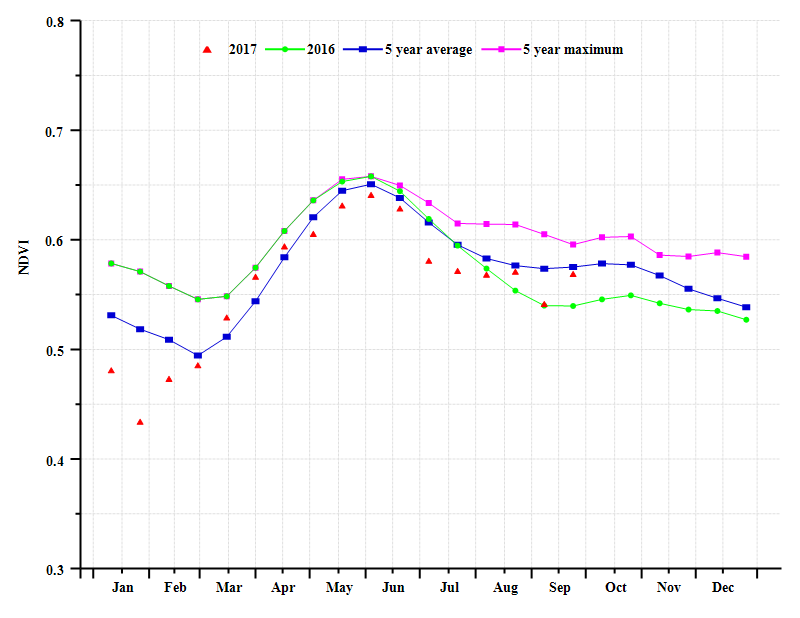
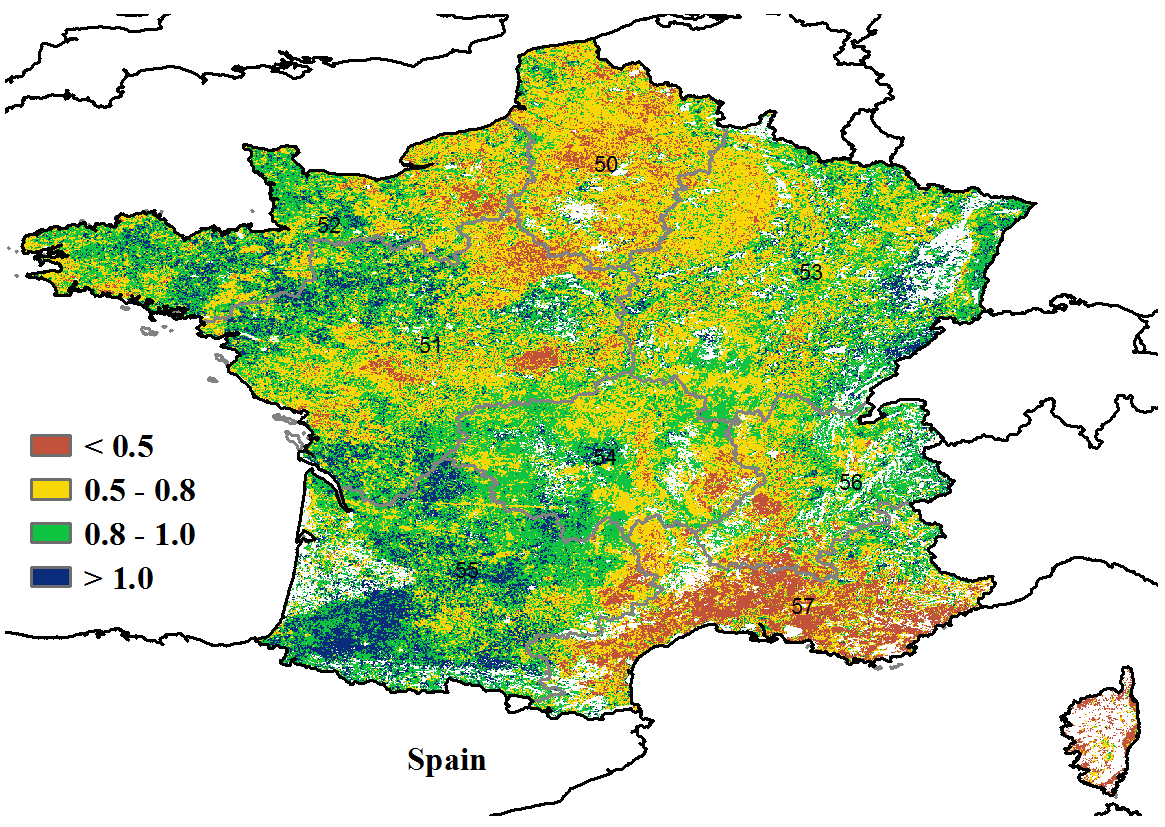
Figure 3.13 c. France maximum VCI for July-October 2017 by pixel
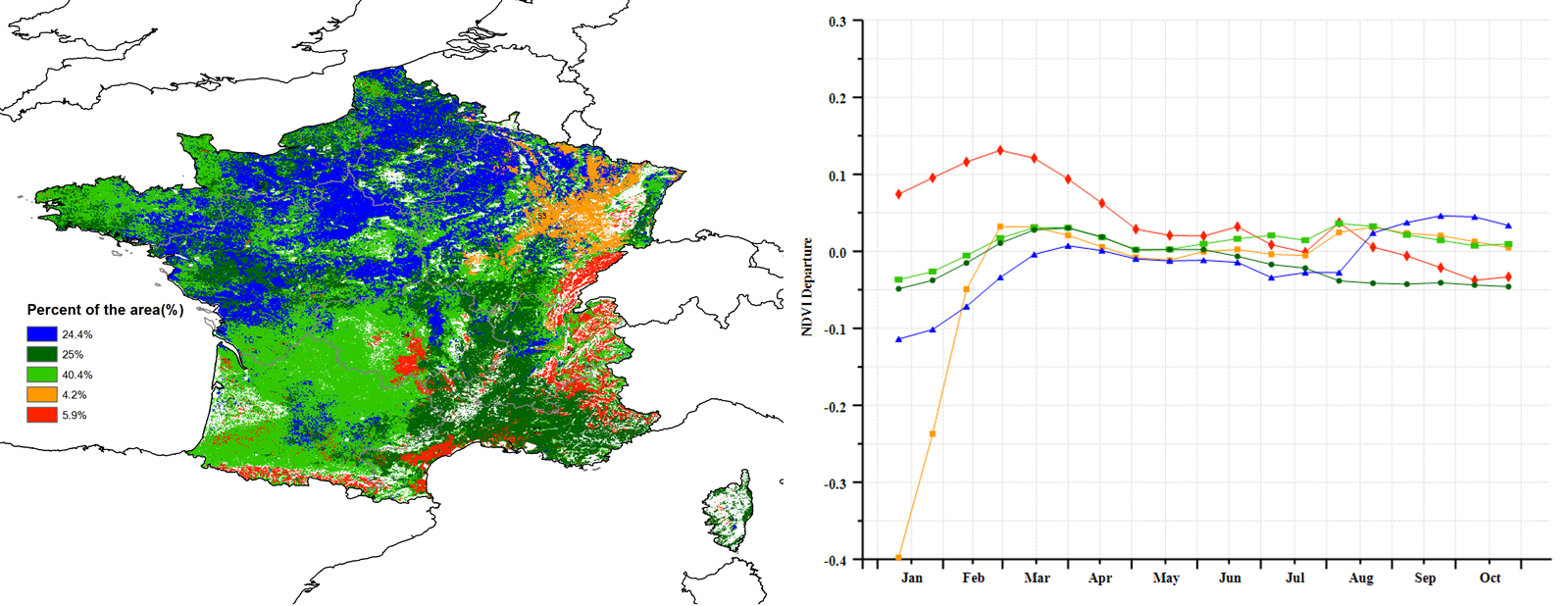
Figure 3.13 d. France spatial NDVI patterns up to October 2017 according to local cropping patterns and compared to the 5YA (left) and (e) associated NDVI profiles(right).
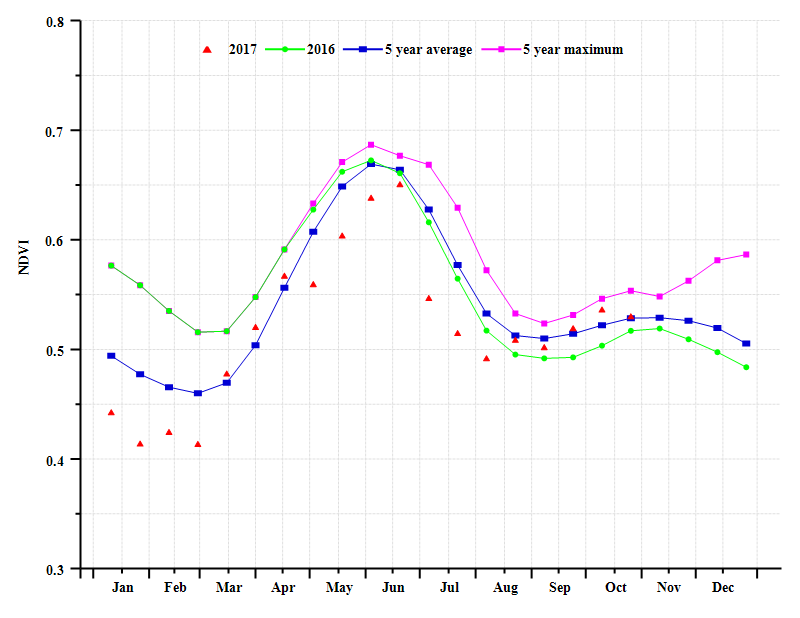
Figure 3.13 f. Northern barley region zone (France) crop condition development graph based on NDVI.

Figure 3.13 g. Western mixed maize,Barley and Rapeseed zone (France) crop condition development graph based on NDVI.

Figure 3.13 h. Northwest mixed maize, Barley and rapeseed zone (France) crop condition development graph based on NDVI.

Figure 3.13 i. Rapeseed zone (France)crop condition development graph based on NDVI.
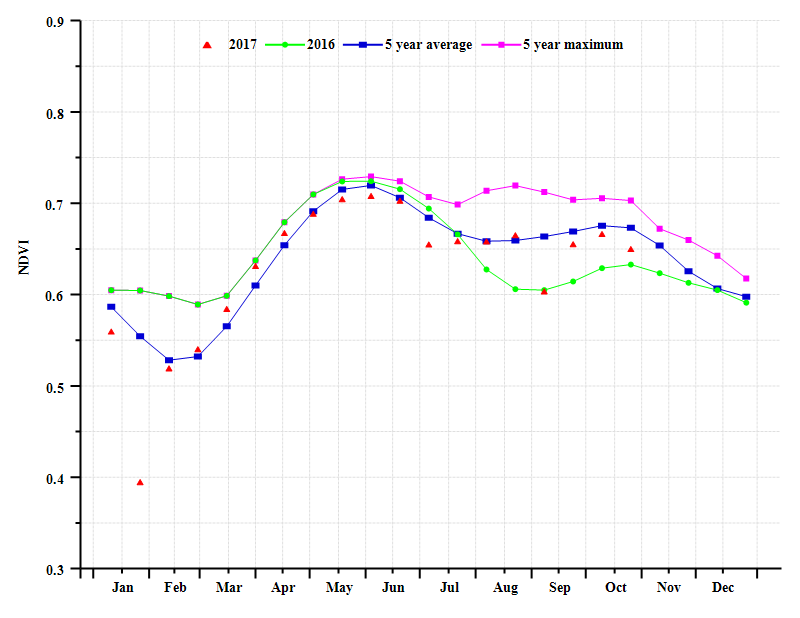
Figure 3.13 j. Central dry zone(France) crop condition development graph based on NDVI.
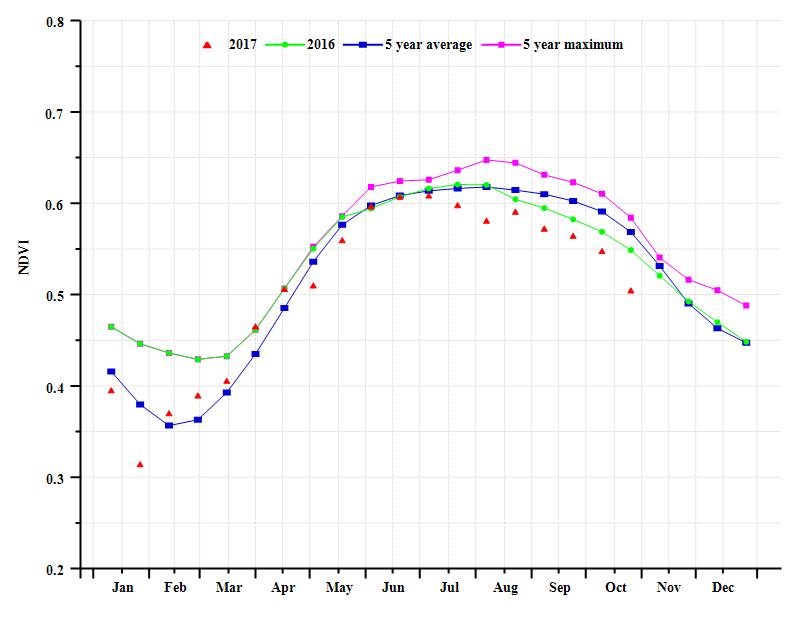
Figure 3.13 k. Southwest maize zone(France) crop condition development graph based on NDVI.
Figure 3.13 l. Eastern highland(France) crop condition development graph based on NDVI.
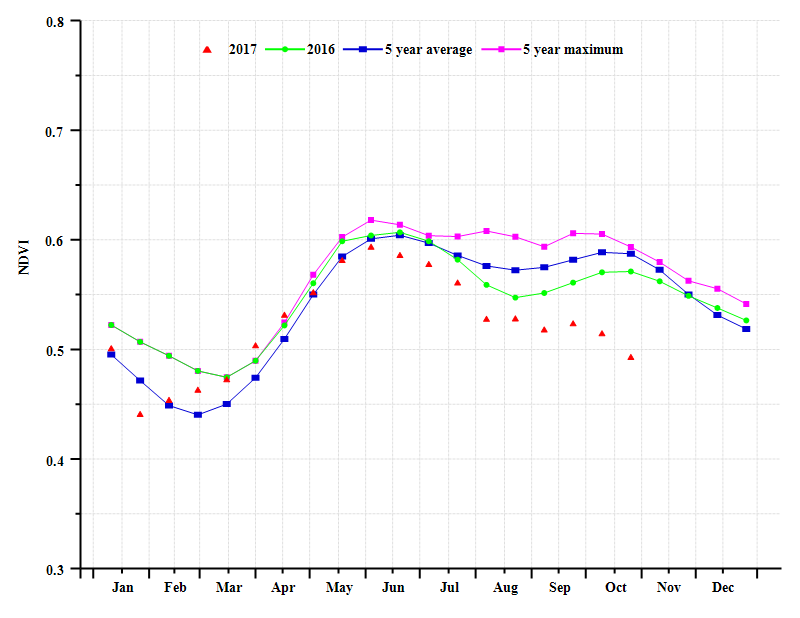
Figure 3.13 m. Mediterranean climate zone(France) crop condition development graph based on NDVI.
Table 3.26. France agroclimatic indicators by sub-national regions, current season's values and departure from 15YA, July-October 2017
| Region | RAIN | TEMP | RADPAR | |||
| Current (mm) | Departure from 15YA (%) | Current (°C) | Departure from 15YA (°C) | Current (MJ/m2) | Departure from 15YA (%) | |
| Northern barley zone (France) | 206 | -13 | 16 | -0.6 | 769 | -10 |
| Western mixed maize, barley, and rapeseed zone (France) | 123 | -47 | 17 | -0.5 | 852 | -9 |
| Northwest mixed maize and barley zone (France) | 161 | -29 | 16 | -0.6 | 783 | -11 |
| Rapeseed zone (France) | 210 | -32 | 16 | -1.0 | 822 | -8 |
| Central dry zone (France) | 157 | -51 | 16 | -0.3 | 907 | -7 |
| Southwest maize zone (France) | 139 | -46 | 18 | -0.5 | 938 | -8 |
| Eastern highland (France) | 196 | -50 | 15 | -0.5 | 1004 | -2 |
| Mediterranean climate zone (France) | 94 | -65 | 17 | -0.4 | 1120 | 1 |
Table 3.27. France agronomic indicatorsby sub-national regions, current season's value and departure from5YA, July-October 2017
| Region | BIOMSS | Cropped arable land fraction | Maximum VCI | ||
| Current (gDM/m2) | Departure from 5YA (%) | Current (%) | Departure from 5YA (%) | Current | |
| Northern Barley zone (France) | 952 | -7 | 100 | 0 | 0.67 |
| Western mixed maize, barley, and rapeseed zone (France) | 584 | -37 | 99 | -1 | 0.78 |
| Northwest mixed maize and barley zone (France) | 766 | -19 | 100 | 0 | 0.87 |
| Rapeseed zone (France) | 943 | -21 | 100 | 0 | 0.81 |
| Central dry zone (France) | 729 | -39 | 100 | 0 | 0.83 |
| Southwest maize zone (France) | 663 | -34 | 100 | 0 | 0.89 |
| Eastern highland (France) | 803 | -35 | 97 | 0 | 0.78 |
| Mediterranean climate zone (France) | 456 | -52 | 87 | -7 | 0.60 |
Table 3.28. CropWatch-estimated maizeand wheat production for France in 2017 (thousand tons)
| Crops | Production 2016 | Yield variation (%) | Area variation (%) | Production 2017 | Production variation (%) |
| Maize | 14703 | -0.2 | 0.0 | 14577 | -0.9 |
| Wheat | 37984 | 0.0 | 0.1 | 38051 | 0.2 |