
 English
 中文
中文
Bulletin
CropWatch bulletinMenu
- Overview
- Country analysis
- Argentina
- Australia
- Bangladesh
- Brazil
- Canada
- Germany
- Egypt
- Ethiopia
- France
- United Kingdom
- Indonesia
- India
- Iran
- Kazakhstan
- Cambodia
- Mexico
- Myanmar
- Nigeria
- Pakistan
- Philippines
- Poland
- Romania
- Russia
- Thailand
- Turkey
- Ukraine
- United States
- Uzbekistan
- Vietnam
- South Africa
- Afghanistan
- Belarus
- Mongolia
- Sri Lanka
- Zambia
- Mozambique
- Kenya
- Angola
- Hungary
- Italy
- Morocco
Authors: 超级管理员 | Edit: Miao
Generally satisfactory crop condition prevailed at the scale of the South and Southeast Asia MPZ during the reporting period with the maximum Vegetation Condition Index (VCIx) reaching 0.89, even if the biomass production potential (BIOMSS) was 13% lower than the 5-year average. The fraction of cropped arable land (CALF) was average. RAIN was close to average but both temperature (TEMP) and photosynthetically active radiation (RADPAR) were below average by 0.3°C and 3%, respectively.
Some national RADPAR values reached significant departure as for instance in India (-5%) and Nepal (-7). Thailand recorded a slight positive anomaly (RADPAR 3% above the average). Other countries were closer to average. TEMP stayed below the average in all countries with significantly cooler than average weather in Cambodia (-0.8°C below average) and Nepal (-1.1°C below average). For rain the largest anomalies are those of Cambodia and Nepal (-8% and -13% respectively) and Laos (+14%).
As a reflection of the agro-climatic conditions during the reporting period, BIOMSS fell below the reference of the 5YA average in all Southern and Southeast Asian countries in the MPZ. The largest departures are those in Nepal (-20%), India (-18%), Laos (-11%) and Bangladesh (-7%).
Uncropped arable land occurs mainly in India, Bangladesh, and southern Vietnam. The cropping intensity of the South and Southeast Asia MPZ was 167%, which is 3% above the average. Low values of VHI minimum were recorded mainly in India.
Figure 2.... South and Southeast Asia MPZ: Agroclimatic and agronomic indicators, July to October 2018.

a. Spatial distribution of rainfall profiles. b. Profiles of rainfall departure from average (mm)

c. Spatial distribution of temperature profiles. d. Profiles of temperature departure from average (mm).


e. Maximum VCI. f. Cropped arable land.

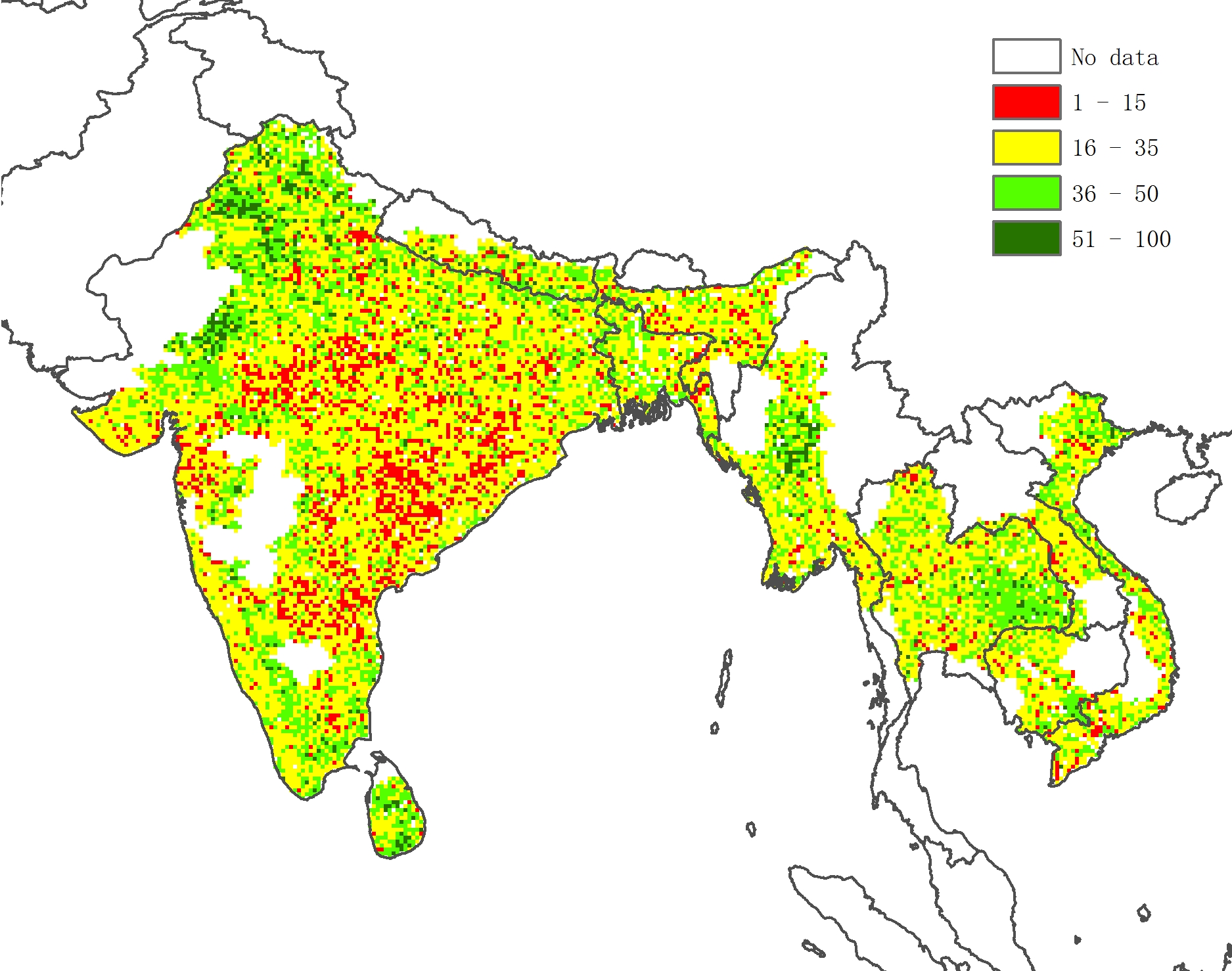
g. Biomass accumulation potential departure. h. VHI minimum.
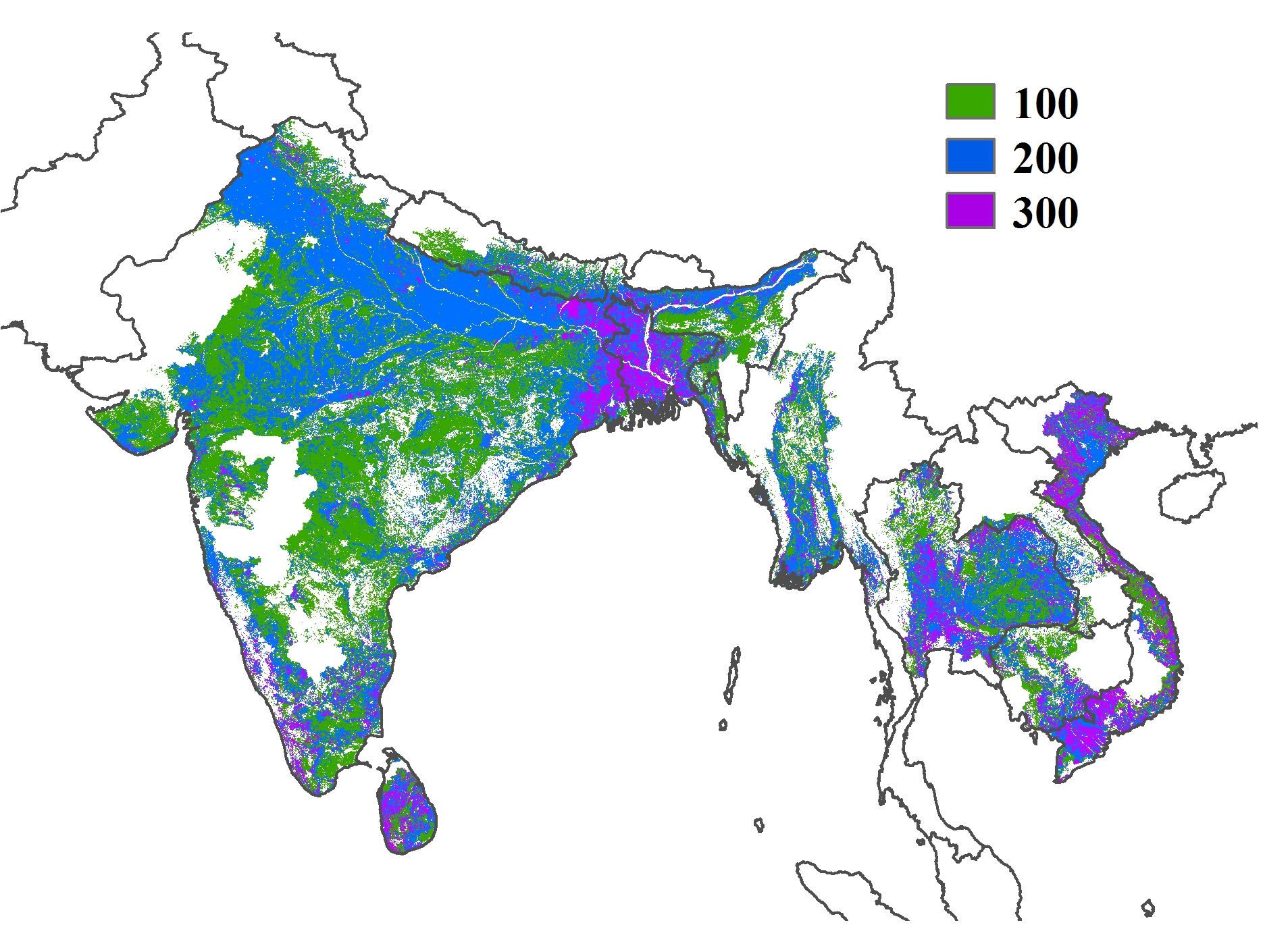
i. cropping intensity.